Archive for Guardians

Sunday Notes: Grant Fink Helps Steven Kwan Keep the Bumpers On

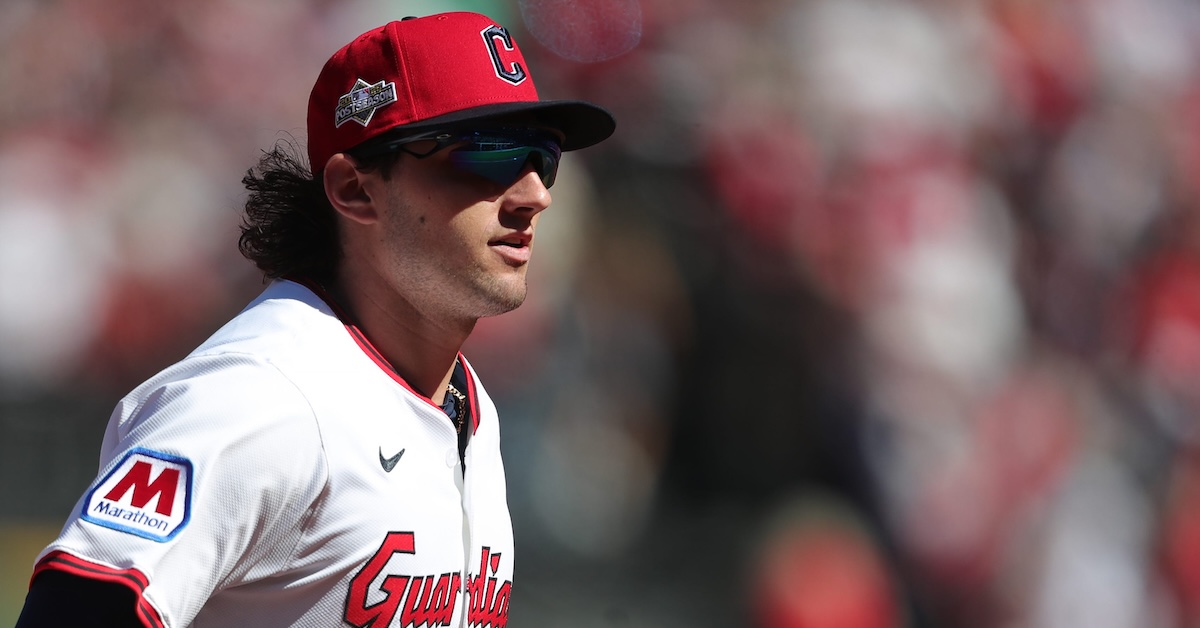
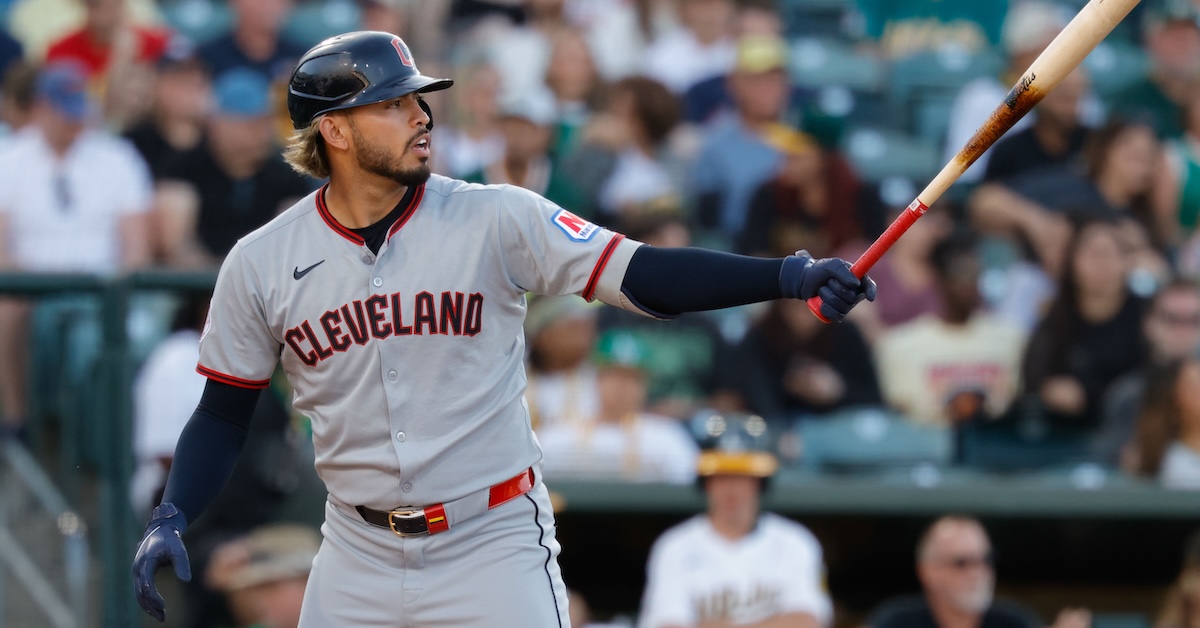
Davy Andrews recently wrote about Steven Kwan’s defense, which, as my colleague chronicled, has been demonstrably stellar. Not only has the 28-year-old Cleveland Guardians left fielder been awarded a Gold Glove in each of his four MLB seasons, the metrics back up the accolades. There hasn’t been a better defender at his position, and that goes for the senior circuit as well as the American League.

And then there is Kwan’s bat. The 2018 fifth-round pick out of Oregon State University isn’t a basher, but he is a solid contributor to the Guardians offense. Since debuting in 2022, the erstwhile Beaver has slashed .281/.351/.390 with a 112 wRC+. Moreover — this is no secret for most FanGraphs readers — he seldom goes down by way of the K. Kwan’s 9.5% strikeout rate over the past four campaigns is the lowest among qualified hitters not named Luis Arraez.

Grant Fink knows his left-handed stroke as well as anyone. Cleveland’s hitting coach tutored Kwan in the minors before moving into his current role, and they work together in the offseason. I asked Fink about two-time All-Star when the Guardians visited Fenway Park last September.

“If you look at his profile as a hitter in the major leagues, it is based on accuracy and ball flight,” Fink told me. “His key is making sure that his body is moving in a way where he can get his barrel to the ball in multiple places in the zone, and that he is making contact in the right windows to produce that consistent ball flight. Read the rest of this entry »


José Ramírez Is a Forever Guardian

Rick Osentoski-Imagn Images

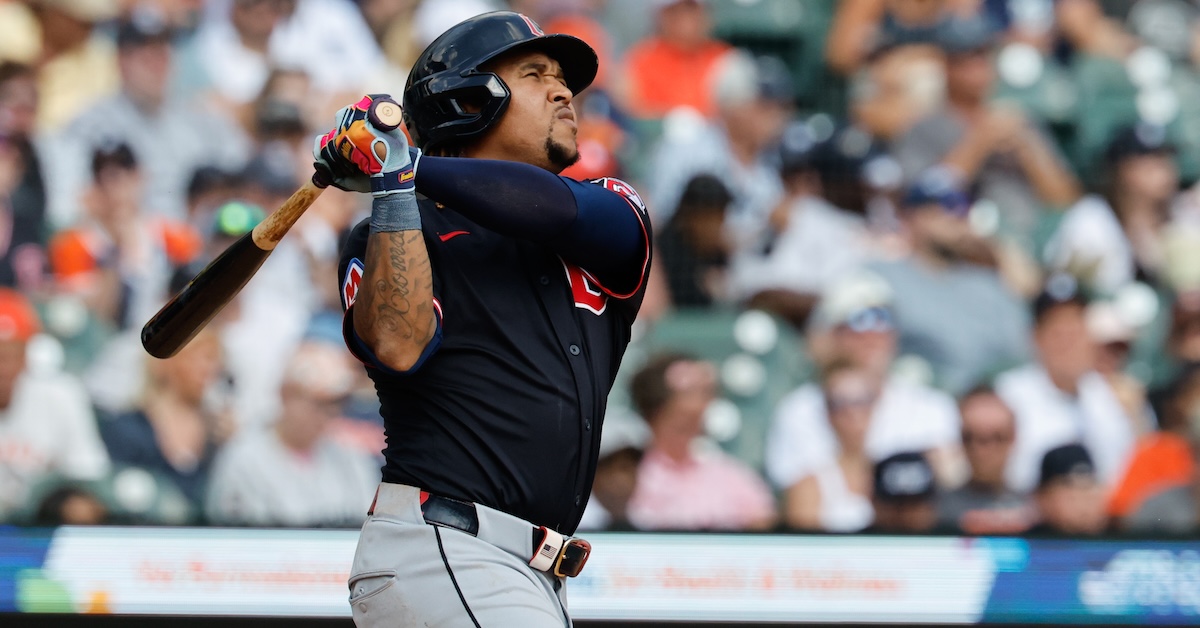
One day, José Ramírez will get old. One day, he’ll dodder out to the grass in front of the pitcher’s mound on the arm of an adorable grandchild and lollipop the ball into the dirt in front of home plate to the warm cheers of the Cleveland faithful. That’s sure to happen at some indeterminate point in the future. This weekend, however, the Guardians expressed their belief that Ramírez’s inevitable decline is a long way off, inking the 33-year-old future Hall of Famer to a seven-year contract extension that will keep him in the fold through the 2032 season. When the extension expires, Ramírez will be 40.

We’ll break down all the numbers and the dollars, but the biggest story here is the most obvious one. This is great news for anybody who loves Ramírez, the Guardians, or baseball. Ramírez has full no-trade rights, and there’s every reason to expect him to stay for the rest of his career. It’s time to talk about statues and plaques and how nice it is that we’ll never have to know just how wrong it would feel to see him in a jersey that doesn’t say Cleveland on it. This is the third extension Ramírez has signed. The first came in 2016, and it bought out his arbitration years plus two option years. The second came in 2022, and, like this one, it bought out the final three years of the previous extension. Ramírez wanted to stay in Cleveland, and with those first two extensions, he forfeited tens of millions of dollars on the open market to do so.

This extension is slightly more complicated, and the details matter quite a bit. Ramírez was already signed though the 2028 season as part of the previous seven-year extension, so it’s not as if there was a pressing need to get this done. He was owed $69 million over the next three years. This deal reworks his compensation over that period and adds four more years. Over the next seven seasons, Ramírez will earn $25 million per year, with $10 million per year deferred. (Each of those deferrals lasts 10 years, and then pays out $1 million per year for 10 years. So he’ll get $1 million in 2036, $2 million in 2037, and so on until he gets his final $1 million payment in 2051.) The deal also came with perks like increased bonuses for awards and high finishes in the MVP voting, an extra hotel room on road trips, and use of a private jet to and from the All-Star Game plus one extra time per year. Read the rest of this entry »


Sunday Notes: Red Sox Prospect Franklin Arias Aspires To Out-Power Luis Arraez

Franklin Arias has a bright future in Boston. Signed out of Venezuela in 2023, the 20-year-old shortstop is the top position-player prospect in the Red Sox system thanks to plus tools on both sides of the ball. A slick-fielder — Eric Longenhagen has described him as an incredibly polished defender for his age” — Arias possesses a line-drive stroke that produced a 109 wRC+ across three levels last season. And while that number may not jump off the page, it stands out when put into context: the Caracas native not only played the entire year as a teenager, he finished it in Double-A.

The degree to which he can boost his power profile will go a long way toward determining his ceiling. Currently more contact than pop, Arias went deep just eight times in 526 plate appearances. At a listed 5-foot-11, 170 pounds, he is by no means built like a bopper.

Red Sox farm director Brian Abraham brought up that aspect of Arias’s game when I asked him about the young infielder earlier this week.

“He’s a guy who makes really good swing decisions,” Abraham said of Arias, who posted a 10.1% strikeout rate and a 5.3% swinging-strike rate in 2025. “He puts the bat on the ball and can drive it to all fields. We’re looking to see him add size and strength so that he can really impact the ball pull-side in the air.

“It’s definitely in there,” added Abraham. “We’ve seen flashes of it, it’s just a matter of him being able to do that on a consistent basis. As a young player who is continuing to grow and get bigger, I think it will come out the more he is able to hit the ball out front and drive it to the pull side. Right now I would say that he is a contact hitter with occasional power, and that the power can be more consistent than it has been.”

Not surprisingly, Arias echoed Abraham’s thoughts when addressing his near-term development goals. Read the rest of this entry »


How Steven Kwan Keeps Earning Gold Gloves

Ken Blaze-Imagn Images

Steven Kwan looks like the kind of guy who gets underestimated. He’s undersized. He doesn’t hit the ball particularly hard. He plays for a franchise that’s most famous for refusing to spend money. Still, I don’t think many people are underestimating Kwan these days. He’s the undisputed second-best player on the Guardians, behind only future Hall of Famer José Ramírez. He’s a two-time All-Star. He’s never put up fewer than 3.0 WAR in a season. He’s never not won a Gold Glove. Everybody knows that he’s a great player, but I’d like to highlight a couple specific parts of his game that we tend to take for granted.

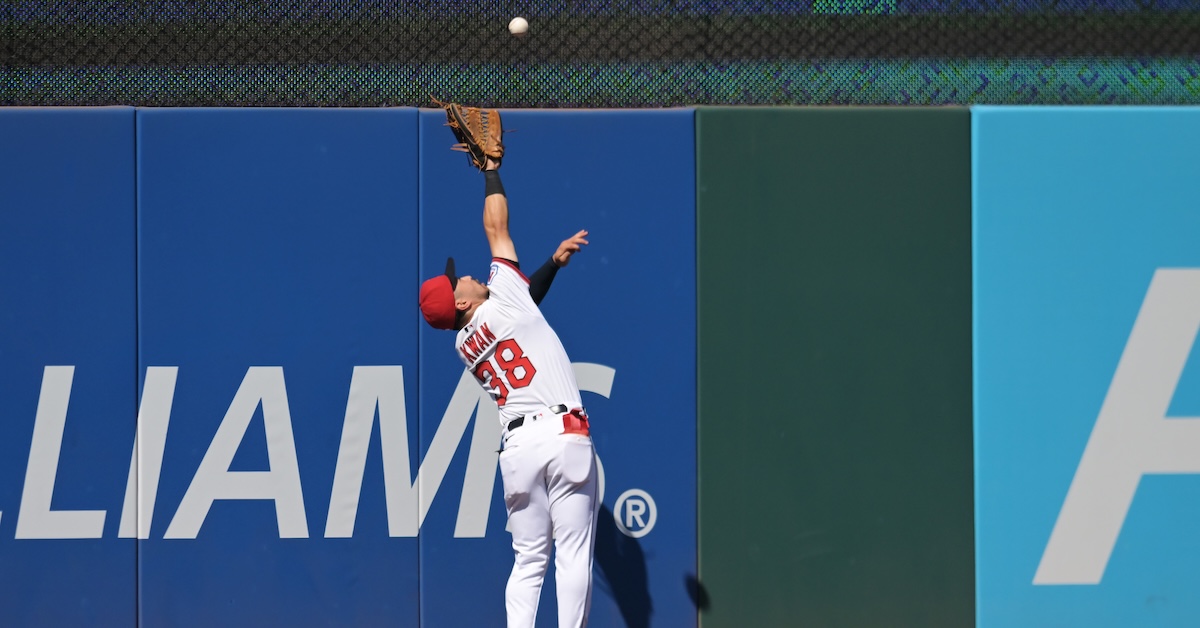
Kwan’s defense certainly receives plenty of appreciation. In two of his four major league seasons (2023 and 2025), he has swept the three advanced defensive metrics, finishing first among all left fielders in Defensive Runs Saved, Deserved Runs Prevented, and Fielding Run Value. In 2022, he finished first in both DRS and FRV, but didn’t lead in DRP. In 2024, he finished in second in FRV and fourth in DRS (but because of the arguably arcane innings minimum of 900, he did lead all Gold Glove-eligible left fielders in both metrics). The point of this complicated litany is that all of the major defensive metrics love Kwan, and that’s important because they use very different methods, methods don’t always line up. DRS detests Oneil Cruz, but FRV thinks he’s great. DRP loves Randy Arozarena even though the other two systems hate his guts. All the systems can agree on Kwan. Whether you’re breaking down video with human eyes or analyzing catch probability through the lens of a high-speed Statcast camera, when you look at Kwan, you’ll see the best left fielder in the game. Read the rest of this entry »


Cleveland Guardians Top 46 Prospects

Chase DeLauter Photo: Jeff Lange/USA TODAY NETWORK via Imagn Images

Below is an analysis of the prospects in the farm system of the Cleveland Guardians. Scouting reports were compiled with information provided by industry sources as well as our own observations. This is the sixth year we’re delineating between two anticipated relief roles, the abbreviations for which you’ll see in the “position” column below: MIRP for multi-inning relief pitchers, and SIRP for single-inning relief pitchers. The ETAs listed generally correspond to the year a player has to be added to the 40-man roster to avoid being made eligible for the Rule 5 draft. Manual adjustments are made where they seem appropriate, but we use that as a rule of thumb.

A quick overview of what FV (Future Value) means can be found here. A much deeper overview can be found here.

All of the ranked prospects below also appear on The Board, a resource the site offers featuring sortable scouting information for every organization. It has more details (and updated TrackMan data from various sources) than this article and integrates every team’s list so readers can compare prospects across farm systems. It can be found here. Read the rest of this entry »


JAWS and the 2026 Hall of Fame Ballot: Shin-Soo Choo

Jerome Miron-USA TODAY Sports

The following article is part of Jay Jaffe’s ongoing look at the candidates on the BBWAA 2026 Hall of Fame ballot. For a detailed introduction to this year’s ballot, and other candidates in the series, use the tool above; an introduction to JAWS can be found here. For a tentative schedule, see here. All WAR figures refer to the Baseball Reference version unless otherwise indicated.

2026 BBWAA Candidate: Shin-Soo Choo
Player Pos Career WAR Peak WAR JAWS H HR SB AVG/OBP/SLG OPS+
Shin-Soo Choo RF 34.7 29.3 32.0 1,671 218 157 .275/.377/.447 122
Source: Baseball-Reference

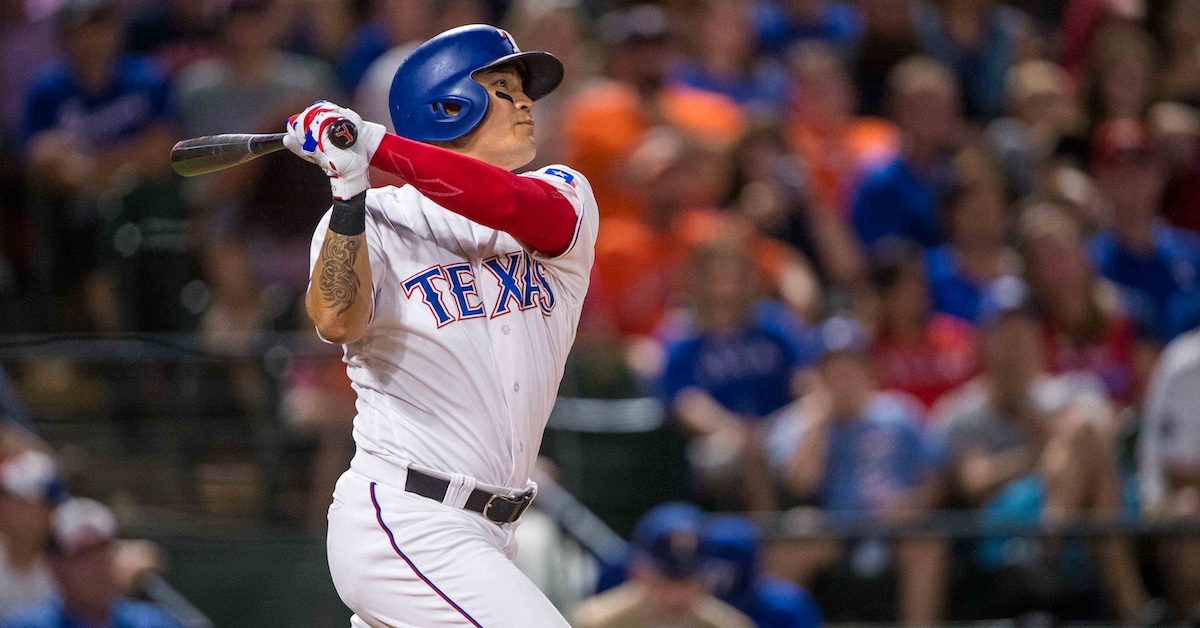
By the time Shin-Soo Choo reached the majors with the Mariners in 2005, nine South Korea-born pitchers had followed in the wake of Chan Ho Park, who debuted with the Dodgers in 1994, but just one position player preceded him, namely Hee-Seop Choi. It took a few years and a lopsided trade before Choo’s major league career got off the ground, and he lost significant time to a variety of injuries, but over the course of his 16 seasons with Seattle, Cleveland, Cincinnati, and Texas, he established himself as an on-base machine with considerable pop. He set a number of firsts, including becoming the first South Korean position player to make an All-Star team and now, the first such player to make a Hall of Fame ballot.

To these eyes, that latter distinction is a big deal. Most of the 12 newcomers on this year’s Hall of Fame ballot don’t have the numbers to merit election or even much debate. Their appearance on the ballot after spending at least 10 seasons in the majors with some distinction is its own reward, and with the deadline for voting now past, we’re in the part of the cycle where we can take the time to celebrate these players’ fine careers in their own right. A decade ago, I raised a bit of an international stink when Park — who spent 17 seasons in the majors (1994–2010), won 124 games (still the major league record for a player born in Asia, one ahead of former teammate Hideo Nomo), and became the first South Korea-born player to make an All-Star team — was left off. It felt like a needless snub. “Like Hideo Nomo, who blazed a trail for modern Japanese players to come to the majors, Park deserves the recognition that comes with a spot on the ballot,” I wrote for SI.com. I’ve made noise about other slights since then, and I think the situation has improved over time, so I’m particularly glad to see Choo here.

Shin-Soo Choo was born on July 13, 1982 in the Nam district of Busan, South Korea, a coastal city that is the country’s second-largest, behind Seoul. He’s the oldest son of father So-min Choo and mother Yu-jeon Park. He was born into a baseball family, as his mother’s brother, Jeong-Tae Park, starred as a second baseman for the KBO’s Lotte Giants from 1991–2004, winning five Gold Gloves (given to the best all-around player at each position, not just the best defender) and sealing the Giants’ 1992 championship by recording the final out in their Korean Series victory over the Binggrae Eagles. Read the rest of this entry »


Can You Make More Contact by Standing Closer to the Plate?

Sergio Estrada-Imagn Images

Back in the fall, Daniel R. Epstein of Baseball Prospectus wrote a couple of articles about where hitters stand in the batter’s box. Statcast released batting stance information last year as part of the ongoing rollout of bat tracking information that started in 2024. Understandably, the location of a hitter’s center of mass got a bit overshadowed by the wealth of information about how their bat moves through space and finds its way to the ball (or not), but Dan did his part to drag it into the light. He found a relationship between contact rate and where the batter stands. Specifically, standing deeper in the box and standing closer to home plate are both associated with higher contact rates.

Both of those findings are intuitive enough. Standing deeper in the box gives you a longer reaction time. It’s no surprise that batters who take advantage of that extra information make more contact. It’s also easy to spot a potential selection bias: The players in the back of the box are likely back there because they’re the kind of contact-oriented players who want the extra reaction time.

I saw less of a physical reason for players who stand farther from home plate to make more contact, unless they stand so far from the plate that they have trouble reaching the outside corner, but (almost) nobody actually does that. It might take your bat head slightly longer to reach the outside part of the plate, but the ideal contact point for an outside pitch is deeper anyway, so I assumed the two would balance out and chalked the difference up to selection bias. Bigger players with longer arms naturally feel more comfortable farther away from home plate, and those bigger players tend to have more powerful swings, which tend to result in more whiffs. Causation isn’t correlation, and I wasn’t ready to go so far as to assume that standing farther away from home plate actually causes a batter to make less contact. Then I watched A League of Their Own again. Read the rest of this entry »


Sunday Notes: The Minnesota Twins Have a (Mostly) High-Pick Homegrown Lineup

The composition of the Minnesota Twins’ projected starting lineup caught my eye while I was perusing Roster Resource during the Winter Meetings. Not only were all but two of the nine position players homegrown: each of those seven was drafted in either the first or second round. Byron Buxton (first round in 2012) is the oldest of the bunch, while Luke Keaschall (second round in 2023) is the youngest and most recent.

Where do the Twins rank among MLB clubs in terms of homegrown position-player starters taken in the first two rounds? According to Jon Becker, who along with Jason Martinez keeps Roster Resource running like a well-oiled machine, the Minnesotans top the list. Moreover, while the Baltimore Orioles have six, and three other clubs have five, the rest have notably fewer. Fully half of the 30 teams have no more than three, including the Houston Astros, Miami Marlins, and Toronto Blue Jays, who have none.

My colleague provided me with some other roster-construction breakdowns as well, but before we get to those, let’s hear from Minnesota’s president of baseball operations. I asked Derek Falvey what the aforementioned seven-of-nine says about his organization. Read the rest of this entry »


And the 2025 Kit Keller Award Goes To…

Courier & Press-USA TODAY NETWORK

I got sick last week. So did my wife. We canceled our plans. We spent the weekend horizontal. We watched TV. On Sunday morning, I woke up and found my wife on the couch watching A League of Their Own. I did what anyone does when they catch a glimpse of the greatest baseball movie of all time on television. I sat down and watched the rest of it.

I’m still kind of sick. My wife is still fully sick. A League of Their Own is still on my mind. Specifically, I’ve been thinking about the scouting report that Rockford Peaches catcher Dottie Hinson (Geena Davis) delivered to pitcher Ellen Sue Gotlander (Freddie Simpson) with two outs and the tying run on first in the bottom of the ninth in Game 7 of the World Series in Racine. I had useful thoughts, and we’ll get to those in a moment. First, though, we’re going to wade through some useless thoughts. I beg you to humor me, because I am about to critique the baseball strategy in a perfect movie. I told you I’m sick.

There’s nothing wrong with making a mound visit in a big moment, giving the pitcher a break and reminding them of the scouting report. But the batter was Hinson’s sister Kit Keller (Lori Petty), who spent nearly the entire season with the Peaches, then faced them throughout the Series, including three times alone in Game 7. There’s no way Ellen Sue needed a refresher on that particular scouting report. Then, there’s the scouting report itself. “High fastballs,” Dottie said. “Can’t hit ‘em, can’t lay off ‘em.” It was right on the money, but they didn’t have to follow it on every single pitch, did they? Once they’d jumped ahead 0-2, did it never occur to Dottie or Ellen Sue to waste a breaking ball in the dirt in order to reset Kit’s eye level? I don’t care who’s at the plate; you can’t throw the same pitch to the same spot three times in a row and expect to get away with it. Read the rest of this entry »


JAWS and the 2026 Hall of Fame Ballot: Edwin Encarnación

Nick Turchiaro-USA TODAY Sports

The following article is part of Jay Jaffe’s ongoing look at the candidates on the BBWAA 2026 Hall of Fame ballot. For a detailed introduction to this year’s ballot, and other candidates in the series, use the tool above; an introduction to JAWS can be found here. For a tentative schedule and a chance to fill out a Hall of Fame ballot for our crowdsourcing project, see here. All WAR figures refer to the Baseball Reference version unless otherwise indicated.

Though he was athletic enough to be drafted as a shortstop, Edwin Encarnación never found much success in the field. Through his first seven seasons with the Reds and Blue Jays, his defensive miscues offset generally solid offense, so much so that he earned the derisive nickname “E5” (as in error, third base). But as with his late-blooming teammate in Toronto, José Bautista, when adjustments to Encarnación’s swing unlocked his in-game power, he became a force to be reckoned with.

Surrendering his third baseman’s mitt and splitting time between first base and designated hitter definitely helped. From 2012–19, Encarnación hit a major league-high 297 homers, with at least 32 in every season, and a high of 42, set in ’12 and matched in ’16. He never led the league, but placed among the AL’s top five four times, and within the top 10 in three other seasons. Among players with at least 2,500 plate appearances in that span, his 138 OPS+ ranks 10th.

The one-two punch of Bautista and Encarnación kept the Blue Jays entertaining through some lean years, and with the arrivals of third baseman Josh Donaldson and catcher Russell Martin in 2015, the team reached the playoffs for the first time since winning back-to-back World Series in 1992–93. Toronto did it again the next year, punctuated by Encarnación’s three-run walk-off homer off the Orioles’ Ubaldo Jiménez to win the 2016 AL Wild Card Game. Read the rest of this entry »