Archive for Red Sox

Sunday Notes: David Cone Tackles a Challenging Career Quiz

Last summer, an article titled Mark Gubicza Tackles a Challenging Career Quiz ran here at FanGraphs. In it, the Los Angeles Angels broadcaster did his best to answer matchup-specific questions from his playing days —- he pitched in the big leagues from 1984-1996 — such as which batter he allowed the most hits to, and who took him deep the most times. Along with taking a stab at the answers, Gubicza shared entertaining anecdotes about some of the hitters that were mentioned.

He isn’t the only pitcher-turned-broadcaster I challenged with (a version of) the quiz. Later in the season, I sat down with David Cone who, much like his 1980s-1990s contemporary, had fun stories to share.

I first asked the New York Yankees broadcast analyst which batter he faced the most times. Cone failed to come up with the correct answer, first guessing Will Clark (76 plate appearances), and then Juan Gonzalez (57), to who he recalled surrendering several gophers.

The answer is Roberto Alomar, against whom he matched up 93 times. What does he remember about facing the Hall of Fame second baseman?

“The thing that stands out — and he was a teammate of mine, too — is that Robbie was one of the best at picking up tipped pitches,” Cone told me. “Maybe a pitcher was doing something with his glove, and you kind of knew that Robbie would see that. But a lot of times he was using it as a bluff. Alex Cora does it to this day. You want the pitcher to think you have something on him, which gets into his head. It’s psychological warfare, and Robbie was the best at that.”

The batter with the most hits against him? Read the rest of this entry »

White Sox Take Two Steps Toward Stinking Less

Jayne Kamin-Oncea and David Butler II-Imagn Images

Not every team shows up for spring training with a reasonable hope of winning the World Series, but there is a grand, overarching narrative to follow in every camp. For the Chicago White Sox, it’s whether they can achieve an all-Sean-and-Shane starting rotation — they’re currently 60% of the way there.

That might sound like a modest goal, but it’s a lot more ambitious than what they set out to achieve just last year: Avoid losing 120 games. Again. The White Sox will sink or swim (or at least sink more slowly) based on how their young homegrown players perform, but Chicago’s supporting cast is looking relatively OK.

All the more so after this weekend, when the White Sox made two moves: signing free agent outfielder Austin Hays to a one-year contract, and trading for Red Sox pitchers Jordan Hicks and David Sandlin. Read the rest of this entry »


Sunday Notes: Grant Fink Helps Steven Kwan Keep the Bumpers On

Davy Andrews recently wrote about Steven Kwan’s defense, which, as my colleague chronicled, has been demonstrably stellar. Not only has the 28-year-old Cleveland Guardians left fielder been awarded a Gold Glove in each of his four MLB seasons, the metrics back up the accolades. There hasn’t been a better defender at his position, and that goes for the senior circuit as well as the American League.

And then there is Kwan’s bat. The 2018 fifth-round pick out of Oregon State University isn’t a basher, but he is a solid contributor to the Guardians offense. Since debuting in 2022, the erstwhile Beaver has slashed .281/.351/.390 with a 112 wRC+. Moreover — this is no secret for most FanGraphs readers — he seldom goes down by way of the K. Kwan’s 9.5% strikeout rate over the past four campaigns is the lowest among qualified hitters not named Luis Arraez.

Grant Fink knows his left-handed stroke as well as anyone. Cleveland’s hitting coach tutored Kwan in the minors before moving into his current role, and they work together in the offseason. I asked Fink about two-time All-Star when the Guardians visited Fenway Park last September.

“If you look at his profile as a hitter in the major leagues, it is based on accuracy and ball flight,” Fink told me. “His key is making sure that his body is moving in a way where he can get his barrel to the ball in multiple places in the zone, and that he is making contact in the right windows to produce that consistent ball flight. Read the rest of this entry »


Let’s Hear About, and From, a Quartet of Red Sox Southpaws

Eric Hartline and Paul Rutherford-Imagn Images

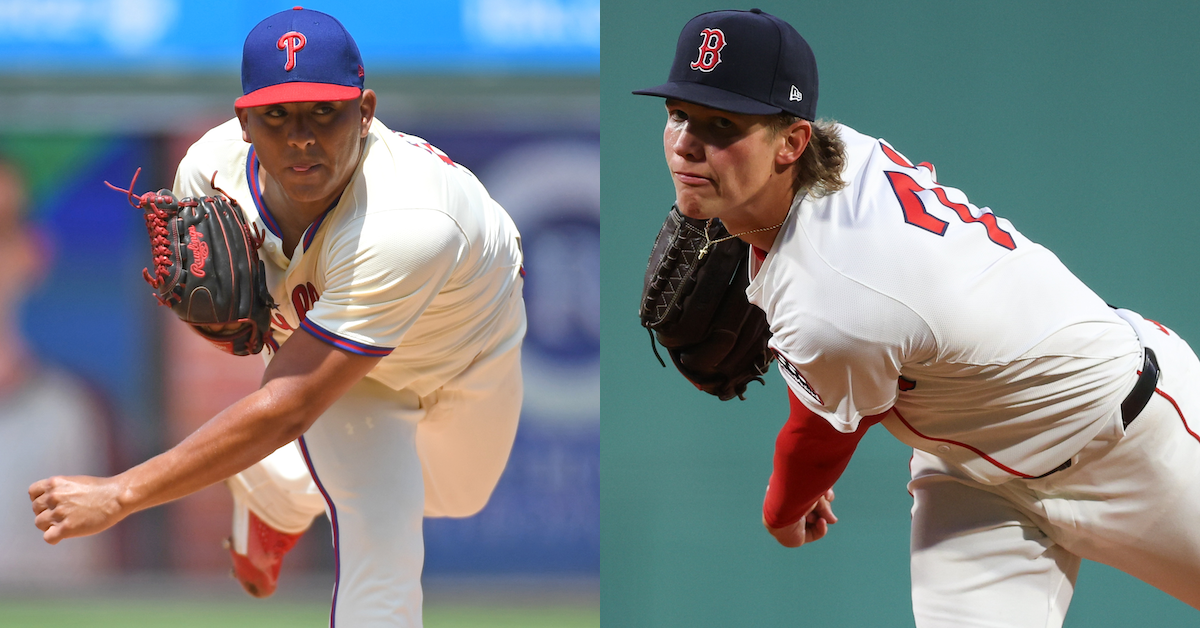
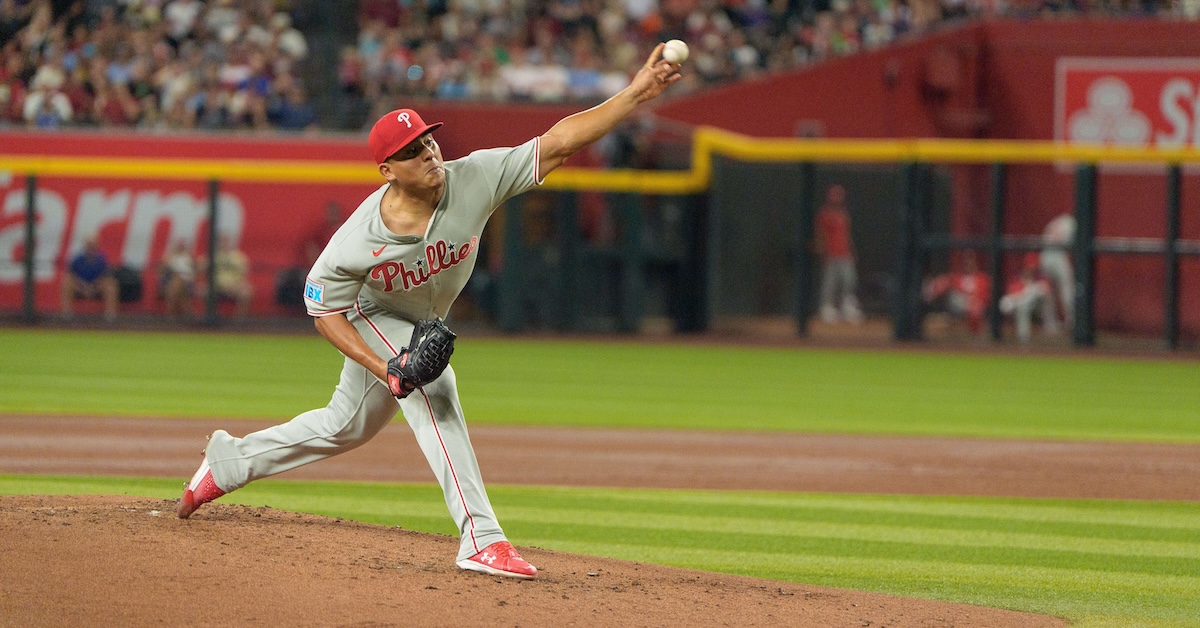
When Eric Longenhagen put together our 2018 Philadelphia Phillies top prospects list, he described southpaw Ranger Suárez as “small but athletic and mechanically efficient, unfurling a sinker/slider combination that has a chance to play at the back of a rotation.” Having yet to pitch above High-A, the 22-year-old Suárez was assigned a 40 FV and a 2020 ETA.

He has gone on to exceed expectations. Not only did Suárez reach the majors earlier than anticipated — July of that same season — he has evolved into a frontline starter. After first establishing himself as a reliever, the Pie de Cuesta, Venezuela native moved into the Phillies rotation in August 2021, and since then, he boasts a 3.39 ERA and a 3.45 FIP over 654 frames. Moreover, he has gone 4-1 with a 1.48 ERA in the postseason, a contributing factor to his desirability in the free agent market. As chronicled by my colleague Davy Andrews, the Red Sox inked Suárez to a five-year, $130-million deal earlier this month.

When Sonny Gray met with the Boston media after being acquired via trade from the St. Louis Cardinals in late November, I asked the veteran right-hander if he feels settled in to who he’ll be going forward, or if he foresees making any changes to his repertoire or pitch usage. I haven’t had an opportunity to ask that question to Suárez, but I did present a version of it to Red Sox chief baseball officer Craig Breslow. Does the organization’s pitching brain trust anticipate suggesting any tweaks, or do they view the 30-year-old lefty as someone who already optimizes his talents? Read the rest of this entry »


Sunday Notes: Bobby Abreu, Jimmy Rollins, Chase Utley, and the 2026 HoF Ballot

This year’s Hall of Fame ballot included three former Philadelphia Phillies position players, none of whom received the necessary 319 votes (out of 425 cast) to gain election. Chase Utley fared best with 251 votes (59.1%), while Bobby Abreu got 131 (30.8%), and Jimmy Rollins received 108 (25.4%). As did my colleagues Jay Jaffe and Dan Szymborski, I put checkmarks next to Abreu’s and Utley’s names, but not Rollins’s.

How did other BBWAA voters choose among the Phillies trio? A comprehensive answer isn’t possible — not everyone makes their ballots public — but we do know about the 260 voters whose selections were shared on Ryan Thibodaux’s Ballot Tracker. Here is the breakdown as of yesterday afternoon courtesy of the Tracker’s Anthony Calamis:

66 voted for none of the three.
25 had all three.
52 had only Utley.
9 had only Abreu.
3 had only Rollins.
63 had Utley and Abreu, but not Rollins.
42 had Utley and Rollins, but not Abreu.

As for the players’ relative merit, that is in the eye of the beholder. Reasonable arguments, both for and against, can be made for all three former Phillies by prioritizing specific statistics and accolades — or even reputations (none of Abreu, Rollins, or Utley have been tainted by scandal). Read the rest of this entry »


Sunday Notes: Red Sox Prospect Franklin Arias Aspires To Out-Power Luis Arraez

Franklin Arias has a bright future in Boston. Signed out of Venezuela in 2023, the 20-year-old shortstop is the top position-player prospect in the Red Sox system thanks to plus tools on both sides of the ball. A slick-fielder — Eric Longenhagen has described him as an incredibly polished defender for his age” — Arias possesses a line-drive stroke that produced a 109 wRC+ across three levels last season. And while that number may not jump off the page, it stands out when put into context: the Caracas native not only played the entire year as a teenager, he finished it in Double-A.

The degree to which he can boost his power profile will go a long way toward determining his ceiling. Currently more contact than pop, Arias went deep just eight times in 526 plate appearances. At a listed 5-foot-11, 170 pounds, he is by no means built like a bopper.

Red Sox farm director Brian Abraham brought up that aspect of Arias’s game when I asked him about the young infielder earlier this week.

“He’s a guy who makes really good swing decisions,” Abraham said of Arias, who posted a 10.1% strikeout rate and a 5.3% swinging-strike rate in 2025. “He puts the bat on the ball and can drive it to all fields. We’re looking to see him add size and strength so that he can really impact the ball pull-side in the air.

“It’s definitely in there,” added Abraham. “We’ve seen flashes of it, it’s just a matter of him being able to do that on a consistent basis. As a young player who is continuing to grow and get bigger, I think it will come out the more he is able to hit the ball out front and drive it to the pull side. Right now I would say that he is a contact hitter with occasional power, and that the power can be more consistent than it has been.”

Not surprisingly, Arias echoed Abraham’s thoughts when addressing his near-term development goals. Read the rest of this entry »


How the Red Sox Could Miss Out on All the Big Free Agent Infielders and Still Come Out Ahead

John E. Sokolowski-Imagn Images

Things have been a little testy in Boston of late. It’s all downstream of the decision, in June, to trade — salary dump, reallyRafael Devers to San Francisco. I won’t relitigate the blow-by-blow, but Boston had just made the opportunistic signing of Alex Bregman and anointed Kristian Campbell as their second baseman of the future. Coupled with Trevor Story’s return to decentness after two years lost to injury, to say nothing of Marcelo Mayer’s rapid development, that left the Sox with more infielders than they could use.

Now, having seen what’s happened to Devers’ in-zone contact rate over the past two seasons, I think in the long run Red Sox fans will be happy they don’t have to watch the last eight and a half years of his contract up close. But for now, everyone’s nerves are a still a little raw. It’s always tough parting with a homegrown superstar, but the player Boston seemingly chose over Devers is quite good himself… oh wait, Bregman opted out of the last two years of his contract and signed with the Cubs. Read the rest of this entry »


Red Sox Jump Into Free Agency With Five-Year Deal for Ranger Suárez

Allan Henry-Imagn Images

The Red Sox have finally done it. On Wednesday afternoon, the Sox became the last team in baseball to agree to terms with a major league free agent and they did so with a bang, nabbing southpaw Ranger Suárez on a five-year deal worth $130 million. Jon Heyman of the New York Post first reported the signing, while Bob Nightengale of USA Today reported the terms. Alex Speier of the Boston Globe reported that the deal contained no deferred money, meaning that the average annual value is a straight $26 million. Setting aside Alex Bregman’s opt-out laden pillow contract and several two-year deals given to pitchers who missed the first while recovering from injuries, this represents the first true multi-year commitment the team has made to a free agent during the tenure of chief baseball officer Craig Breslow. The Red Sox are finally going for it using every means available, and with one of the game’s most consistently good (if not consistently available) starting pitchers on their roster, they are looking more and more like a championship contender.

The Red Sox went into the offseason with one of the game’s greatest starters in Garrett Crochet, but there was a big gap between him and the rest of the rotation, which featured a number of solid pitchers who hadn’t managed to step up and grab the no. 2 spot in Brayan Bello, Tanner Houck, and Kutter Crawford. Boston upgraded through trades for Sonny Gray and Johan Oviedo, and according to our depth charts, they projected to have the best rotation in the game even before signing Suárez (the Phillies, even without Suárez, rank fourth).

Still, this is a different caliber of move, the effects of which seem likely to cascade down the roster. It represents a major commitment in both years and dollars, and according to RosterResource, it pushes Boston just over the second luxury tax threshold. All of a sudden, Bello and Co. are likely jockeying for the fourth or fifth spot in the rotation rather than the second. The Red Sox also boast Patrick Sandoval, who missed the 2025 season recovering from internal brace surgery, and Kyle Harrison, who came over in the Rafael Devers trade and projects for an above-average line in 2026. We’ve now named nine different viable big league starters, before you even get to coveted prospects like Payton Tolle and Connelly Early, who debuted in 2025. That’s a lot of depth to deal from, freeing Boston up to trade a starter and maybe some of its outfield surplus to reinforce a particularly weak infield. Read the rest of this entry »


JAWS and the 2026 Hall of Fame Ballot: Rick Porcello

Brian Fluharty-USA TODAY Sports

The following article is part of Jay Jaffe’s ongoing look at the candidates on the BBWAA 2026 Hall of Fame ballot. For a detailed introduction to this year’s ballot, and other candidates in the series, use the tool above; an introduction to JAWS can be found here. For a tentative schedule, see here. All WAR figures refer to the Baseball Reference version unless otherwise indicated.

2026 BBWAA Candidate: Rick Porcello
Pitcher Career WAR Peak WAR Adj. S-JAWS W-L SO ERA ERA+
Rick Porcello 18.8 18.3 18.6 150-125 1,561 4.40 99
Source: Baseball-Reference

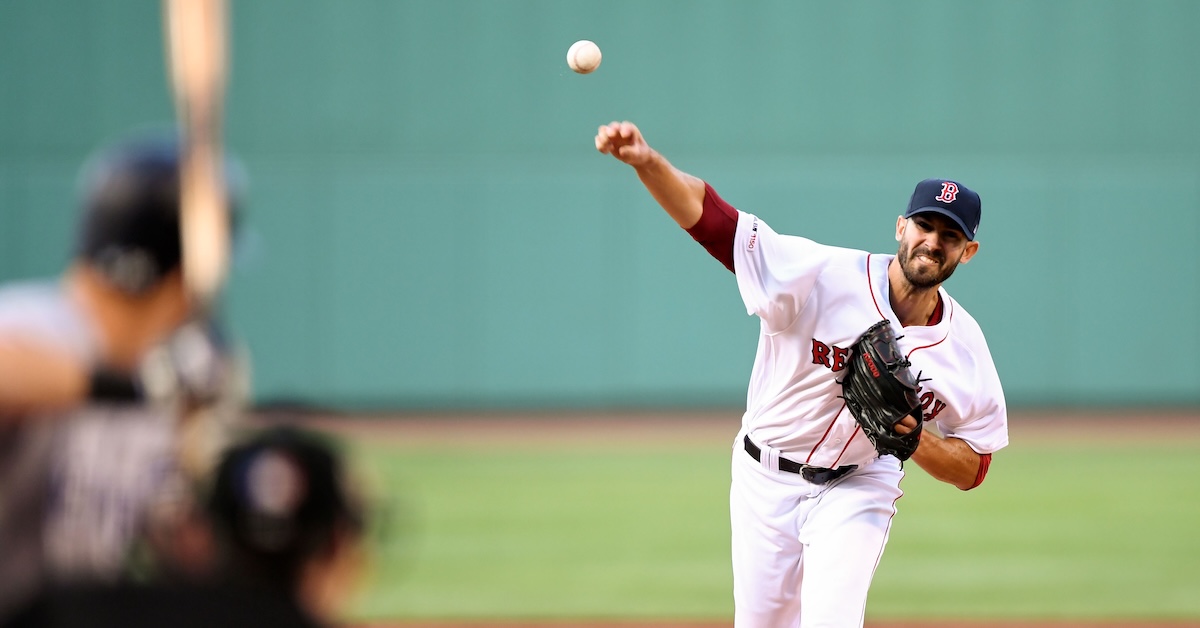
He was a first-round draft pick, and a rotation regular at age 20. By the time he turned 30, he had won both a Cy Young Award and a World Series ring while helping his teams reach the playoffs six times. On the heels of emerging as the best high school pitching prospect in the country, Rick Porcello packed all of that into a 14-season span, with 12 of those seasons spent in the majors with the Tigers, Red Sox, and Mets. He endured a fair share of growing pains and wild performance swings along the way, threw his last pitch at age 31, and didn’t put up numbers that will keep him on the Hall of Fame ballot. But within that comparatively short timespan, Porcello checked a few pretty impressive boxes.

Frederick Alfred Porcello III was born on December 27, 1988 in Morristown, New Jersey, the second of three children of Fred and Patricia Porcello. Fred worked as a civil engineer, founding his own firm in 1994. Baseball was in Rick’s bloodlines, as Patricia’s father Sam Dente spent parts of nine seasons in the majors (1947–55) as an infielder with six American League teams; he had his best season (79 OPS+, 1.2 WAR) with Cleveland’s AL pennant-winning 1954 squad, and played in three games in that World Series. Rick’s older brother Zack pitched for Lehigh University and the New Jersey Institute of Technology, and later became an assistant coach at Seton Hall University, while his younger brother Jake was drafted by the Tigers out of high school in the 48th round in 2009, and pitched at NJIT as well. Read the rest of this entry »


Sunday Notes: The Minnesota Twins Have a (Mostly) High-Pick Homegrown Lineup

The composition of the Minnesota Twins’ projected starting lineup caught my eye while I was perusing Roster Resource during the Winter Meetings. Not only were all but two of the nine position players homegrown: each of those seven was drafted in either the first or second round. Byron Buxton (first round in 2012) is the oldest of the bunch, while Luke Keaschall (second round in 2023) is the youngest and most recent.

Where do the Twins rank among MLB clubs in terms of homegrown position-player starters taken in the first two rounds? According to Jon Becker, who along with Jason Martinez keeps Roster Resource running like a well-oiled machine, the Minnesotans top the list. Moreover, while the Baltimore Orioles have six, and three other clubs have five, the rest have notably fewer. Fully half of the 30 teams have no more than three, including the Houston Astros, Miami Marlins, and Toronto Blue Jays, who have none.

My colleague provided me with some other roster-construction breakdowns as well, but before we get to those, let’s hear from Minnesota’s president of baseball operations. I asked Derek Falvey what the aforementioned seven-of-nine says about his organization. Read the rest of this entry »