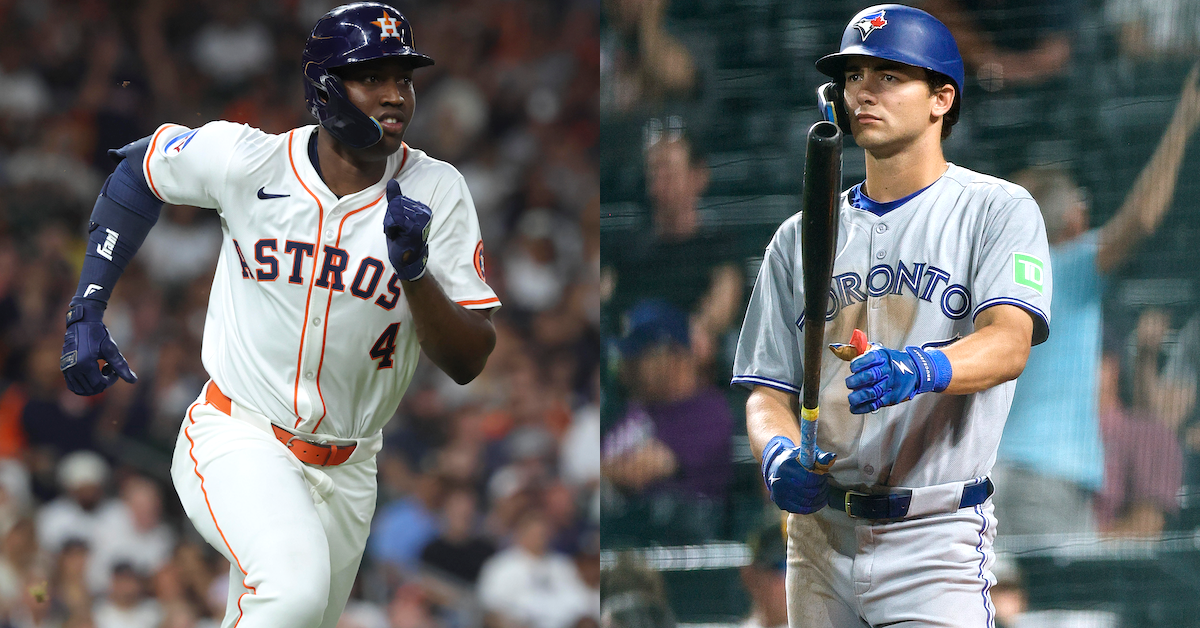
Most people have never been traded. Most people find a job and go there until they find a better one (or until they move or they get fired or they can’t take it anymore or they die). I don’t have any friends or relatives who showed up for work one day only to be told, “Oh, you don’t work here anymore. We’ve decided you work for the competition.” It must be even weirder for Joey Loperfido, who got traded from the Astros to the Blue Jays at the deadline in 2024 and is now getting traded back. Somewhere out there is an elephant who got pregnant the day the Astros traded Loperfido to the Jays, and that elephant won’t give birth until June.
The 26-year-old Loperfido is headed back to the Astros in a one-for-one lefty-hitting corner outfielder swap for Jesús Sánchez. Sánchez must be feeling like the subject of buyer’s remorse, too, as the Astros traded for him at the 2025 deadline, a mere 197 days ago. Any humans who got pregnant the day of that trade still have another month or so before they actually have to assemble the crib. As starkly as it outlines the differences between the life of a baseball player and the life of a human with a regular job, the trade makes its own sense. We’re going to start in Toronto, because although it involves a lot of platoon finagling, the situation there is simpler. Read the rest of this entry »
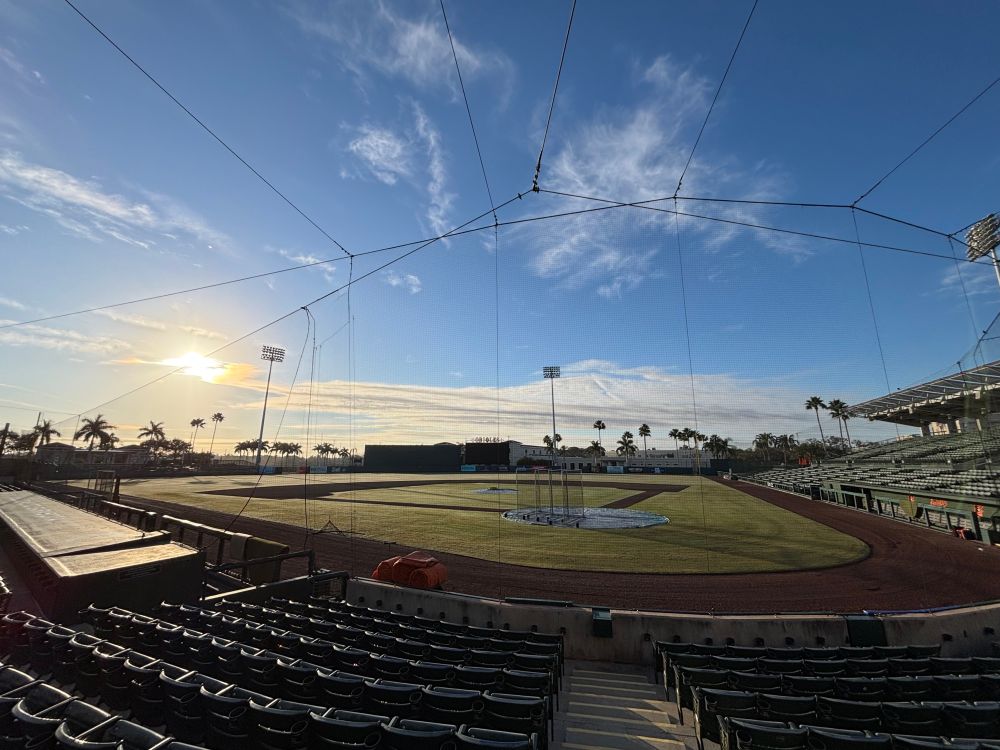
One of the things that happens when pitchers and catchers report to camp is that managers update everyone on any unreported offseason developments. Unfortunately, few of those updates are about fun new cocktails they tried or animals they saw on vacation. It brings me no pleasure to tell you I have yet to see one single beat reporter file a story about a manager who saw a really cool sea turtle while snorkeling. Most of those developments are injuries, which meant that Tuesday was at once a glorious rite of the coming spring and an unbearably heavy dump of unpleasant injury news. Today we’re going to focus on the depressing dump, so courtesy of Andy Kostka of The Baltimore Banner, here’s a gorgeous picture that captures the eternal hope of spring training as a little pre-casualty report treat to soften the blow.
Andy Kostka
Wow. That was beautiful. Thank you, Andy. Now we’ll get miserable, but please remember that it could always be worse. We could be back in the 1880s, when the unpleasant health updates weren’t about who broke their hamate bone, but about who died of consumption. (The preceding sentence was originally intended to be a joke, but guess what.) Read the rest of this entry »
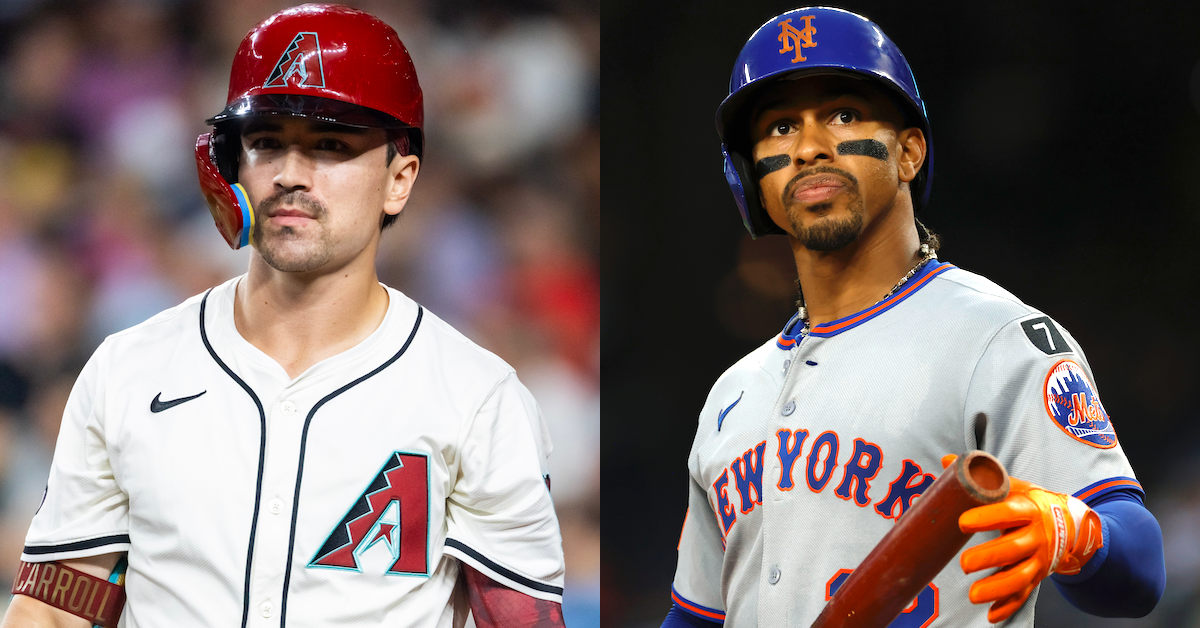
Ben Lindbergh and Meg Rowley banter about MLB player chatbots, an Addison Barger giveaway, Tarik Skubal’s big arbitration win, the Tigers signing Framber Valdez, and a rough week for sports media, then (36:29) begin the 14th annual EW season preview series by discussing the 2026 Houston Astros with The Athletic’s Chandler Rome, and the 2026 Arizona Diamondbacks (1:25:35) with The Arizona Republic’s Nick Piecoro, followed (1:54:53) by a postscript.
For the 22nd consecutive season, the ZiPS projection system is unleashing a full set of prognostications. For more information on the ZiPS projections, please consult this year’s introduction, as well as MLB’s glossary entry. The team order is selected by lot, and the next team up is the Houston Astros.
Batters
For the first time since 2016, the Houston Astros missed the playoffs. Now, it would be a mistake to call the 2025 season a disaster, as they were just barely squeezed out of October baseball by virtue of an awful idea that I hate with every fiber of my being: the tiebreaker. Still, it’s an unhappy milestone for this era’s Astros, especially coming after the departure of two of the team’s key players, Kyle Tucker and Alex Bregman, before Opening Day. The prospect of losing Framber Valdez after the season makes the early elimination feel even worse.
One of the main reasons Houston missed the playoffs is simply that it’s really hard to make up for shedding Tucker and Bregman in a single winter. Add in Yordan Alvarez’s season being ruined due to hand problems, and you’re talking quite a few wins that suddenly went poof! into the aether. As a result, the Astros fell to 12th in position player WAR, the first time they’ve been that low over a full season since 2014. Read the rest of this entry »
The following article is part of Jay Jaffe’s ongoing look at the candidates on the BBWAA 2026 Hall of Fame ballot. For a detailed introduction to this year’s ballot, and other candidates in the series, use the tool above; an introduction to JAWS can be found here. For a tentative schedule, see here. All WAR figures refer to the Baseball Reference version unless otherwise indicated.
2026 BBWAA Candidate: Hunter Pence
Player
Pos
Career WAR
Peak WAR
JAWS
H
HR
SB
AVG/OBP/SLG
OPS+
Hunter Pence
RF
30.9
26.2
28.6
1,791
244
120
.279/.334/.461
114
Source: Baseball-Reference
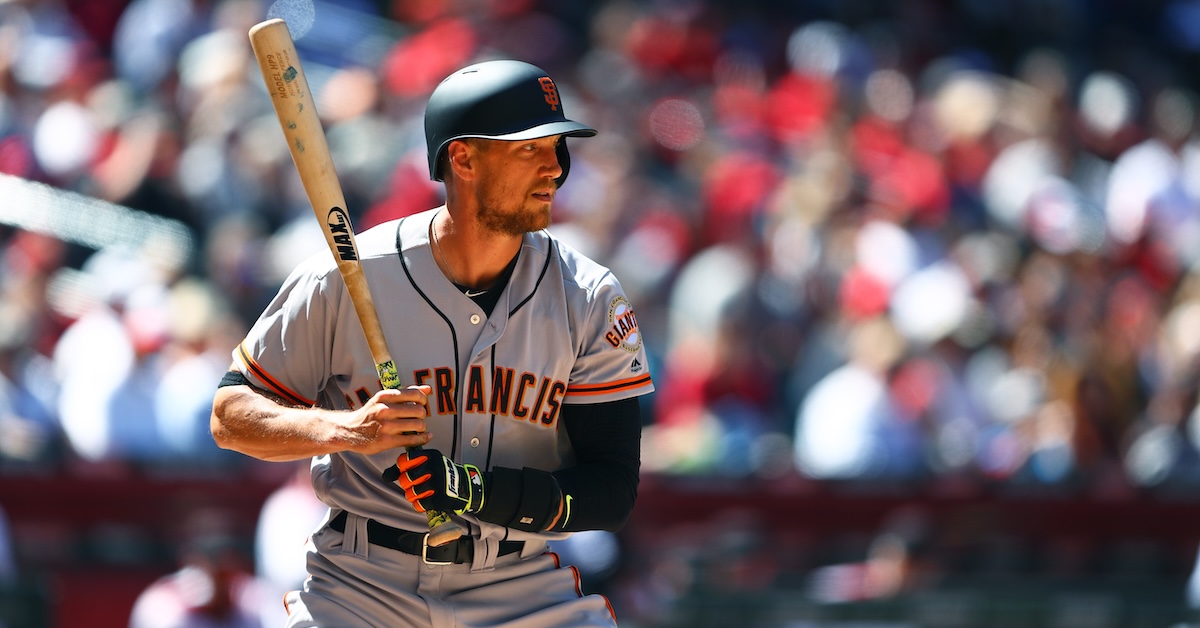
The great Vin Scully often describedHunter Pence as “all elbows and kneecaps,” and if you never understood the meaning of that colorful phrase, one look at the gangly 6-foot-4 right fielder, with his unorthodox swing, gait, and throwing mechanics, would explain a whole lot. Amplified by his high socks and what more thanone writertermed his “bug-eyed intensity,” Pence’s on-field style was anything but textbook. As it turns out, there was a reason for that: In 2013, he was diagnosed with a condition called Scheuermann’s Disease, which caused his vertebrae to grow at different rates, deprived him of flexibility in his thoracic spine, and led him to find ways to compensate. Despite that significant disadvantage, Pence carved out an impressive 14-year major league career, making four All-Star teams and helping the Giants win the 2012 and ’14 World Series. Read the rest of this entry »
Yesterday, the New York Post’s Jon Heyman reported that Japanese pitcher Tatsuya Imai has agreed to a three-year, $54 million pact with the Houston Astros (ESPN’s Jesse Rogers had the length). The deal includes opt outs after each of the first two years, essentially a “prove it” contract that gives Imai the opportunity to re-enter free agency should he quickly demonstrate that he’s better than the open market seemed to think he was during this posting period. Speaking of the posting system, note that the Astros will also pay Imai’s Japanese club, the Seibu Lions, just shy of $10 million under the current MLB/NPB posting agreement’s formula (20% of the contract’s first $25 million, 17.5% of the next $25 million, and 15% of anything over $50 million). The deal also features $9 million in escalator clauses that kick in as Imai approaches and crosses the 100-inning threshold during his first two seasons, bringing Houston’s total potential expenditure to roughly $73 million.
This deal is shorter and less lucrative than was generally expected by pundits (including yours truly) when it became known that Imai would be posted; Ben Clemens forecast a five-year, $100 million deal, while our median crowdsource estimate was for four years and $64 million before the posting fee. Imai is 27-years-old, he’s coming off of his best pro season after multiple consecutive years of improved strike-throwing, and he checks several of the visual scouting and data analytics boxes you want from a mid-rotation starter. What could be the reason(s) for the discrepancy between our collective expectations and Imai’s actual payday, and where does he fit into Houston’s rotation?
Let’s revisit the background on Imai. He was the Seibu Lions’ 2016 first round pick out of a high school in Utsunomiya City, a metro roughly the size of Tucson that’s about 80 miles north of Tokyo. He spent a year in the minors and then hopped right into the Lions rotation as a 20-year-old in 2018. Throughout his early and mid-20s, Imai was a walk-prone (but effective) starter. He dealt with multiple ailments in 2022 (including a right adductor injury), then took a step forward as a strike-thrower and an innings-eater in each of the next three seasons, becoming one of NPB’s best arms. Across the 2022-25 seasons, Imai halved his walk rate (from the 14% area to 7%), expanded his repertoire, and improved his fastball velocity even as his innings count grew to north of 160 frames. He’s had four consecutive seasons with an ERA under 2.50 (even while he was wild), and in 2025, he posted a 1.92 ERA and 2.01 FIP. Read the rest of this entry »
Summary:
The Houston Astros are seeking individuals with professional baseball coaching aspirations to participate in a virtual education program with the potential for an invitation to an off-season Player Development camp at the Astros’ spring training complex in West Palm Beach, Florida.
Staff Identification program participants will be immersed and exposed to the inner workings of the Astros Player Development department and provided the opportunity to learn from current staff and coordinators. Additionally, program participants will be provided with professional development classes to further their knowledge of specific player development disciplines.
Format:
Program will begin in April 2026
Biweekly virtual meetings via Microsoft Teams
Select participants may receive an invitation to an off-season Player Development camp in West Palm Beach, FL in the fall of 2026
Objectives:
Introduce the foundational elements of the professional player development system
Develop basic competency in pitching, hitting, and defensive instruction
Leverage biomechanics and quantitative information to design effective practice settings
Interpret basic baseball performance data and apply it to coaching and personnel decisions
Learn to communicate effectively with athletes and staff from other disciplines
Produce an individualized player plan and receive feedback from staff
Candidates should have interest in the following topics:
Roster restrictions and decisions in minor league baseball
Foundations of pitching, hitting, and defensive development
Baserunning instruction
Informed development using sports science testing, biomechanics, on-field technology, high-speed video, and in-game data as well as practice design for hitting, pitching, and defense
Requirements / Qualifications:
Interest in on-field coaching, including throwing batting practice and hitting fungo
Curiosity about player development, strength & conditioning, and analytics
Some familiarity with information and/or tools used in professional baseball
Strong interpersonal/communication skills and work ethic
Professional or collegiate playing experience is a plus
Proficiency in Spanish is a plus
Other Notes:
Program will be at no cost to selected participants
If selected to participate in person, travel and hotel expenses will be covered by the Houston Astros
The Pirates, Rays, and Astros came together on a three-team trade on Friday. In the move, Pittsburgh acquired Brandon Lowe, Jake Mangum, and Mason Montgomery from Tampa Bay. The Bucs sent Mike Burrows to Houston, who in turn dealt Jacob Melton and Anderson Brito to the Rays. Multi-teamers are always complicated, and I find it most helpful to break these down team by team.
Pittsburgh Pirates
Acquires: 2B Brandon Lowe, OF Jake Mangum, LHP Mason Montgomery
Loses: RHP Mike Burrows
The motivation for the Pirates here is obvious, as they entered the offseason with a dire need to convert their pitching surplus into a few bats. The Pirates scored 583 runs this past season, the fewest in baseball, and only Colorado saved their collective 82 wRC+ from bringing up the rear in that category, as well. At the same time, the team’s pitching development pipeline is humming. Paul Skenes is the best pitcher in the NL, and Mitch Keller is a solid mid-rotation starter behind him.
The following article is part of Jay Jaffe’s ongoing look at the candidates on the BBWAA 2026 Hall of Fame ballot. For a detailed introduction to this year’s ballot, and other candidates in the series, use the tool above; an introduction to JAWS can be found here. For a tentative schedule and a chance to fill out a Hall of Fame ballot for our crowdsourcing project, see here. All WAR figures refer to the Baseball Reference version unless otherwise indicated.
For the past several election cycles, as a means of completing my coverage of the major candidates before the December 31 voting deadline, I’ve grouped together some candidates into a single overview, inviting readers wishing to (re)familiarize themselves with the specifics of their cases to check out older profiles that don’t require a full re-working because very little has changed, even with regards to their voting shares. This year, I’m adding Bobby Abreu — a candidate for whom I’ve voted five times thus far and intend to include again — to a pair I’ve yet to include on my ballots.
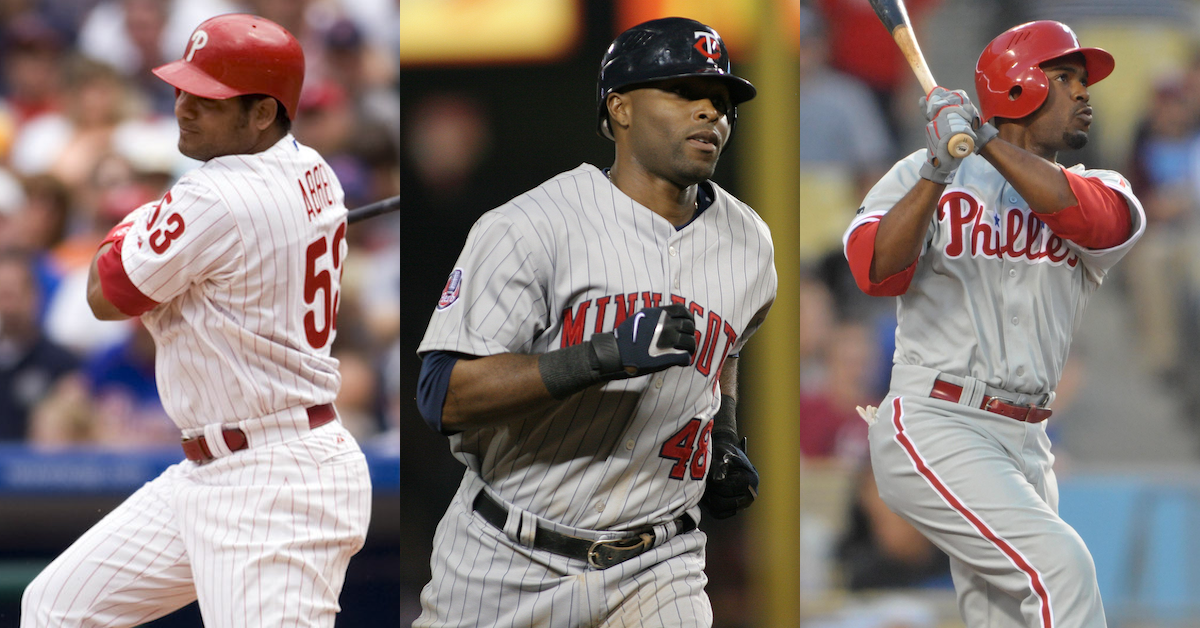
Before Joe Mauer began starring for the Twins, there was Torii Hunter. Before Chase Utley began starring for the Phillies, they had Abreu and Jimmy Rollins. Hunter, a rangy, acrobatic center fielder who eventually won nine Gold Gloves and made five All-Star teams, debuted with Minnesota in 1997 and emerged as a star in 2001, the same year the Twins chose Mauer with the number one pick of the draft. The pair would play together from 2004 to ’07, making the playoffs twice before Hunter departed in free agency. Abreu, a five-tool player with dazzling speed, a sweet left-handed stroke, power, and outstanding plate discipline, quickly blossomed upon being traded to the Phillies in November 1997. But even while hitting at least 20 homers, stealing at least 20 bases, and batting above .300, recognition largely eluded him until he made All-Star teams in 2004 and ’05. Rollins, a compact shortstop who carried himself with a swagger, debuted in 2001 and made two All-Star teams before he and Utley began an 11-year run (2004–14) as the Phillies’ regular double play combination. By the time the pair of middle infielders helped Philadelphia to five NL East titles, two pennants, and a championship — with Rollins winning NL MVP honors in 2007 and taking home four Gold Gloves — Abreu was gone, traded to the Yankees in mid-2006.
All three players enjoyed lengthy and impressive careers, racking up over 2,400 hits apiece with substantial home run and stolen base totals. From a Hall of Fame perspective, Rollins and Hunter have credentials that appeal more to traditionally minded voters than to statheads — particularly their Gold Gloves — while Abreu, despite half a dozen .300 seasons and eight with at least 100 RBI, was a stathead favorite. Regardless, they’ve all spent years languishing on the ballot. Hunter debuted with 9.5% in 2021 but has yet to match that since, scraping by in 2025 with just 5.1%; one fewer vote and he’d have been bumped off the ballot. Rollins debuted with 9.4% in 2022 and has gained roughly two or three points in each cycle since, with 18% in ’25. Abreu barely made the cut with just 5.5% in his 2020 debut, and since then has alternated small gains and losses; he received 19.5% in 2025. Read the rest of this entry »
The following article is part of Jay Jaffe’s ongoing look at the candidates on the BBWAA 2026 Hall of Fame ballot. For a detailed introduction to this year’s ballot, and other candidates in the series, use the tool above; an introduction to JAWS can be found here. For a tentative schedule and a chance to fill out a Hall of Fame ballot for our crowdsourcing project, see here. All WAR figures refer to the Baseball-Reference version unless otherwise indicated.
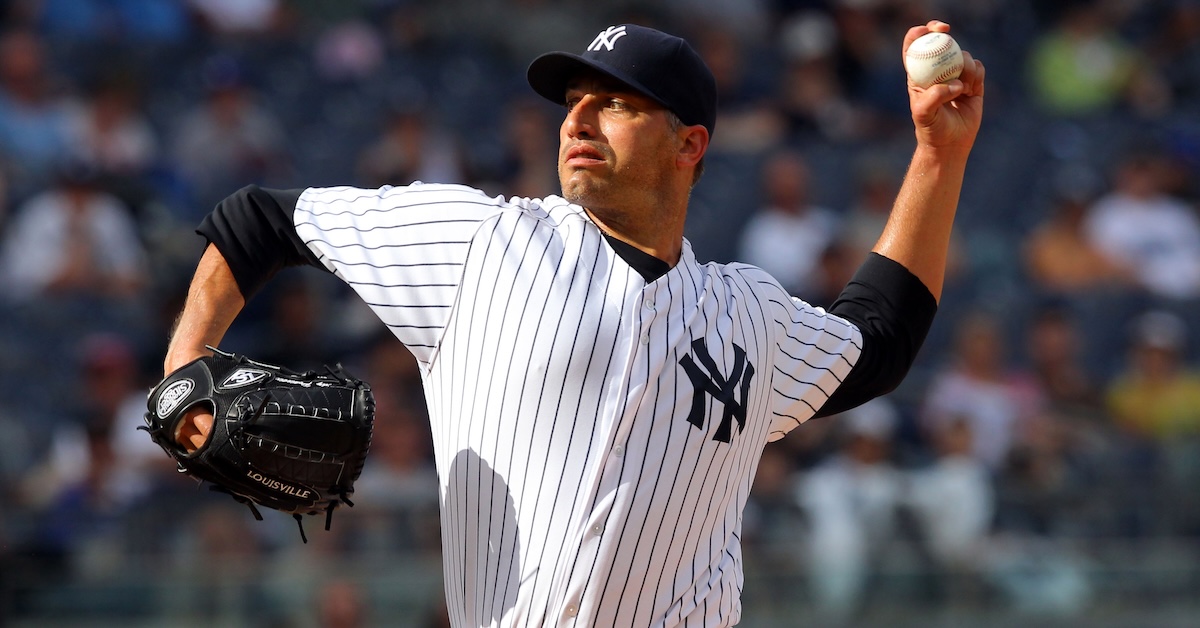
As much as Derek Jeter, Jorge Posada, Mariano Rivera, and Bernie Williams, Andy Pettitte was a pillar of the Joe Torre-era Yankees dynasty. The tall lefty Texan played such a vital role on 13 pinstriped playoff teams and seven pennant winners — plus another trip to the World Series during his three-year run with Houston — that he holds several major postseason records. In fact, no pitcher ever started more potential series clinchers, both in the World Series and the postseason as a whole.
For as important as Pettitte was to the “Core Four” (Williams always gets the short end of the stick on that one) that anchored five championships from 1996 to 2009 — and to an Astros team that reached its first World Series in ’05 — he seldom made a case as one of the game’s top pitchers. High win totals driven by excellent offensive support helped him finish in the top five of his leagues’ Cy Young voting four times, but only three times did he place among the top 10 in ERA or WAR, and he never ranked higher than sixth in strikeouts. He made just three All-Star teams.
Indeed, Pettitte was more grit than glamour. A sinker- and cutter-driven groundballer whose pickoff move was legendary, he was a championship-level innings-eater, a grinder rather than a dominator, a pitcher whose strong work ethic, mental preparation, and focus compensated for his lack of dazzling stuff. About that focus: his peering in for the sign from the catcher with eyes barely visible underneath the brim of his cap was such a visual signature that the Yankees used it on a commemorative patch when they retired his no. 46 in 2015. Read the rest of this entry »



 Sponsor Us on Patreon
 Give a Gift Subscription
 Effectively Wild Subreddit
 Effectively Wild Wiki
 Apple Podcasts Feed
 Spotify Feed
 YouTube Playlist
 Facebook Group
 Bluesky Account
 Twitter Account
 Get Our Merch!