Eric Canha, Katie Stratman, Troy Taormina-Imagn Images
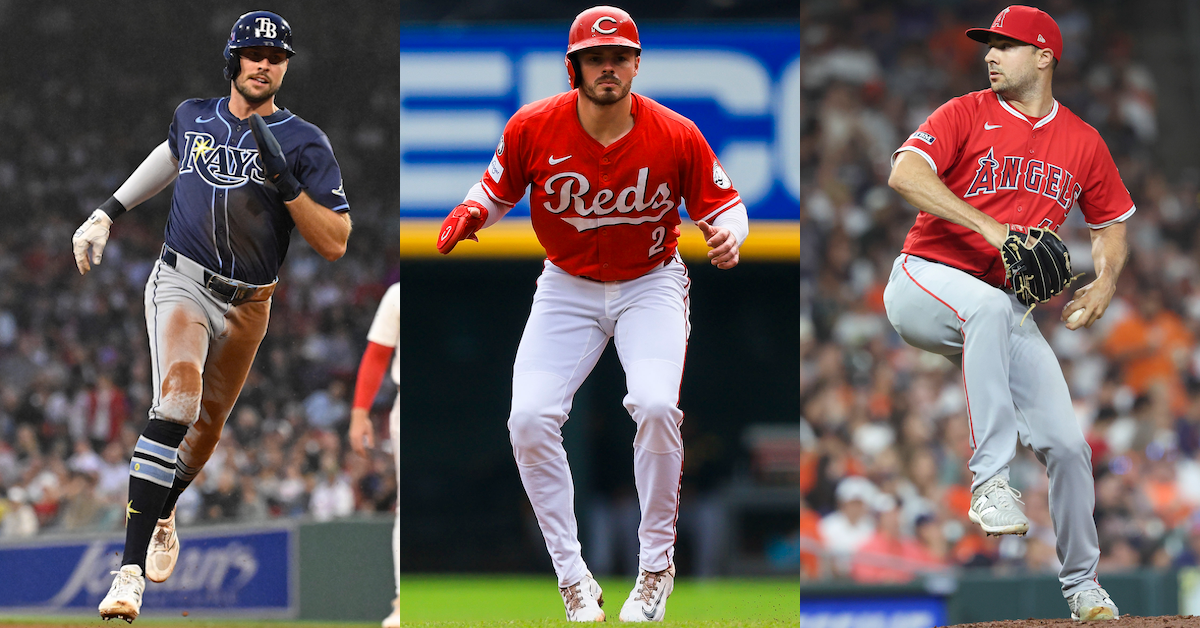
Last week was one of the busiest of the offseason so far, with Kyle Tucker taking his talents to Chavez Ravine and Bo Bichette heading to the Mets. Given those glitzy headlines, it was easy to miss an annual rite of winter: a weird, zero-sum-feeling trade that didn’t need to be a three-teamer but was anyway because the Rays got involved. The particulars: The Rays sent Josh Lowe to the Angels, the Angels sent Brock Burke to the Reds, and Tampa Bay got Gavin Lux from Cincinnati and prospect Chris Clark from the Halos.
The first thing that drew my eye in this trade is that the two hitters are at least superficially similar: lefties with enormous platoon splits and no real defensive home. Lux has a career 99 wRC+; Lowe 101. They get to those marks in extremely different ways, though, and I think that’s as good of an entry point into analyzing this swap as any.
Lowe is an archetypical lefty power bat, and the Angels simply don’t have anyone like that. Last year was easily Lowe’s worst as a pro on a rate basis, and he also spent a month and a half on the IL. But his 11 homers would have been the second-most by an Angels lefty, behind Nolan Schanuel’s 12 in 150-ish more plate appearances (Yoán Moncada also hit 12 lefty homers, but he left in free agency). Overall, the Angels were 29th in baseball in home runs hit by lefties, with 34 for the entire team put together. Read the rest of this entry »
The following article is part of Jay Jaffe’s ongoing look at the candidates on the BBWAA 2026 Hall of Fame ballot. For a detailed introduction to this year’s ballot, and other candidates in the series, use the tool above; an introduction to JAWS can be found here. For a tentative schedule, see here. All WAR figures refer to the Baseball Reference version unless otherwise indicated.
2026 BBWAA Candidate: Matt Kemp
Player
Pos
Career WAR
Peak WAR
JAWS
H
HR
SB
AVG/OBP/SLG
OPS+
Matt Kemp
CF
21.6
23.6
22.6
1,808
287
184
.284/.337/.484
121
Source: Baseball-Reference
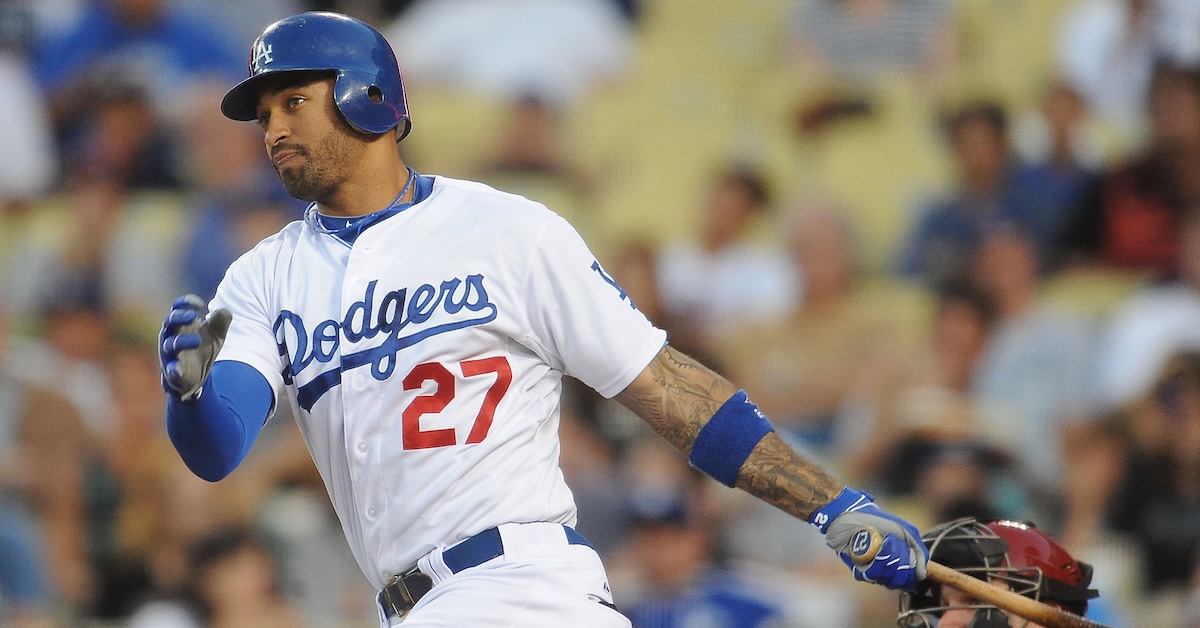
From being called out publicly by his general manager, manager, and third base coach during an historically wretched season one year, to being robbed of an MVP award after falling just short of a 40-homer, 40-steal campaign the next, Matt Kemp was an enigma. Because he focused more on basketball than baseball growing up, his instincts for the sport sometimes lagged behind his physical abilities, but at his best, he was a superstar, and a sight to behold thanks to his speed and power — a combination of traits that earned him the nickname “The Bison.” He made three All-Star teams and won two Gold Gloves (despite subpar metrics), but unfortunately, a series of injuries to his shoulders and legs compromised those abilities. The $160 million contract he signed after that near-MVP 2011 season became a millstone that sent him from team to team during its eight-year run. Read the rest of this entry »
The following article is part of Jay Jaffe’s ongoing look at the candidates on the BBWAA 2026 Hall of Fame ballot. For a detailed introduction to this year’s ballot, and other candidates in the series, use the tool above; an introduction to JAWS can be found here. For a tentative schedule, see here. All WAR figures refer to the Baseball Reference version unless otherwise indicated.
2026 BBWAA Candidate: Shin-Soo Choo
Player
Pos
Career WAR
Peak WAR
JAWS
H
HR
SB
AVG/OBP/SLG
OPS+
Shin-Soo Choo
RF
34.7
29.3
32.0
1,671
218
157
.275/.377/.447
122
Source: Baseball-Reference
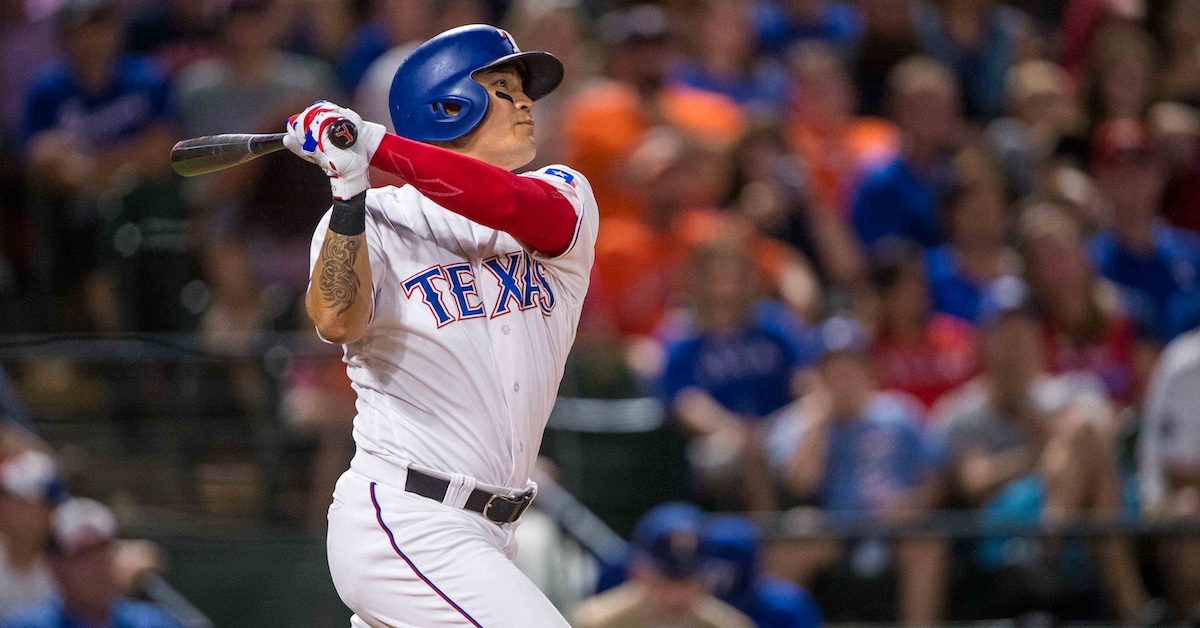
By the time Shin-Soo Choo reached the majors with the Mariners in 2005, nine South Korea-born pitchers had followed in the wake of Chan Ho Park, who debuted with the Dodgers in 1994, but just one position player preceded him, namely Hee-Seop Choi. It took a few years and a lopsided trade before Choo’s major league career got off the ground, and he lost significant time to a variety of injuries, but over the course of his 16 seasons with Seattle, Cleveland, Cincinnati, and Texas, he established himself as an on-base machine with considerable pop. He set a number of firsts, including becoming the first South Korean position player to make an All-Star team and now, the first such player to make a Hall of Fame ballot.
To these eyes, that latter distinction is a big deal. Most of the 12 newcomers on this year’s Hall of Fame ballot don’t have the numbers to merit election or even much debate. Their appearance on the ballot after spending at least 10 seasons in the majors with some distinction is its own reward, and with the deadline for voting now past, we’re in the part of the cycle where we can take the time to celebrate these players’ fine careers in their own right. A decade ago, I raised a bit of an international stink when Park — who spent 17 seasons in the majors (1994–2010), won 124 games (still the major league record for a player born in Asia, one ahead of former teammate Hideo Nomo), and became the first South Korea-born player to make an All-Star team — was left off. It felt like a needless snub. “Like Hideo Nomo, who blazed a trail for modern Japanese players to come to the majors, Park deserves the recognition that comes with a spot on the ballot,” I wrote for SI.com. I’ve made noise about other slights since then, and I think the situation has improved over time, so I’m particularly glad to see Choo here.
…
Shin-Soo Choo was born on July 13, 1982 in the Nam district of Busan, South Korea, a coastal city that is the country’s second-largest, behind Seoul. He’s the oldest son of father So-min Choo and mother Yu-jeon Park. He was born into a baseball family, as his mother’s brother, Jeong-Tae Park, starred as a second baseman for the KBO’s Lotte Giants from 1991–2004, winning five Gold Gloves (given to the best all-around player at each position, not just the best defender) and sealing the Giants’ 1992 championship by recording the final out in their Korean Series victory over the Binggrae Eagles. Read the rest of this entry »
Cole Henry could close out games for the Nationals next season. Paul Toboni was noncommittal when I brought up that possibility during the Winter Meetings, yet there are no currently clear favorites to fill the role — not since Washington’s new president of baseball operations swapped southpaw Jose Ferrer to the Seattle Mariners in exchange for Harry Ford and Isaac Lyon in early December. And while the 26-year-old right-hander admittedly lacks ninth-inning experience — just two professional saves — he has attributes suggestive of late-inning effectiveness.
Henry’s 2025 numbers serve as an argument both for and against his assuming the closer responsibilities that Ferrer had inherited when Kyle Finnegan was dealt to Detroit at July’s trade deadline. Over 57 relief outings comprising 52-and-two-thirds innings, he held opposing batters to a .213 xBA while logging a better-than-league-average 25.6% whiff rate. Less encouraging were the 5.34 FIP that accompanied his 4.27 ERA, and the 13.3% walk rate that accompanied his 21.6% strikeout rate. Also notable was his .259 BABIP, but is that a red flag, or is it actually a sign that the Nationals might have stumbled upon their next Tyler Clippard?
Pitching for Washington from 2008-2014, Clippard crafted a 2.68 ERA, a notably higher 3.46 FIP, an 15.8% infield-fly rate, and a .233 BABIP (he also had 34 saves and 150 holds during that seven-year span). Henry’s infield-fly rate this past season was 21.4%, the third-highest mark in MLB among pitchers to throw at least 50 innings. Only Jordan Leasure (26.0%) and Alex Vesia (22.1%) induced a higher percentage of pop-ups.
Henry’s arm slot differs from Clippard’s, but his delivery nonetheless plays a role in his ability to miss barrels. Moreover, his slot has dropped since he was drafted 55th overall in 2020 out of LSU. Eric Longenhagen pointed that out earlier this summer: Read the rest of this entry »
The following article is part of Jay Jaffe’s ongoing look at the candidates on the BBWAA 2026 Hall of Fame ballot. For a detailed introduction to this year’s ballot, and other candidates in the series, use the tool above; an introduction to JAWS can be found here. For a tentative schedule and a chance to fill out a Hall of Fame ballot for our crowdsourcing project, see here. All WAR figures refer to the Baseball Reference version unless otherwise indicated.
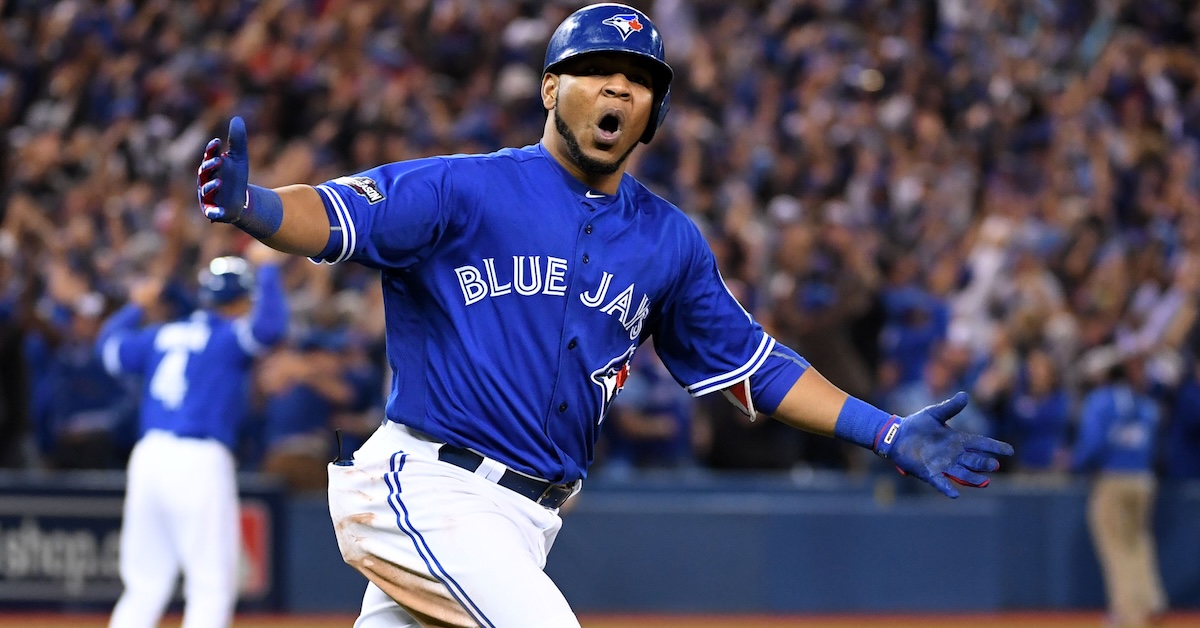
Though he was athletic enough to be drafted as a shortstop, Edwin Encarnación never found much success in the field. Through his first seven seasons with the Reds and Blue Jays, his defensive miscues offset generally solid offense, so much so that he earned the derisive nickname “E5” (as in error, third base). But as with his late-blooming teammate in Toronto, José Bautista, when adjustments to Encarnación’s swing unlocked his in-game power, he became a force to be reckoned with.
Surrendering his third baseman’s mitt and splitting time between first base and designated hitter definitely helped. From 2012–19, Encarnación hit a major league-high 297 homers, with at least 32 in every season, and a high of 42, set in ’12 and matched in ’16. He never led the league, but placed among the AL’s top five four times, and within the top 10 in three other seasons. Among players with at least 2,500 plate appearances in that span, his 138 OPS+ ranks 10th.
The one-two punch of Bautista and Encarnación kept the Blue Jays entertaining through some lean years, and with the arrivals of third baseman Josh Donaldson and catcher Russell Martin in 2015, the team reached the playoffs for the first time since winning back-to-back World Series in 1992–93. Toronto did it again the next year, punctuated by Encarnación’s three-run walk-off homer off the Orioles’ Ubaldo Jiménez to win the 2016 AL Wild Card Game. Read the rest of this entry »
Some rough edges need to be smoothed out, but Cam Collier could be contributing to the Cincinnati Reds offense in the not-too-distant future. Assigned a 45 FV by Eric Longenhagen, the 21-year-old corner infielder is coming off of a 2025 campaign in which he put up a 123 wRC+ over 396 plate appearances across three levels (primarily Double-A). Among the few downsides was a dearth of dingers — he went yard just four times — but that presents as a blip as opposed to a barometer. Our lead prospect analyst grades Collier’s raw power as above average.
I broached the power outage when I talked to Collier during his stint in the Arizona Fall League, where he concluded his campaign with the Peoria Javelinas. He’d hammered 20 homers with the High-A Dayton Dragons in 2024, so why so few of them in his third full professional season?
“I’ve tried to not think about it too much,” replied Collier, whom the Reds drafted 18th overall in 2022 out of Chipola College. “This year, I wanted to really get back to being a hitter. I wanted to have consistent good at-bats, and while that didn’t produce as many homers, it produced a lot more base hits. I was happy with that.”
The stat sheet reflects some of his targeted strides. After batting .248 with a 25.0% strikeout rate in 2024, Collier improved to .279 with an only-incrementally-higher 26.3% K-rate against a higher level of competition. Moreover, the exit velocities he produced when he squared up the baseball were impressive — which remained the case in the desert. At 113.1 mph, Collier had the hardest-hit ball in the Fall Stars Game.
I had read reports that his exit velos and hard-hit rates were plus, so I brought that up as well. Was it perhaps a little counterintuitive that his slugging percentage (.384) and home run totals were as low as they were? Read the rest of this entry »
Alfredo Duno Photo: David TuckerNews-Journal/USA TODAY NETWORK
Below is an analysis of the prospects in the farm system of the Cincinnati Reds. Scouting reports were compiled with information provided by industry sources as well as my own observations. This is the sixth year we’re delineating between two anticipated relief roles, the abbreviations for which you’ll see in the “position” column below: MIRP for multi-inning relief pitchers, and SIRP for single-inning relief pitchers. The ETAs listed generally correspond to the year a player has to be added to the 40-man roster to avoid being made eligible for the Rule 5 draft. Manual adjustments are made where they seem appropriate, but we use that as a rule of thumb.
A quick overview of what FV (Future Value) means can be found here. A much deeper overview can be found here.
All of the ranked prospects below also appear on The Board, a resource the site offers featuring sortable scouting information for every organization. It has more details (and updated TrackMan data from various sources) than this article and integrates every team’s list so readers can compare prospects across farm systems. It can be found here. Read the rest of this entry »
World Baseball Classic managers were made available to the media during the Winter Meetings, and I took that opportunity to ask Chinese Taipei’s Hao-Jiu Tseng about some of the best arms in Taiwan. I had specific pitchers in mind, but opted to begin with an open-ended question rather than cite any names. The response I got was likewise non-specific.
“I hope all pitchers from our team can be known by all baseball fans,” Tseng told me via an interpreter. “There are so many young pitchers. Most of them are still playing at the minor league level, but this tournament can help them improve their skills and experience, and someday grow into great players at a top level.”
The first pitcher he mentioned when I followed up was Wei-En Lin, a 20-year-old left-hander in the Athletics system who was featured here at FanGraphs back in August. The second was the hurler I was most interested in hearing about
.
“Jo Hsi Hsu pitches in the [Chinese Professional Baseball League], ”Tseng said of the recently-turned-25-year-old right-hander, who had a 2.05 ERA and 120 strikeouts, with just 78 hits allowed, over 114 innings for the Wei Chuan Dragons. “He is a posted player this offseason. Right now he is eligible to negotiate with foreign clubs. He possibly will transfer his contract to Japan or America. He is the ace of the CPBL. Read the rest of this entry »
Patrick Gorski, Darren Yamashita, Mark J. Rebilas-Imagn Images
At first, it was a trickle. A Gregory Soto here, a Hoby Milner there. On Tuesday, though, we were staring down a veritable deluge. In a single day, the low-to-mid-tier short-term left-handed pitching market got ransacked like a Ralph’s on the Wednesday before Thanksgiving. In rapid succession, three cromulent southpaws inked deals. First, it was Caleb Thielbar, returning to the Cubs on a one-year pact. Foster Griffin followed, lured back from Japan by a $5.5 million guarantee from the Nationals. Finally, Caleb Ferguson linked up with the Reds, also for a single year. (Later on Tuesday, Drew Pomeranz joined the party; he agreed to a one-year contract with the Angels, which be covered in a separate post.) Let’s assess each of these deals in the order in which they signed:
Caleb Thielbar
When Thielbar appeared on one of these roundups around this time last year, it was under sorrier circumstances. The weathered middle reliever had just dropped a stinker, walking 11.1% of hitters on his way to 47 1/3 innings of a 5.32 ERA. The Cubs handed him a “here’s your last chance” $2.75 million; given that Thielbar was heading into his age-38 season, another shoddy campaign would’ve likely marked the end of a surprisingly successful career for the former 18th rounder.
Instead, the wily veteran innovated his way out of a hole, adding a new pitch and delivering a vintage Thielbar performance. The terms of his deal have not yet been disclosed, but considering that many relievers this offseason have signed for more money than they were expected to get, Thielbar almost certainly received a healthy raise to keep playing ball for a living.
In 2025, his strikeout rate remained down a few points from his 30ish% peak, but Thielbar got his command back, in part due to his decision to replace a good chunk of his big old sweepers with a tighter, cutterish hard slider. The slutter (sorry) was a genius bridge between his three other pitches, which are all relatively easy to identify out-of-hand. By adding a pitch that he could conceivably tunnel with his four-seamer, curveball, and sweeper, he seems to have increased the effectiveness of his entire arsenal.
See all of those yellow dots on the pitch plot above? That pitch did not exist before this year. In 2024, Thielbar primarily attacked lefties with the sweeper, throwing it 55% of the time in same-handed matchups. A pitch with all that movement — 14 inches of horizontal movement on average — is hard to land for strikes. His new slider doesn’t have that sort of crazy break, and he had a much easier time throwing it in and around the zone.
And it wasn’t just a chase pitch to lefties. Thielbar also used the new slider as a soft-contact generator against right-handed batters, jamming them inside with respectable velo and glove-side break:
Otherwise, it was vintage Thielbar, slinging slow, high-ride fastballs and some of the prettiest curveballs in the sport. He handled righties and lefties alike, and will assume a similar role in the Chicago bullpen, navigating medium-high leverage situations, particularly when that leverage context coincides with a run of lefties.
Foster Griffin
Last we saw of Griffin stateside, it was 2022, and he was languishing in Quad-A limbo, making brief cameos with the Royals and Blue Jays before hopping on a bus back to Omaha or Buffalo. Back then, he was a fringy bullpen arm, leaning on a cutter with a movement profile that coincidentally resembled Thielbar’s new slider. On top of the cutter, Griffin featured a dead-zone four-seamer at 93 mph, a pretty standard curveball, and a changeup with some quality arm-side fade.
The uninspiring stuff and varied arsenal felt more befitting of a backend starter, and starting is exactly what Griffin took to with the Yomiuri Giants, where he pitched some excellent ball for three seasons. The final was his finest for the Tokyo-based club. He posted the third-best FIP (1.78) among NPB hurlers with at least 70 innings pitched, striking out a quarter of hitters and allowing just a single home run.
What changed? For that, I’ll hand it over to James Fegan, who wrote up a little blurb on Griffin for The Board:
The addition of a low-80s splitter is the profile-changing development since the last of Griffin’s eight career big league innings. Its raw action won’t knock you out of your chair, but it flirted with a 50% miss rate this past season because Griffin almost never leaves it in mistake locations. His steep approach angle makes the pitch nearly impossible to lift, allowing Griffin to allow fewer home runs (18) in over 300 innings in Japan than he gave up in his last full season in the PCL (20) in 2019. Even topping out at 93 mph now, this is still too much of a nibbling profile to project him beyond a multi-inning swingman role. But now that he can wield his splitter as an out pitch to either side, it’s easier to see Griffin carving out a Tyler Alexander-shaped niche at the end of a pitching staff.
The prospect team gave Griffin a 35+ FV grade, suggesting he is unlikely to do much more than hoover up innings for the Nationals. But if there’s a club in need of some innings-hoovering, it’s the Nats, who have a bunch of question marks on the staff after MacKenzie Gore, and that’s assuming they hang onto Gore, which, who knows.
Caleb Ferguson
The second left-handed Caleb in this roundup is 10 years younger than his predecessor. Once a whiff chaser with shaky command, Ferguson leaned hard into contact suppression in 2025, scaling back his four-seamer against same-handed hitters while boosting the sinker to nearly 50% usage. At times, this worked great. His strikeout rate dropped over eight percentage points, but the heavy combination of sinkers and cutters gave Ferguson some of the lowest barrel rates and exit velocities in the league.
Chasing weak contact as a relief pitcher can be a blessing and a curse. Attacking the zone with three fastballs keeps the walks down and the extra base hits to a minimum. But it also means a big chunk of balls in play, and one day the BABIP gods will rise with vengeance and rain misery upon your poor ERA. Unfortunately, this happened to Ferguson at a crucial juncture. Plucked from Midwestern obscurity in Pittsburgh and thrust into a playoff push in Seattle, he initially performed well before running into a spate of poor performances in late August and early September. In a tight postseason race, that was that — Ferguson didn’t get many leverage opportunities for the remainder of the season, and his brief playoff work went terribly. Brought in to close down a seven-run lead in the ninth inning of ALDS Game 3, Ferguson allowed three runs without recording an out, requiring Dan Wilson to throw Andrés Muñoz on a day that he could’ve secured some crucial rest. It cannot be great for a reliever to get shelled on a big stage in his final moments before hitting the free market.
For most of his Mariners tenure, Ferguson was treated like a member of the B team, deployed mostly in losing efforts. Will the Reds, themselves a recent playoff club, trust him to handle leads in close games? It’s sort of on the edge. RosterResource sees Ferguson as the fourth arm out of the pen, behind Emilio Pagán, Tony Santillan, and Graham Ashcraft. Astute readers will note that all three of those guys throw baseballs with their right arm, and so Ferguson will assume the mantle of Most Trusted Lefty, prying that loosely held title from Sam Moll’s fingertips.
ORLANDO — Congratulations, everybody. We made it. It’s now Thursday, and the Winter Meetings have officially concluded. It’s time to reflect on the state of effort in Major League Baseball, and I am pleased to report that it is strong. At this time last year, we had seen 22 We Trieds (though a few more would be added retroactively due to a rule clarification). As of now, we’re sitting at 24, so let’s take a moment to congratulate all the agents, the anonymous sources, and the reporters who took us this far. As always, I invite you to peruse this vast bounty on the official We Tried Tracker.
Before we break down the last couple days, I should start with an important update on the most recent entry of this series. When news broke that the Giants asked for Tatsuya Imai’s medicals even though they didn’t plan on pursuing him, I gave it an intentionally cumbersome moniker: We’re Not Even Going To Try, So Don’t Bother Getting Your Hopes Up. This was a classic defense mechanism. I went with the big, long name to deflect from the fact that I couldn’t come up with a clever, pithy one. But the right name came to me this week. In the future, such a move will be known as a Pre-Tried. I have spoken.
Since that last update, Bob Nightengale took a new angle on this exercise, packaging the news that the Reds “were hoping to sign” Devin Williams with the news that they had actually re-signed Emilio Pagán. It’s a brilliant maneuver. You sign a lesser player while also announcing that you were also thinking even bigger. We Trieds are all about partial credit, but here are the Reds, breaking out the razzle dazzle and running an end-around in a bid for double credit!
This strategy is also something of a double-edged sword, though. Some fans might give the Reds the double credit they want, but it’s also easy to take the information in the other direction. The Reds held onto a good reliever, Reds fans! Let’s celebrate! Oh, also, they only got him because they tried and failed to get an even better reliever? Do you still want to celebrate? Try pulling that move with a child. Take them to an ice cream shop and get them a kid’s cone. Once they’ve given it a big lick and smiled their adorable little smile, lean over and say, “You know, I was hoping to get you a giant ice cream sundae, but you’ll have to settle for this little one because the New York Mets ordered it first.” Read the rest of this entry »