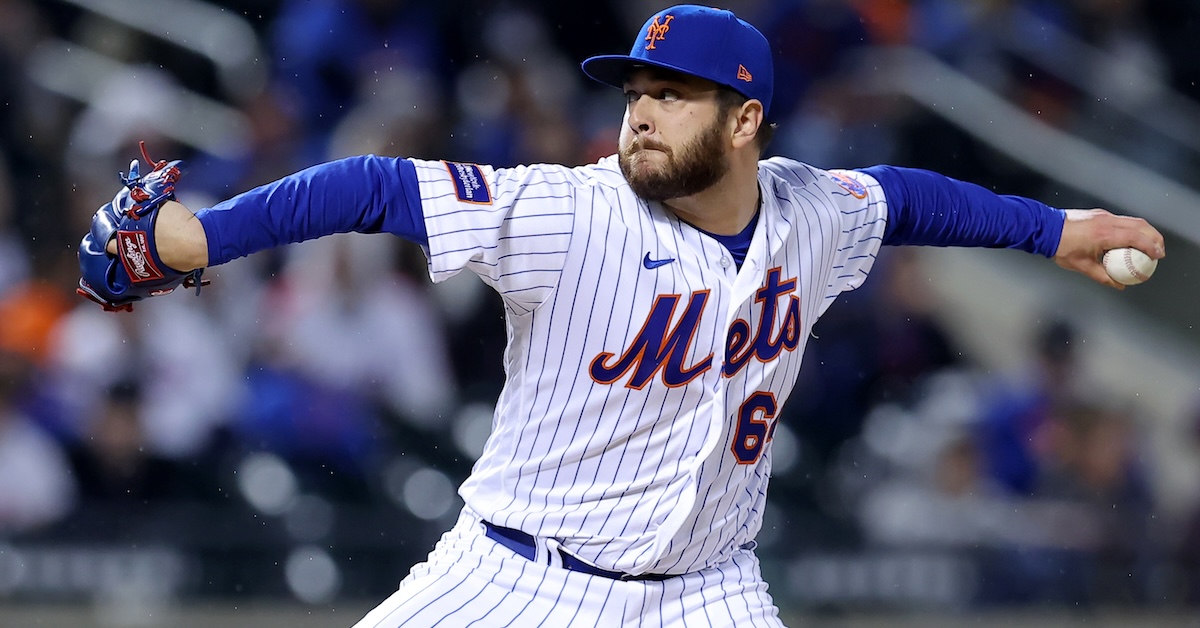
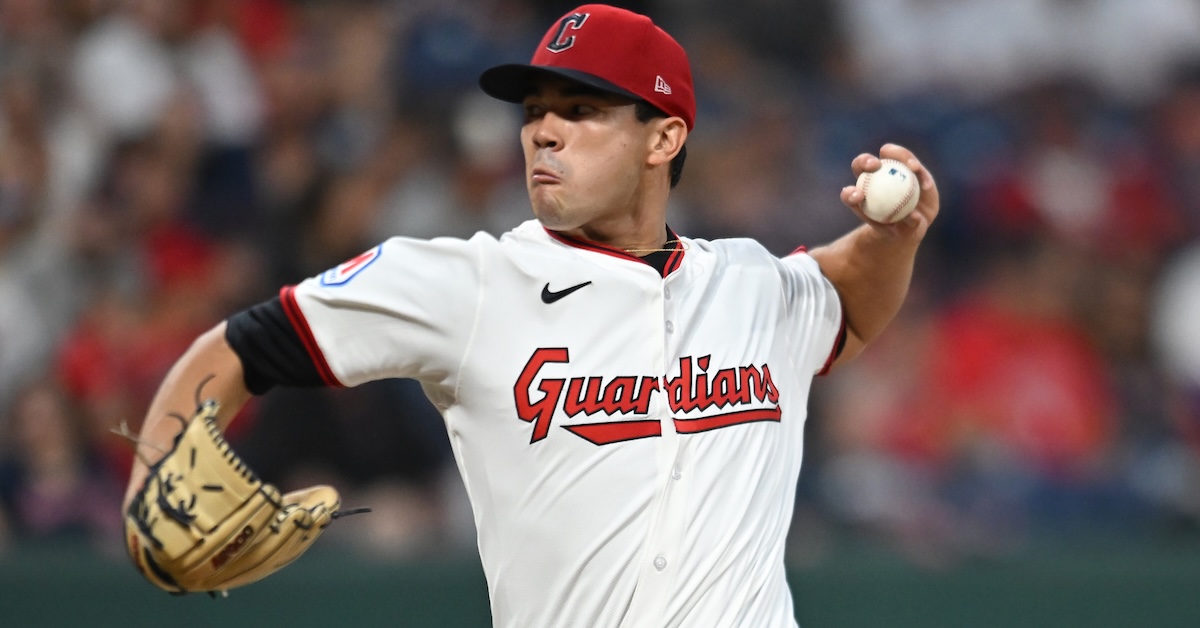
The Chicago White Sox got on the board in free agency on Wednesday morning, inking left-handed pitcher Anthony Kay to a two-year, $12 million contract with a $10 million mutual option for 2028. Kay will make $5 million in each of the next two seasons, with a $2 million buyout due if the mutual option isn’t exercised.
It’s been a huge week for the trans-Pacific starting pitching exchange, with Matt Manninggoing over to the KBO and Cody Poncecoming back in the other direction. Kay spent the past two seasons pitching for the Yokohama DeNA BayStars of NPB — and pitching quite well, it bears mentioning: In 24 starts and 155 innings this past season, Kay posted a 1.74 ERA and a 2.55 FIP. That ERA is a couple tenths better than what Tatsuya Imai, this offseason’s hot Japanese pitching import, posted this season. Read the rest of this entry »
Up and in, low and away. That’s how you attack hitters. That’s always been how you attack hitters. There are exceptions, of course. Some hitters struggle with low-inside pitches, so they see more of them. Some hitters are so feeble that pitchers just pump fastballs down the middle and dare them to do their worst. Some pitchers just throw their best pitch and don’t bother worrying about the hitter at all. But most of the time, it’s up and in, low and away. Ben Clemens wrote about a version of this yesterday, in a piece that focused on the data behind why pitchers throw inside fastballs. And the toughest inside fastballs to hit are those thrown up and in.
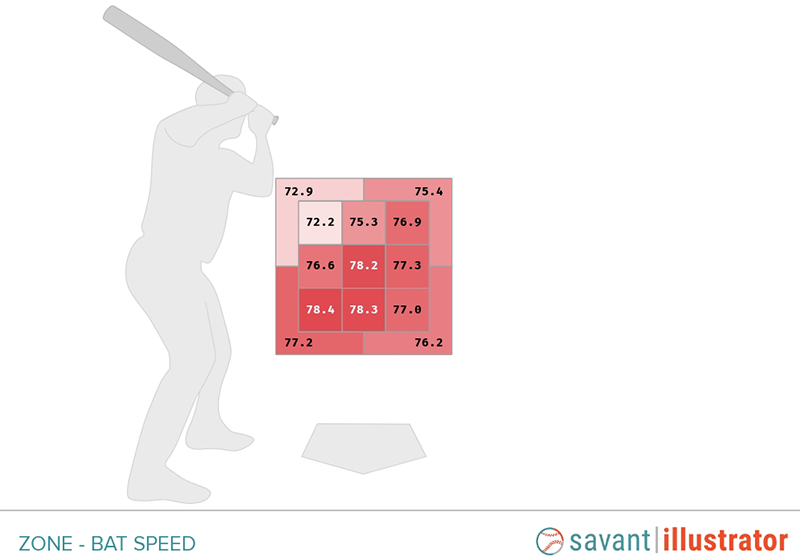
Pitchers have been throwing hard stuff up and in for as long as they’ve been throwing hard stuff, but Statcast’s new bat tracking data allowed us a new peek at why that’s such a successful game plan. The heat map for bat speed below is extra red because it belongs to Aaron Judge, but insofar as the least red spot is the high-inside strike, it might as well belong to any hitter.
It’s harder to get your bat around up there. It requires a stiffer, more rotational (as opposed to linear) swing. You can’t get your arms extended. You can’t drop your bat head on the ball. Bust somebody up and in with something hard, and they’ll have a tough time catching up to it; now confirmed by science.
Because we are not Ben Clemens, we’re going to focus on down and away today, and we’re going to focus on batters. As you can see from Judge’s heat map, bat speed tends to be slower down there too. We’re no longer just talking about getting your arms extended. You have to modify your swing to reach pitches that far away, bending and reaching, slowing down your bat because the optimal contact point is deeper. If there’s one thing we’ve learned from bat tracking data, it’s that those kinds of adjustments make you hemorrhage bat speed. Low and away is also where trickier pitches like offspeed and breaking balls tend to end up. Nobody is good against those pitches, and I do mean nobody.
See the spot in the heat map that says 77.0 mph, inside the strike zone, but on the outer third and in the bottom third? Since 2008, 225 left-handed batters and 297 right-handed batters have seen at least 500 pitches in that low-and-outside box. According to Baseball Savant’s run values, not one of those players has a positive run value against those pitches. Not one! Every single player has been below average in that particular box, and that’s not true of any of the other 12 boxes. The two players who have come closest to breaking even on those low-and-outside strikes are Hall of Famer David Ortiz, who has been worth -0.08 runs per 100 pitches, and future Hall of Famer Mike Trout, who has been worth -0.4. It’s just not possible to perform well against that pitch (at least not without eschewing the rest of the strike zone, but no one would ever do that), even if you’re literally Mike Trout.
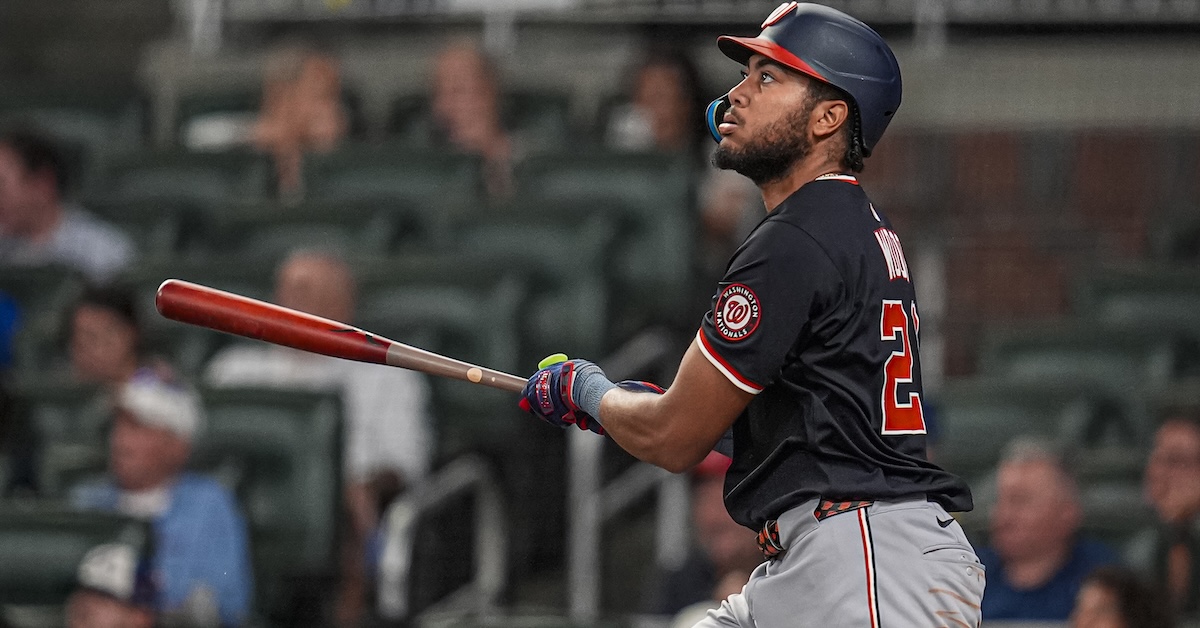
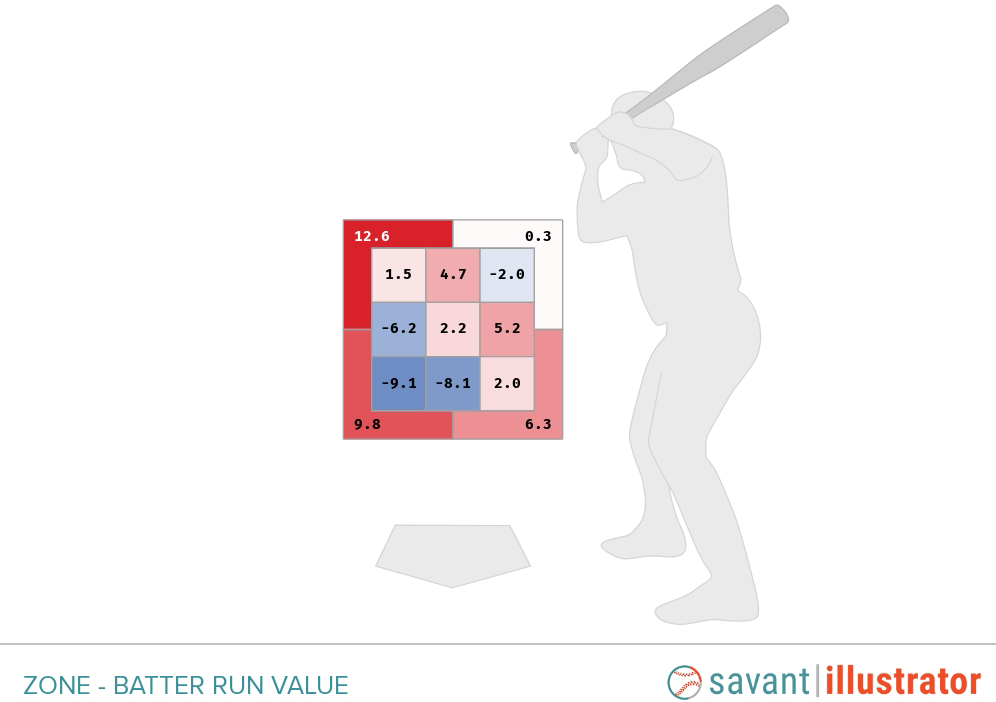
So we’ve established that the low-outside strike is hard to hit. It took 500 words, but we’re here now. The heat map below belongs to James Wood, and it’s part of the reason we’re talking about pitching people low and away. The numbers in this heat map show run value per 100 pitches, and they show why Wood is the poster boy for difficulty down and away.
After a season and a half in the majors, Wood is the proud owner of 4.6 WAR, a 125 wRC+, and one of the most explosive swings in the game. That’s amazing. He’s just 23 years old. He looks like he will be great for at least another decade. He’s also the owner of this particularly lopsided heat map. He’s patient to a fault, which means that he’s excellent on pitches outside the strike zone. He’s great when he can get his long arms extended or when he can drop his bat head on the ball. But throw him something, anything down and away but still inside the zone, and he turns into a (very imposing) pumpkin.
If you’re a regular FanGraphs reader or just a fan of the Nationals (or Padres), you’ve likely known the book on Wood since long before he actually debuted in Washington. He’s really big. He hits the ball really hard. He hits it on the ground. He whiffs a lot too. Major league pitchers knew the book as well, and they most definitely saw some earlier version of that heat map the second the Nationals called Wood up in July 2024.
I can say that for certain because even though he was just a 21-year-old rookie, 24.2% of the pitches Wood saw were located in those three blue boxes. Among players who saw at least 1,000 pitches, that was the highest rate in baseball (switching the side of the plate around for right-handers, of course). In 2025, that rate fell to 23.8% and Wood fell to third place, behind Dansby Swanson (24.5%) and Tommy Pham (24.2%). What those numbers mean is that from the moment he debuted, pitchers have known that the only way to attack Wood was to stay the hell away from his gigantic bat. Aim for the outside corner, keep it low, and hope for the best.
In a narrow sense, that strategy has been wildly successful, as those three blue boxes can attest. In 2025, 457 players saw at least 100 pitches within those boxes. Wood’s 50% swing rate ranked 376th, meaning he took way more called strikes than the average player. When he did swing, his 28.7% whiff rate was tied for 426th place, meaning that he ended up with way more swinging strikes than the average player. When Wood put the ball in play, he was more successful than the average player, because of course he was. Even though that’s the spot where he has his lowest bat speed, lowest exit velocity, and lowest launch angle, he still hits the ball so hard that it can’t help but find grass. He ran a .418 wOBACON on those pitches. But that’s not enough to mitigate all those extra strikes.
In a broader sense, that plan has its limits. Aiming for the corner against a player as patient as Wood means that when you miss, you’ve got a higher chance of missing the zone entirely, and Wood is so patient that he’ll make you pay for it. Once you’re behind, you have to hit the heart of the zone. More importantly, this is something of a desperation move. For years now, the trend across the league has been toward throwing the ball right over the middle and trusting your stuff to do the rest. The fear of grooving a pitch to Wood is driving pitchers toward an older, less successful game plan. Wood is bad at handling that pitch, but so is every hitter on earth. He’s seeing so many pitches there because against a hitter like him, all the options are suboptimal. Wood may not get to the next level as a hitter until he can find a way to cover more of the strike zone, but he’s young and he’s still learning. He may well get there. In the meantime, he’s still striking fear into the hearts of pitchers, and they’re doing their best to stay away from him.
“He has the best stuff on the staff. His pitches move all over the place.”
Those words, which were spoken to me in the Progressive Field press box in late September, came from someone who had not only seen the Cleveland Guardians on a regular basis throughout the season, but a person whose background also includes having played in the big leagues. His assessment of 25-year-old left-hander Joey Cantillo was based both on experience and expertise. (As we were chatting informally, I’m opting not to quote him by name.)
Cantillo’s numbers in is first full major league season suggest that he has a bright future. Initially pitching out of the bullpen, the Honolulu native moved into Cleveland’s starting rotation in early July and proceeded to log a 2.96 ERA, a 3.21 FIP, and a 25.9% strikeout rate over 13 outings comprising 67 innings. Counting his 21 appearances as a reliever, he put up 3.21 ERA, a 3.55 FIP, and a 26.9% strikeout rate over 95 1/3 frames in 2025. All told, Cantillo held opposing batters to a .217 average and a .289 wOBA.
The southpaw was originally drafted by the San Diego Padres in the 16th round of the 2017 draft out of a Kailua, Hawaii high school. (Coincidentally, two picks earlier, the Minnesota Twins took Cleveland reliever Cade Smith out of a British Columbia high school, only to have him eschew signing and attend the University of Hawaii). The Guardians subsequently acquired Cantillo in August 2020 as part of a nine-player trade that included Mike Clevinger, Austin Hedges, and Josh Naylor.
Cantillo sat down to discuss his development path and his four-pitch arsenal in the final week of the regular season.
———
David Laurila: How much have you changed since coming here from San Diego?
Joey Cantillo: “A bunch. When I first got here I wasn’t really throwing very hard. I was one of those guys where it was like, ‘Hey, if he can throw harder he could really do some good things.’ Getting here, it was, ‘Hey, let’s start to move the body faster, get the body in better positions and use it better.’
“That’s what we focused on those first couple years, and it was a struggle. When you’re out there on the mound thinking about things like body positions, it takes away from your over-the-plate focus at times. I needed to learn to balance that. Mechanics and competing are two different things.”
For the 22nd consecutive season, the ZiPS projection system is unleashing a full set of prognostications. For more information on the ZiPS projections, please consult this year’s introduction, as well as MLB’s glossary entry. The team order is selected by lot, and the next team up is the Miami Marlins.
Batters
While the Marlins were expected to need to fight hard to get out of the NL East basement in 2025, the team was surprisingly solid from midseason on, and though they never reached .500, they at least flirted with it thanks to a winning record in the second half.
A lot of the happy surprises in Miami came from the starting lineup. While a team wRC+ of 96, good for 21st in the majors, doesn’t exactly occasion a “Mission Accomplished” banner, both marks were a notable improvement on the team’s recent history. Indeed, a 96 wRC+ represents the team’s best result since 2017, that year being one of only two seasons in which the Marlins passed the century mark. While there’s no direct comparison to the team’s terrific Marcell Ozuna/Christian Yelich/Giancarlo Stanton outfield of that era, there’s actually some good young offensive talent on the team. And importantly for Miami, it’s generally inexpensive. Read the rest of this entry »
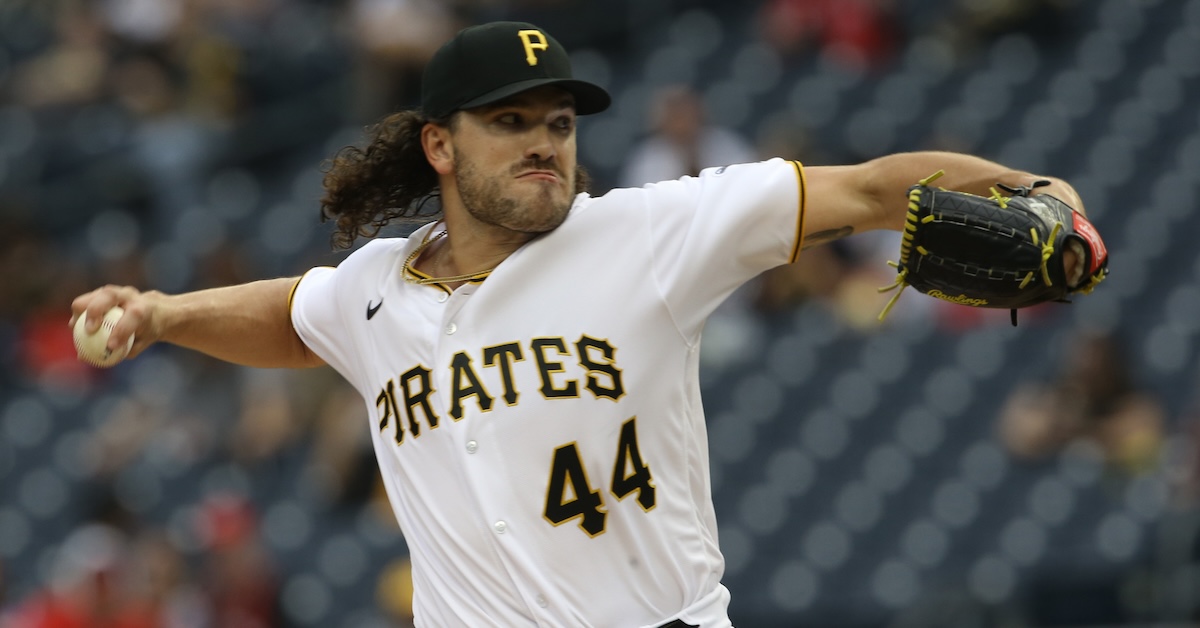
While 29 American teams sit around twiddling their thumbs, the Toronto Blue Jays continue to run up their bill on the free agent market. After spending $210 million (with deferrals) to bring Dylan Cease in on Thanksgiving Eve, Toronto has now landed one of the top international free agents: right-handed pitcher Cody Ponce, late of the Hanwha Eagles of the KBO.
Even those of you who vaguely remember Ponce from his first stint in the majors might have trouble distinguishing him from any other of the dozens of big, replacement-level relievers the Pirates have thrown out there over the past decade. On some level, Ponce’s stint in Asia is just a chapter in a Sisterhood of the Traveling Pants-type deal he’s stuck in with John Holdzkom, Nick Kingham, and Colin Holderman.
The following article is part of Jay Jaffe’s ongoing look at the candidates on the BBWAA 2026 Hall of Fame ballot. For a detailed introduction to this year’s ballot, and other candidates in the series, use the tool above; an introduction to JAWS can be found here. For a tentative schedule and a chance to fill out a Hall of Fame ballot for our crowdsourcing project, see here. All WAR figures refer to the Baseball Reference version unless otherwise indicated.
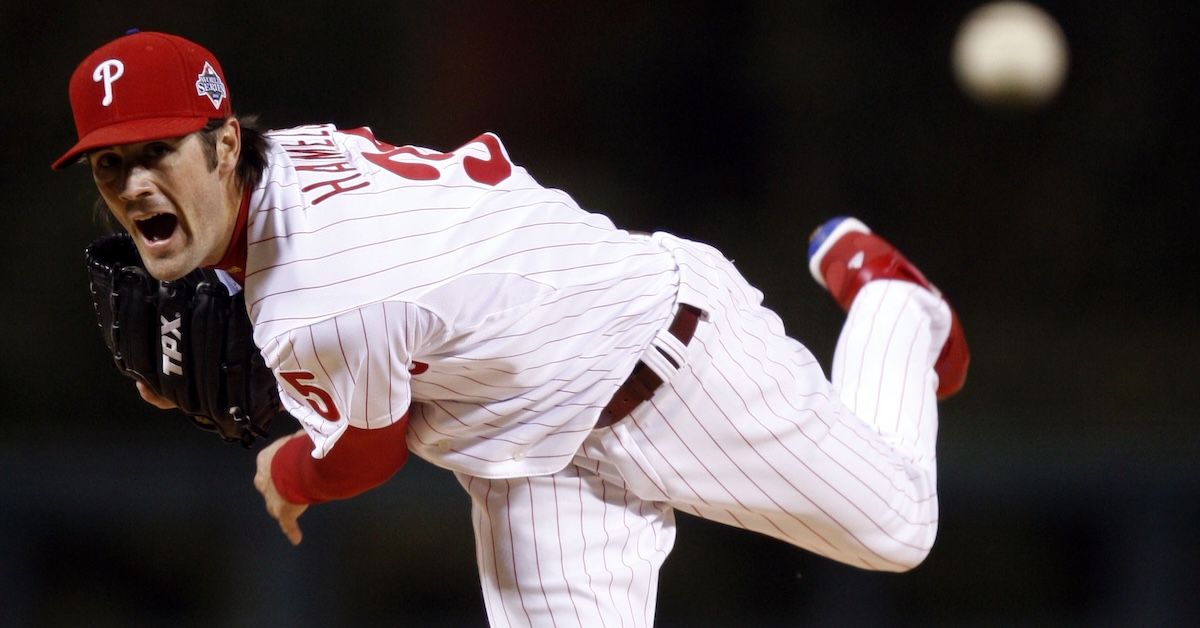
Before he turned 25 years old, Cole Hamels had already reached the pinnacle of the baseball world. At the tail end of his third major league season, the lanky lefty — listed at 6-foot-4, 205 pounds — had gone 4-0 with a 1.80 ERA during the 2008 postseason, leading the Phillies to their first championship since 1980 and winning NLCS and World Series Most Valuable Player honors along the way. Suddenly, the aura he projected — a handsome laidback surfer from San Diego — needed an upgrade. He became a celebrity, expected to dress the part and live up to outsized expectations, both of which he did with some amount of awkwardness but a fair level of success.
Hamels spent the first 9 1/2 seasons of his major league career with the Phillies, part of the nucleus that helped them climb out of the doldrums to become a powerhouse that won five straight division titles. Armed with a fastball that could reach the mid-90s, an above-average curve, and a killer changeup — inspired by watching Padres closer Trevor Hoffman in his heyday — Hamels was a master of deception thanks to his consistency in throwing those three pitches from the same release point. “It’s devastating for a hitter when all of them look like a fastball, and two of them aren’t,” pitching guru Tom House, who worked with Hamels when he was a junior in high school, toldSports Illustrated’s Ben Reiter in 2009.
Hamels’ career wasn’t without hiccups. He missed significant time due to injuries while in the minors, including both the usual arm troubles and a fracture in his pitching hand, sustained during a barroom brawl while standing up for a close friend. Although he helped the Phillies get a shot at repeating their title in 2009, his postseason was a disaster; during the World Series against the Yankees, he nearly came to blows with teammate Brett Myers. At times he was overshadowed by other members of his rotation, Cy Young winners for whom the Phillies traded in case Hamels wasn’t enough, namely Cliff Lee and Roy Halladay. For as well as he pitched, Hamels himself never came close to winning a Cy Young, and he made just four All-Star teams. Read the rest of this entry »
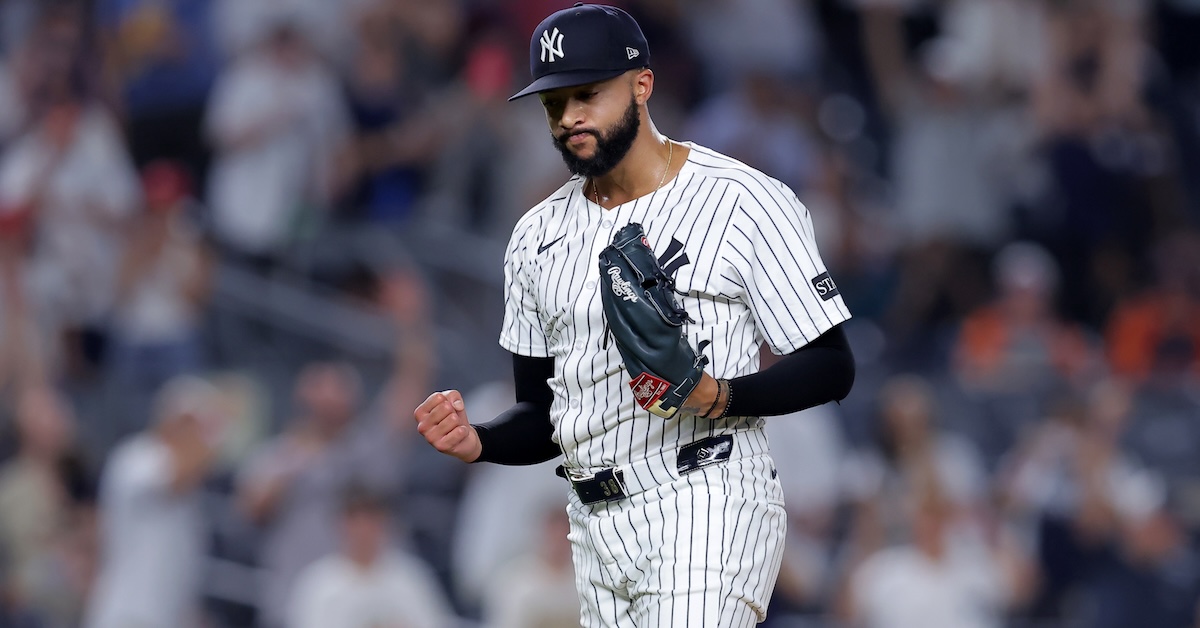
Devin Williams, the lights-out reliever with the M. Night Shyamalan changeup, has agreed to a three-year deal with the Mets. A two-time All-Star, Williams earned NL Rookie of the Year honors in 2020 and scored a down-ballot MVP vote as recently as 2023. Even after a disastrous 2025 season kicked his career ERA all the way up from 1.83 to 2.45, he still has a career ERA of – you guessed it – 2.45. Here’s my first piece of analysis: That’s so good, you guys! Assuming he won’t keep running a 55% strand rate from here on out, the Mets just signed up for three years of one of the best relievers in baseball; meanwhile, Williams just signed up for a quick ride from the Bronx to Flushing, but it’s important to note that the ride is always going to be longer than Google Maps predicts, because the odds of actually catching an express 7 train rather than the local are vanishingly small.
Let’s start with the terms of the deal and the credit for who reported which parts of those terms, and then we’ll take a nap and perform some more light analysis. Cool? Cool. Read the rest of this entry »
Rest in peace, starting pitcher Ryan Helsley (November 23, 2025 — November 29, 2025.) Last Sunday, a trio of staffers at The Athleticreported that the Tigers, among other teams, were interested in converting Helsley into a starter. Even by the open-minded modern standards of reliever-to-starter conversions, this seemed like a stretch. As Michael Baumann noted when he pondered the possibility, Helsley’s arsenal, comprised almost exclusively of four-seamers and sliders, is about as limited as it gets, and his extreme over-the-top arm angle leaves little room for projection.
On Saturday afternoon, Helsley’s illustrious starting career came to a close. ESPN’s Jeff Passan reported that the Orioles and Helsley had agreed on a two-year, $28 million pact, with an opt-out after the first year. According to Passan, Baltimore expects Helsley to handle the closer job.
Given the Orioles’ competitive ambitions and their considerable payroll space, they were all but a lock to spend a little cash on a backend reliever. President of baseball operations Mike Elias said as much earlier in the offseason, telling reporters that they were working to acquire an “experienced ninth-inning guy.” Following a season in which their bullpen delivered a 4.57 ERA, their top internal options to handle the late innings were Keegan Akin and Kade Strowd — fine pitchers, but not the leverage arms of a team with division-winning aspirations. After swinging a trade for setup man Andrew Kittredge in early November, Baltimore landed its “experienced ninth-inning guy” in Helsley.
Whether he’s up for the task is a reasonable question. After three straight dominant seasons with the Cardinals — book-ended by All-Star selections — Helsley had himself a nightmarish 2025, particularly after St. Louis traded him to the Mets at the deadline; he had a 7.20 ERA and a 5.19 FIP with New York after posting a 3.00 ERA and a 3.55 FIP before the trade. His 89-mph bullet slider was as effective as ever, racking up a 41.6% whiff rate and staying off barrels, but the fastball got rocked. In an interview with The Athletic’s Katie Woo a few days prior to his signing, he gave his theory for why his season went off the rails.
“I felt great, and the Mets’ models showed I was actually having the best stuff of my career, so it didn’t make sense for me to struggle as bad as I did,” Helsley told The Athletic. “But I was being really predictable in certain counts. It was almost a double-confirmation for hitters. They see it with their eyes, and they also had a stat behind it saying I’m more likely to throw this pitch in a certain count. It just gave them that much more comfort in the box, and more conviction.”
When hitters put his fastball in play, they slugged .667. And they had no issues putting it in play. His 17.8% four-seam whiff rate ranked in the 26th percentile of all pitchers with at least 300 fastballs thrown, surrounded by names like Jake Irvin, Miles Mikolas and Bailey Ober. That’s not ideal company.
Assuming his slider is fine, the merit of the Helsley deal boils down to whether his triple-digit fastball is still a good pitch. The way I see it, there are three possible explanations for its poor performance in 2025. The first is that Helsley was tipping with some sort of visual cue. Helsley told Woo that he believed his hand position “as he was becoming set” revealed whether the pitch would be a fastball or a slider.
“It was pretty obvious,” Helsley told The Athletic. “I’m not the greatest at (spotting pitch tipping), and even I could see it (on film with) the majority of the pitches.”
For whatever it’s worth, it didn’t look that obvious to me. For those on the public side, pitch-tipping analysis often looks like paranoid pattern-matching, like Charlie Day’s Pepe Silvia red string board. There’s little from the center field cameras, at least, that makes it clear. Here’s Helsley’s setup on a fastball that Harrison Bader launched 109 mph to the pull side:
And here is the previous pitch, a slider. Do you see any difference in the setup? To me, there’s no there there.
Here they are right next to each other:
(Helsley changed his setup after this game for the rest of the season, bringing his hands down and holding the ball closer to his body. The results weren’t much better; as Helsley himself said in that interview, it’s hard to make an in-season adjustment.)
While the physical tipping evidence is ambiguous, the count-level predictability is pretty clear-cut. In a broad sense, Helsley maintained a roughly 50/50 usage of his slider and fastball, occasionally tossing in a curveball as a wrinkle. But looking at the overall usage patterns belies the predictability of his pitch selection.
In 0-0 counts, Helsley opted for the heater 57% of the time. In deep hitter counts (2-0, 3-1, and 3-0), that leapt to 75%. Heavy fastball usage in these contexts is somewhat excusable, but Helsley’s full count approach underlined his reliance on the heater in tight spots. Of the 50 pitches thrown in 3-2 counts, 37 (74%) were four-seamers. (Perhaps another reason Bader smashed that 3-2 heater into the stratosphere.)
A similar story could be told with the slider. Heavy slider use in two-strike counts is to be expected, but even in 1-1 counts, Helsley threw it 72 times in 99 opportunities. For a pitcher with essentially two pitches, this type of predictability is lethal, no matter the nastiness of the stuff.
If Helsley’s ineffectiveness comes down to pitch-tipping and count issues, the Orioles have good reason to be confident in a bounce back. But if his stuff is starting to decline, they may have a problem on their hands.
Is there evidence this is the case? If you squint, maybe. Helsley broke out in 2022 with a superhuman 39.3% strikeout rate while tag-teaming the closer role with Giovanny Gallegos. The breakout was fueled by a massive velocity jump — from 2021 to 2022, Helsley’s fastball gained over two ticks, jumping to an average of 99.6 mph. In 2025, that dropped all the way down to… 99.3 mph.
The case for Helsley’s fastball losing its juice, then, would need to be about something other than velocity decline. Here, there is a bit more to latch onto. In that 2022 season, Helsley’s average arm angle on his four-seamer was around 52 degrees. By 2025, that had climbed all the way to 62 degrees with no concurrent improvement to the pitch’s vertical movement.
A fastball’s effectiveness can be largely explained by its vertical movement relative to its release point; more movement from a lower release or lower arm angle makes it tougher for a hitter to pick up. Because the excellent induced vertical break (18 inches) on Helsley’s fastball now comes from a more “vertical” arm angle, it doesn’t have the same deceptive qualities. Once near the top of the scale in terms of Alex Chamberlain’s dynamic dead zone measurements, his fastball has declined to merely “very good.” If Helsley needs to keep hiking his arm angle up each year to maintain the same level of induced vertical break, that could start to look like a concern.
As it stands, this seems to be more of a minor concern than a red flag. The stuff models on FanGraphs — Stuff+ and PitchingBot — both still consider Helsley’s fastball to be a well above-average pitch, even if they agree that the quality has declined slightly from 2022 or 2023. He’s sitting 99 mph, after all — even with poor shape, a four-seamer with that velocity should still play.
Overall, I’m inclined to say that both sides found a good deal here. The reliever market is the first of any position group to take shape in this early offseason, with both Phil Maton and Raisel Iglesias inking deals prior to Helsley. Iglesias is older, but received $16 million for a single year’s work; Maton, a solid middle reliever, got two years and $14.5 million. If this is the range for the second-tier relievers, and if the three top guys — Edwin Díaz, Devin Williams, and Robert Suarez — are in line for a good chunk more, Helsley’s signing starts to look pretty reasonable for the Orioles, especially because he is only one year removed from being in that elite group. For Helsley, it’s another shot at ninth-inning duty, with a chance to hit the market again next offseason, assuming all goes well.
From 2022-2024, Helsley ranked fourth among all relievers in FIP. His stuff is essentially the same as it was during that run. Assuming he sorts out the tipping issues and gets a little less predictable in certain count contexts, the Orioles just signed a high-end closer at an eminently reasonable price – even if it only proves to be for one year.
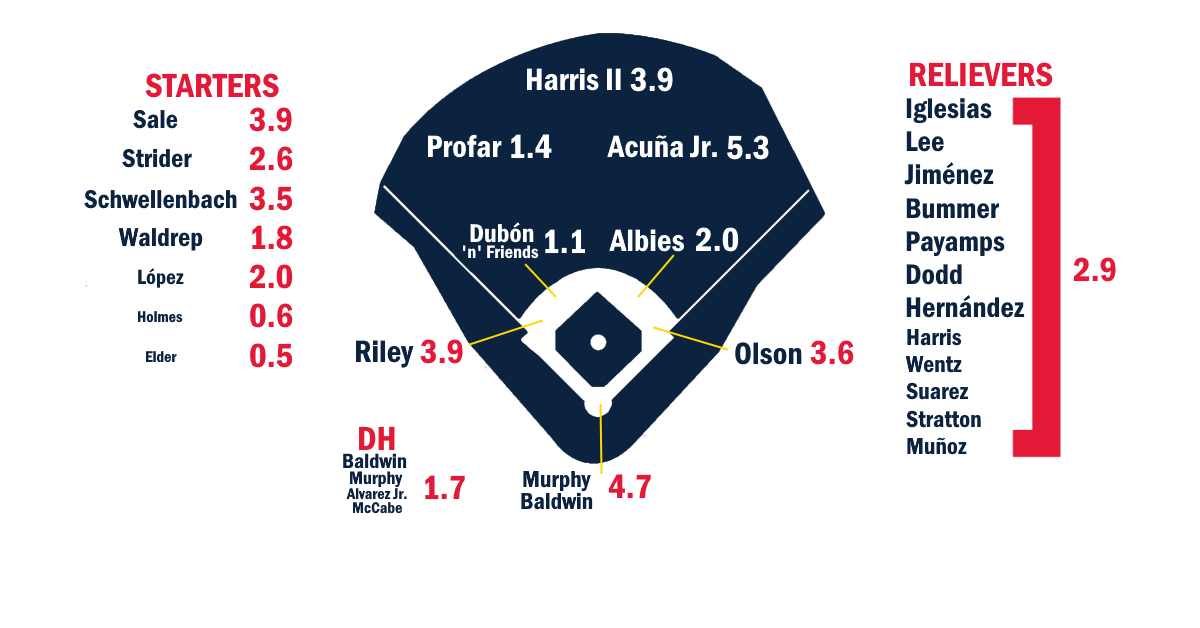
For the 22nd consecutive season, the ZiPS projection system is unleashing a full set of prognostications. For more information on the ZiPS projections, please consult this year’s introduction, as well as MLB’s glossary entry. The team order is selected by lot, and the next team up is the Atlanta Braves.
Batters
Remember how 2024 was a major disappointment for the Atlanta Braves? Well, Father Time apparently took umbrage at that description being applied to an 89-win team that at least made the playoffs, and proceeded to have his beer held as he cooked up something really disappointing in his workshop. The Braves finished with a 76-86 record, the team’s worst showing in a season where it was actually considered a viable contender coming into Opening Day since 2008. Now they hope to put things back together with more or less the same core talent.
Just looking at our depth chart, you’d feel pretty good about the Braves, except for a couple things: They look a bit worse at (almost) every position than they did at this time last year, and we’re getting those WAR numbers with quite a lot of the starters projected for at least 600 plate appearances. The first is a problem because a team with slightly better projections just won 76 games, and the second is worrisome because ZiPS is quite meh on Atlanta’s offensive talent once you get past the team’s impressive first-tier players.
The one place where the Braves did get a projection boost is at catcher, with Drake Baldwin a lot more established than he was coming into 2025. The position didn’t disappoint this season, and there’s no reason for particular worry here. Holding steady is Matt Olson, who more than pulled his weight in his fourth consecutive ironman season. His 2025 paled next to 2023’s 54-homer campaign, likely Olson’s high-water mark, but it represented a nice recovery from a down 2024.
Elsewhere, there are questions. Austin Riley missed significant time to injury, and for the third consecutive season, he shed a good chunk of his wRC+. Ronald Acuña Jr. was his usual terrific self when healthy, but after being plagued by Achilles issues, he appears to be running out of parts in his legs that haven’t been injured. Michael Harris II suddenly hit like a Double-A player for months, and though he made up some of the loss with a hot July and August, you have to have questions about a major leaguer who can go a half-season with a .234 on-base percentage. I’m also not sure that Ozzie Albies is even good anymore, which is a major bummer, as he’s now only a couple of years from hitting free agency and otherwise having the opportunity to make up for one of the worst pre-free agency contracts ever signed by a good player.
Help is unlikely to come from the minors. Atlanta has developed an impressive number of position players, but until/unless the 2025 draftees succeed, Baldwin might be the last short-term boost from within for a bit. And while the Braves aren’t cheap in the sense that teams like the Rays or Marlins are, the organization isn’t known for being super aggressive in free agency.
In short: If the Braves get a bit of good fortune for a change, this could be a really good lineup, but there’s a lot that could easily go very wrong.
Pitchers
The problem with the starting lineup’s projections repeats here, especially in the rotation: There are a lot of good projections, but they’re mostly a bit worse than they were last year. Unfortunately, pitchers being pitchers, I have less confidence in the rotation staying healthy than I do the lineup.
I’m certainly hopeful about Chris Sale, whose late-career mini-comeback has put him in plausible Hall of Fame territory, at least for me. On the plus side, his rib cage injury, like the bicycle-aided broken wrist in 2022, wasn’t a recurrence of his prior elbow problems, so I’m cautiously optimistic here. But he’s also going to be 37, an age where decline becomes a serious year-to-year concern for pitchers.
Both ZiPS and I are relatively bullish on Spencer Schwellenbach coming back from the stress fracture in his elbow, even if he has to give back some velocity to take some pressure off things. Reynaldo López’s shoulder showed no structural damage, but baseball’s medical wizards have become adept at fixing elbows quicker than shoulders, so caution is warranted there. I personally have no idea what Spencer Strider is now, as he’s lost a lot of velocity and his ability to get whiffs inside the strike zone is diminished.
The good news is that ZiPS sees Atlanta’s rotation as having better emergency options than the lineup. Bryce Elder and Hurston Waldrep are reasonable fifth starter options, and the computer thinks JR Ritchie and Lucas Braun could fill-in where needed without it being a major disaster.
ZiPS projects the bullpen to be competently average, and while nobody is forecast to be a dominant arm, the numbers don’t start looking worrisome until you get to the sixth or seventh relievers, which is true of most teams this early in the offseason. ZiPS sees Joel Payamps as a decent addition who adds some heft to the ‘pen. I expect a few moves to be made here, though it’s unlikely to be anything that would push Atlanta into being a top tier bullpen.
When you assume that a lot of injuries will inevitably happen, the Braves look like an 84-88 win team (or somewhere thereabouts) depending on who the healthy guys are. That’s better than last year’s finish, but still kind of a disappointment. Uh oh, maybe I should avoid using that word again!
Ballpark graphic courtesy Eephus League. Depth charts constructed by way of those listed here. Size of player names is very roughly proportional to Depth Chart playing time. The final team projections may differ considerably from our Depth Chart playing time.
Players are listed with their most recent teams wherever possible. This includes players who are unsigned or have retired, players who will miss 2026 due to injury, and players who were released in 2025. So yes, if you see Joe Schmoe, who quit baseball back in August to form a Ambient Math-Rock Trip-Hop Yacht Metal band that only performs in abandoned malls, he’s still listed here intentionally. ZiPS is assuming a league with an ERA of 4.16.
Hitters are ranked by zWAR, which is to say, WAR values as calculated by me, Dan Szymborski, whose surname is spelled with a z. WAR values might differ slightly from those that appear in the full release of ZiPS. Finally, I will advise anyone against — and might karate chop anyone guilty of — merely adding up WAR totals on a depth chart to produce projected team WAR. It is important to remember that ZiPS is agnostic about playing time, and has no information about, for example, how quickly a team will call up a prospect or what veteran has fallen into disfavor.
As always, incorrect projections are either caused by misinformation, a non-pragmatic reality, or by the skillful sabotage of our friend and former editor. You can, however, still get mad at me on Twitter or on BlueSky. This last is, however, not an actual requirement.
The following article is part of Jay Jaffe’s ongoing look at the candidates on the BBWAA 2026 Hall of Fame ballot. For a detailed introduction to this year’s ballot, and other candidates in the series, use the tool above; an introduction to JAWS can be found here. For a tentative schedule and a chance to fill out a Hall of Fame ballot for our crowdsourcing project, see here. All WAR figures refer to the Baseball Reference version unless otherwise indicated.
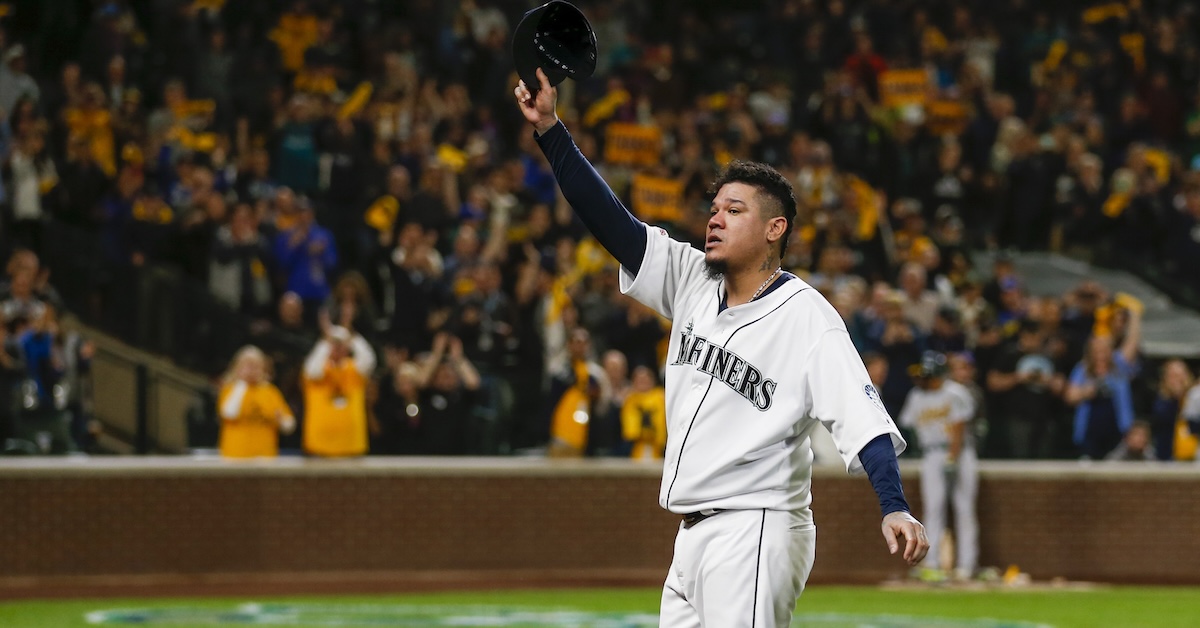
Before he’d ever thrown a major league pitch, cracked a prospect list, or reached legal adult status, Félix Hernández had a nickname: King Felix, crowned by U.S.S. Mariner blogger Jason Michael Barker on July 17, 2003, when he was overpowering much older hitters as a 17-year-old in the Low-A Northwest League. Still a teen when he reached the majors, he quickly came to represent the hopes and dreams of a franchise that had fallen short of a World Series despite four playoffs appearances from 1995–2001; parted with superstars Randy Johnson, Ken Griffey Jr., and Alex Rodriguez along the way; and capped that run with a record-setting 116 wins but a premature exit in the ALCS.
Though slow to embrace the royal moniker, Hernández grew into it. His dazzling combination of an electrifying, darting sinker, a knee-buckling curve, and a signature hard changeup propelled him to a Cy Young Award, two ERA titles, six All-Star appearances, and a perfect game. From 2009–14, he was the best pitcher in the American League by ERA, FIP, strikeouts, and WAR, parlaying that into a contract that made him the game’s highest-paid pitcher. Unfortunately, a heavy workload — more innings than any pitcher 23 or younger since Dwight Gooden two decades earlier — sapped the sizzle from his fastball, with injuries and a cavalier approach to conditioning taking their toll as well. The Mariners struggled to surround him with a quality roster while cycling through managers and pitching coaches every couple of years. The team didn’t reach the playoffs once during Hernández’s career, finishing above .500 just five times, with a pair of second-place showings in the AL West as good as it got. Read the rest of this entry »