Archive for Orioles

Ryan Helsley Is Primed For a Baltimore Bounce Back

Brad Penner-Imagn Images

Rest in peace, starting pitcher Ryan Helsley (November 23, 2025 — November 29, 2025.) Last Sunday, a trio of staffers at The Athletic reported that the Tigers, among other teams, were interested in converting Helsley into a starter. Even by the open-minded modern standards of reliever-to-starter conversions, this seemed like a stretch. As Michael Baumann noted when he pondered the possibility, Helsley’s arsenal, comprised almost exclusively of four-seamers and sliders, is about as limited as it gets, and his extreme over-the-top arm angle leaves little room for projection.

On Saturday afternoon, Helsley’s illustrious starting career came to a close. ESPN’s Jeff Passan reported that the Orioles and Helsley had agreed on a two-year, $28 million pact, with an opt-out after the first year. According to Passan, Baltimore expects Helsley to handle the closer job.

Given the Orioles’ competitive ambitions and their considerable payroll space, they were all but a lock to spend a little cash on a backend reliever. President of baseball operations Mike Elias said as much earlier in the offseason, telling reporters that they were working to acquire an “experienced ninth-inning guy.” Following a season in which their bullpen delivered a 4.57 ERA, their top internal options to handle the late innings were Keegan Akin and Kade Strowd — fine pitchers, but not the leverage arms of a team with division-winning aspirations. After swinging a trade for setup man Andrew Kittredge in early November, Baltimore landed its “experienced ninth-inning guy” in Helsley.

Whether he’s up for the task is a reasonable question. After three straight dominant seasons with the Cardinals — book-ended by All-Star selections — Helsley had himself a nightmarish 2025, particularly after St. Louis traded him to the Mets at the deadline; he had a 7.20 ERA and a 5.19 FIP with New York after posting a 3.00 ERA and a 3.55 FIP before the trade. His 89-mph bullet slider was as effective as ever, racking up a 41.6% whiff rate and staying off barrels, but the fastball got rocked. In an interview with The Athletic’s Katie Woo a few days prior to his signing, he gave his theory for why his season went off the rails.

“I felt great, and the Mets’ models showed I was actually having the best stuff of my career, so it didn’t make sense for me to struggle as bad as I did,” Helsley told The Athletic. “But I was being really predictable in certain counts. It was almost a double-confirmation for hitters. They see it with their eyes, and they also had a stat behind it saying I’m more likely to throw this pitch in a certain count. It just gave them that much more comfort in the box, and more conviction.”

When hitters put his fastball in play, they slugged .667. And they had no issues putting it in play. His 17.8% four-seam whiff rate ranked in the 26th percentile of all pitchers with at least 300 fastballs thrown, surrounded by names like Jake Irvin, Miles Mikolas and Bailey Ober. That’s not ideal company.

Assuming his slider is fine, the merit of the Helsley deal boils down to whether his triple-digit fastball is still a good pitch. The way I see it, there are three possible explanations for its poor performance in 2025. The first is that Helsley was tipping with some sort of visual cue. Helsley told Woo that he believed his hand position “as he was becoming set” revealed whether the pitch would be a fastball or a slider.

“It was pretty obvious,” Helsley told The Athletic. “I’m not the greatest at (spotting pitch tipping), and even I could see it (on film with) the majority of the pitches.”

For whatever it’s worth, it didn’t look that obvious to me. For those on the public side, pitch-tipping analysis often looks like paranoid pattern-matching, like Charlie Day’s Pepe Silvia red string board. There’s little from the center field cameras, at least, that makes it clear. Here’s Helsley’s setup on a fastball that Harrison Bader launched 109 mph to the pull side:

And here is the previous pitch, a slider. Do you see any difference in the setup? To me, there’s no there there.

Here they are right next to each other:

(Helsley changed his setup after this game for the rest of the season, bringing his hands down and holding the ball closer to his body. The results weren’t much better; as Helsley himself said in that interview, it’s hard to make an in-season adjustment.)

While the physical tipping evidence is ambiguous, the count-level predictability is pretty clear-cut. In a broad sense, Helsley maintained a roughly 50/50 usage of his slider and fastball, occasionally tossing in a curveball as a wrinkle. But looking at the overall usage patterns belies the predictability of his pitch selection.

In 0-0 counts, Helsley opted for the heater 57% of the time. In deep hitter counts (2-0, 3-1, and 3-0), that leapt to 75%. Heavy fastball usage in these contexts is somewhat excusable, but Helsley’s full count approach underlined his reliance on the heater in tight spots. Of the 50 pitches thrown in 3-2 counts, 37 (74%) were four-seamers. (Perhaps another reason Bader smashed that 3-2 heater into the stratosphere.)

A similar story could be told with the slider. Heavy slider use in two-strike counts is to be expected, but even in 1-1 counts, Helsley threw it 72 times in 99 opportunities. For a pitcher with essentially two pitches, this type of predictability is lethal, no matter the nastiness of the stuff.

If Helsley’s ineffectiveness comes down to pitch-tipping and count issues, the Orioles have good reason to be confident in a bounce back. But if his stuff is starting to decline, they may have a problem on their hands.

Is there evidence this is the case? If you squint, maybe. Helsley broke out in 2022 with a superhuman 39.3% strikeout rate while tag-teaming the closer role with Giovanny Gallegos. The breakout was fueled by a massive velocity jump — from 2021 to 2022, Helsley’s fastball gained over two ticks, jumping to an average of 99.6 mph. In 2025, that dropped all the way down to… 99.3 mph.

The case for Helsley’s fastball losing its juice, then, would need to be about something other than velocity decline. Here, there is a bit more to latch onto. In that 2022 season, Helsley’s average arm angle on his four-seamer was around 52 degrees. By 2025, that had climbed all the way to 62 degrees with no concurrent improvement to the pitch’s vertical movement.

A fastball’s effectiveness can be largely explained by its vertical movement relative to its release point; more movement from a lower release or lower arm angle makes it tougher for a hitter to pick up. Because the excellent induced vertical break (18 inches) on Helsley’s fastball now comes from a more “vertical” arm angle, it doesn’t have the same deceptive qualities. Once near the top of the scale in terms of Alex Chamberlain’s dynamic dead zone measurements, his fastball has declined to merely “very good.” If Helsley needs to keep hiking his arm angle up each year to maintain the same level of induced vertical break, that could start to look like a concern.

As it stands, this seems to be more of a minor concern than a red flag. The stuff models on FanGraphs — Stuff+ and PitchingBot — both still consider Helsley’s fastball to be a well above-average pitch, even if they agree that the quality has declined slightly from 2022 or 2023. He’s sitting 99 mph, after all — even with poor shape, a four-seamer with that velocity should still play.

Overall, I’m inclined to say that both sides found a good deal here. The reliever market is the first of any position group to take shape in this early offseason, with both Phil Maton and Raisel Iglesias inking deals prior to Helsley. Iglesias is older, but received $16 million for a single year’s work; Maton, a solid middle reliever, got two years and $14.5 million. If this is the range for the second-tier relievers, and if the three top guys — Edwin Díaz, Devin Williams, and Robert Suarez — are in line for a good chunk more, Helsley’s signing starts to look pretty reasonable for the Orioles, especially because he is only one year removed from being in that elite group. For Helsley, it’s another shot at ninth-inning duty, with a chance to hit the market again next offseason, assuming all goes well.

From 2022-2024, Helsley ranked fourth among all relievers in FIP. His stuff is essentially the same as it was during that run. Assuming he sorts out the tipping issues and gets a little less predictable in certain count contexts, the Orioles just signed a high-end closer at an eminently reasonable price – even if it only proves to be for one year.
JAWS and the 2026 Hall of Fame Ballot: Félix Hernández

Joe Nicholson-USA TODAY Sports

The following article is part of Jay Jaffe’s ongoing look at the candidates on the BBWAA 2026 Hall of Fame ballot. For a detailed introduction to this year’s ballot, and other candidates in the series, use the tool above; an introduction to JAWS can be found here. For a tentative schedule and a chance to fill out a Hall of Fame ballot for our crowdsourcing project, see here. All WAR figures refer to the Baseball Reference version unless otherwise indicated.

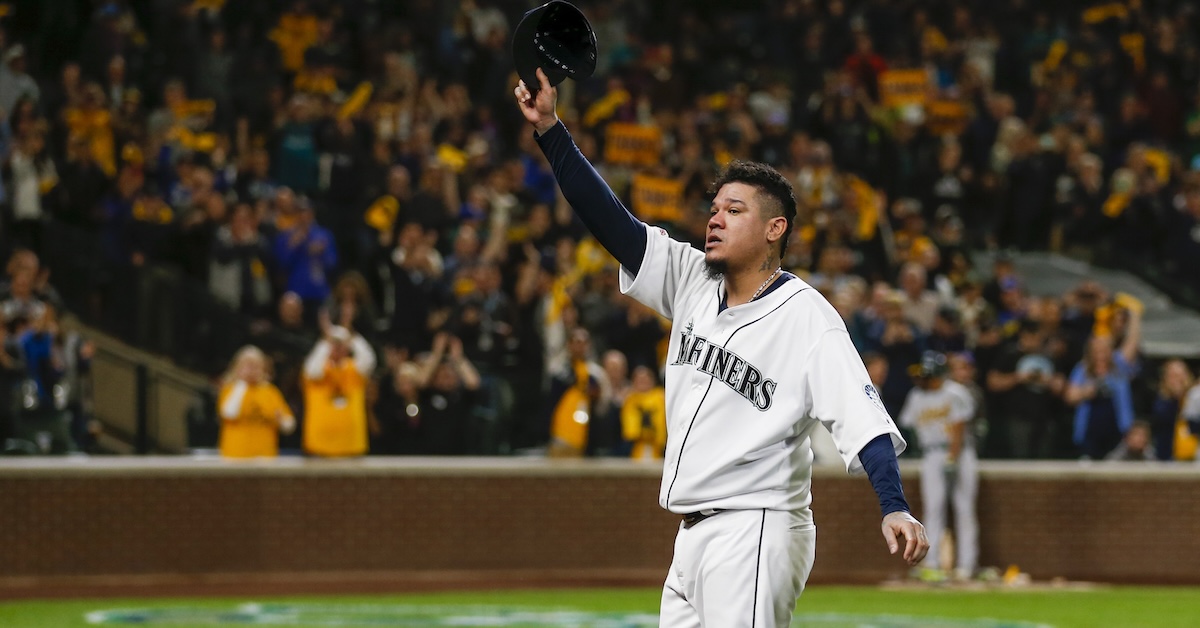
Before he’d ever thrown a major league pitch, cracked a prospect list, or reached legal adult status, Félix Hernández had a nickname: King Felix, crowned by U.S.S. Mariner blogger Jason Michael Barker on July 17, 2003, when he was overpowering much older hitters as a 17-year-old in the Low-A Northwest League. Still a teen when he reached the majors, he quickly came to represent the hopes and dreams of a franchise that had fallen short of a World Series despite four playoffs appearances from 1995–2001; parted with superstars Randy Johnson, Ken Griffey Jr., and Alex Rodriguez along the way; and capped that run with a record-setting 116 wins but a premature exit in the ALCS.

Though slow to embrace the royal moniker, Hernández grew into it. His dazzling combination of an electrifying, darting sinker, a knee-buckling curve, and a signature hard changeup propelled him to a Cy Young Award, two ERA titles, six All-Star appearances, and a perfect game. From 2009–14, he was the best pitcher in the American League by ERA, FIP, strikeouts, and WAR, parlaying that into a contract that made him the game’s highest-paid pitcher. Unfortunately, a heavy workload — more innings than any pitcher 23 or younger since Dwight Gooden two decades earlier — sapped the sizzle from his fastball, with injuries and a cavalier approach to conditioning taking their toll as well. The Mariners struggled to surround him with a quality roster while cycling through managers and pitching coaches every couple of years. The team didn’t reach the playoffs once during Hernández’s career, finishing above .500 just five times, with a pair of second-place showings in the AL West as good as it got. Read the rest of this entry »


Orioles Add Taylor Ward, Send Grayson Rodriguez West

Benny Sieu and Tim Heitman – Imagn Images

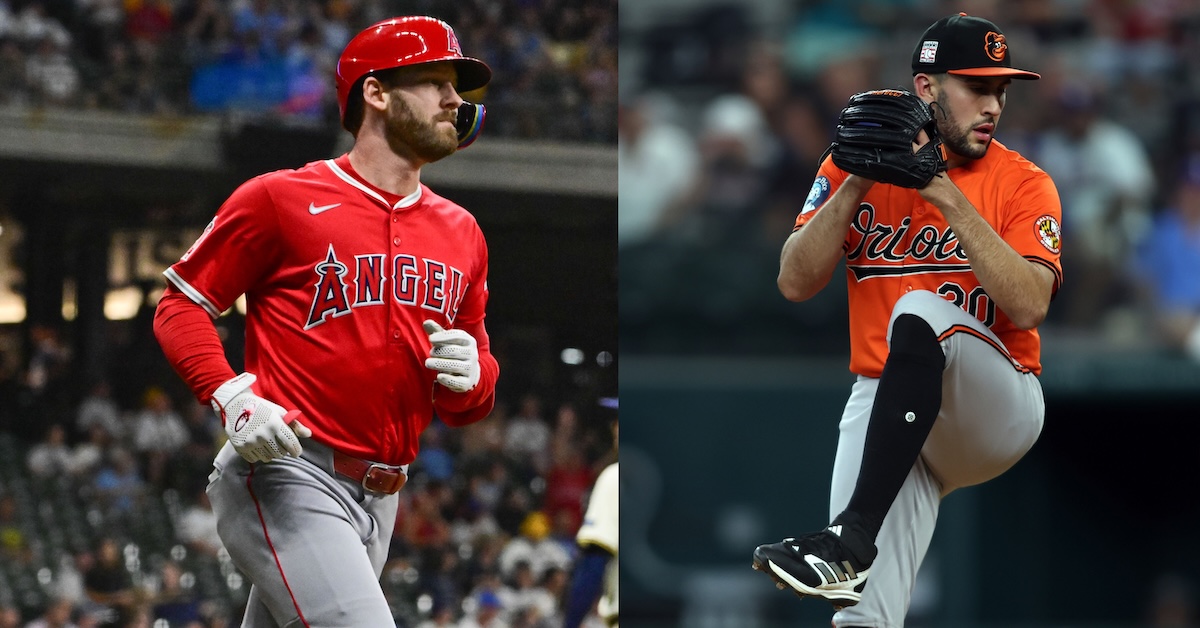
November is supposed to be a sleepy time of the offseason, with qualifying offers and 40-man roster shenanigans the main points of interest. This year has had a few fun surprises, though. First, Josh Naylor returned to the Mariners on a five-year deal, a surprise less in terms of destination than timing – these sorts of contracts normally wait until December. Now, we have a bona fide challenge trade: The Orioles are sending Grayson Rodriguez to the Angels in exchange for Taylor Ward.

Rodriguez, one of the top pitching prospects in baseball a few years ago, is also one of the toughest players in the majors to evaluate. The potential is there. He has multiple putaway secondaries, a lively fastball he can command to multiple parts of the zone, and he’s athletic enough that his command has trended upwards from fringe to average, with the kind of trajectory that makes you expect more to come. If you’re looking for an ace, you’re probably looking for someone whose skills roughly look like this.

On the other hand, unavailability is the worst ability, to twist the tired old saying ever so slightly. Rodriguez has struggled to stay on the field in his time in the majors, and that’s putting it lightly. He missed a good chunk of 2022, his last minor league season, with a lat strain. He then missed half of 2024 with two different shoulder injuries, while another lat strain and bone spurs in his elbow cost him the entirety of the 2025 season. At this point, three of his last four seasons have been severely curtailed by major injuries, including recurring shoulder problems. Read the rest of this entry »


2025 American League 40-Man Roster Crunch Analysis

Angel Genao Photo: Lisa Scalfaro/USA TODAY NETWORK via Imagn Images

One of my favorite annual exercises is a quick and dirty assessment of every team’s 40-man roster situation. Which prospects need to be added to their club’s 40-man by next Tuesday’s deadline to be protected from the Rule 5 Draft? Which veterans are in danger of being non-tendered because of their projected arbitration salary? And which players aren’t good enough to make their current org’s active roster, but would see the field for a different club and therefore have some trade value? These are the questions I’m attempting to answer with a piece like this. Most teams add and subtract a handful of players to their roster every offseason — some just one or two, others as many as 10. My aim with this exercise is to attempt to project what each team’s roster will look like when the deadline to add players arrives on Tuesday, or at least give you an idea of the names I think are likely to be on the table for decision-makers to consider.

This project is completed by using the RosterResource Depth Charts to examine current 40-man occupancy and roster makeup, and then weigh the young, unrostered prospects who are Rule 5 eligible in December against the least keepable current big leaguers in the org to create a bubble for each roster. The bigger and more talented the bubble, the more imperative it is for a team to make a couple of trades to do something with their talent overage rather than watch it walk out the door for nothing in the Rule 5.

Below you’ll see each team’s current 40-man count, the players I view as locks to be rostered, the fringe players currently on the roster whose spots feel tenuous, and the more marginal prospects who have an argument to be added but aren’t guaranteed. I only included full sections for the teams that have an obvious crunch or churn, with a paragraph of notes addressing the clubs with less intricate roster situations at the bottom. I have the players listed from left to right in the order I prefer them, so the left-most names are the players I’d keep, and right-most names are the guys I’d be more likely to cut. I’ve italicized the names of the players who I believe fall below the cut line. As a reminder, players who signed at age 18 or younger must be added to the 40-man within five seasons to be protected from the Rule 5, while those signed at age 19 or older must be added within four. Brendan Gawlowski examined the National League yesterday, so be sure to check that out too. Let’s get to it. Read the rest of this entry »


2026 Contemporary Baseball Era Committee Candidate: Fernando Valenzuela

Malcolm Emmons-USA TODAY Sports

The following article is part of my ongoing look at the candidates on the 2026 Contemporary Baseball Era Committee ballot. For a detailed introduction to this year’s ballot, use the navigation tool above. An introduction to JAWS can be found here.

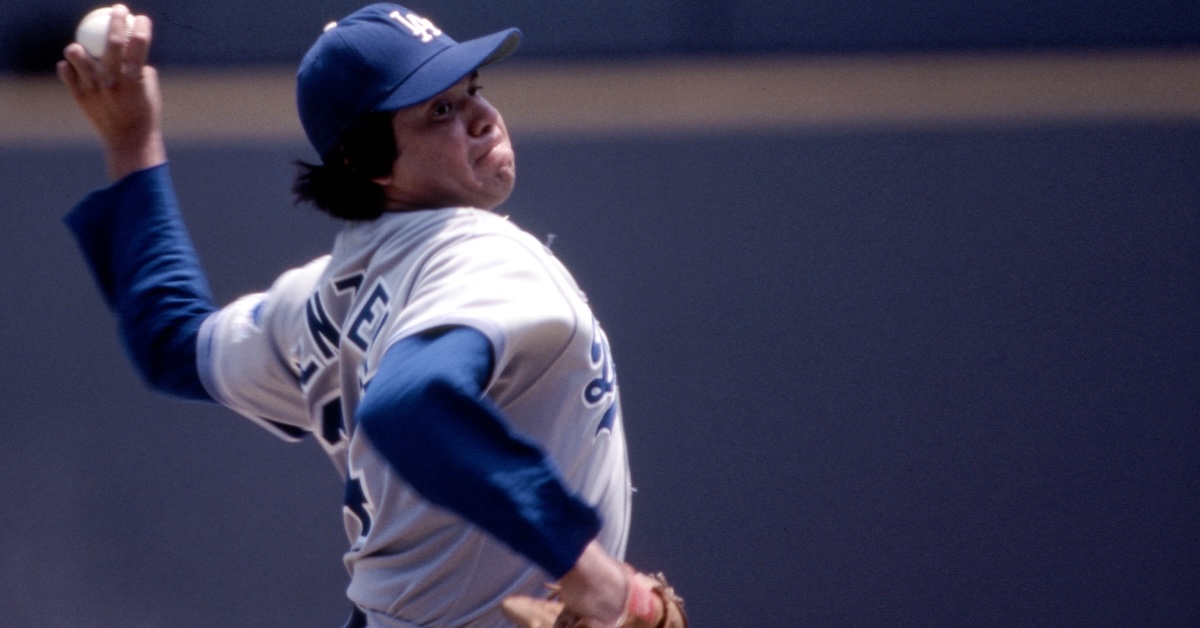
Though he won the Rookie of the Year award, a Cy Young, and a World Series all in his first full season while beginning a six-year streak of All-Star selections — the first of those as the game’s starter — Fernando Valenzuela wasn’t just a star pitcher. He was an international icon, the centerpiece of a cultural phenomenon, and a beloved global ambassador who brought generations of Mexican American and Latino fans to baseball while helping to heal the wounds caused by the building of Dodger Stadium, the very ballpark in which he starred.

Roberto Clemente is ‘The Great One,’ but culturally, Fernando Valenzuela has been more significant in terms of bringing a fan base that didn’t exist in baseball,” José de Jesus Ortiz, the first Latino president of the BBWAA, told author Erik Sherman for Daybreak at Chavez Ravine, a 2023 biography of Valenzuela. Sherman himself described the pitcher as “like a composite of the Beatles — only in Dodger blue. His appeal was universal.”

After excelling in a relief role during a September 1980 cup of coffee with the Dodgers — as a 19-year-old in the heat of a playoff race, no less — Valenzuela took the world by storm the following spring. Pressed into service as the Opening Day starter, he threw a five-hit shutout, then reeled off four more shutouts and six more complete games within his first eight starts, a span during which he posted a 0.50 ERA. Despite speaking barely a word of English, the portly portsider (listed at 5-foot-11 and 180 pounds, but generally presumed to be at least 20 pounds heavier) charmed the baseball world with his bashful smile while bedeviling hitters with impeccable command of his screwball, delivered following a high leg kick and a skyward gaze at the peak of his windup.

Read the rest of this entry »


Taking a Look at Six Fall League Prospects on the Rise

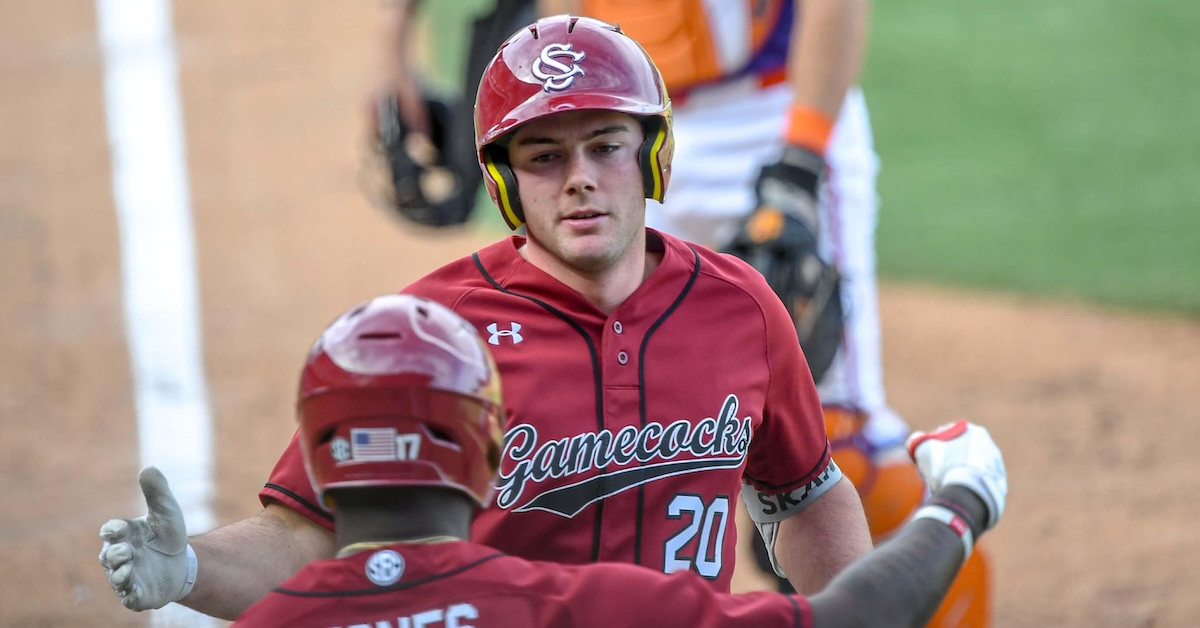
Ethan Petry Photo: Ken Ruinard/USA TODAY NETWORK via Imagn Images

A lot of different types of players get sent to the Arizona Fall League by their parent clubs: prospects who have lost time due to injury, org arms there to soak up enough innings for the league to function, guys eligible for the Rule 5 Draft whose teams aren’t yet sold on putting them on the 40-man roster, and, quite often, the most talented and exciting players in minor league baseball. It’s a rich and robust tapestry.

Now that the league’s action has commenced, one use of the AFL is to provide a sort of decontextualized look at some of the players whose strong performance in 2025 was already cause for some re-evaluation. Here’s one player from each AFL roster who arrived with some helium, prompting us to ask if they’ve changed their scouting report, or are just progressively improving into the player we expected.

Glendale Desert Dogs
Sam Antonacci, 2B, White Sox
2025 FV: Honorable Mention

Not only did the White Sox trade for Chase Meidroth months after giving Antonacci a slightly over-slot bonus in the fifth round of the 2024 draft, their Double-A Birmingham affiliate won the Southern League while slotting Antonacci in as the third straight feisty little bat-to-ball maven at the top of their lineup behind Rikuu Nishida and William Bergolla. At six feet, he’s a bit taller, but similar to Meidroth, below-average thump and a dearth of the athleticism necessary to drive a shortstop projection cooled early scouting reads for Antonacci, and he was an honorable mention for us on the White Sox list in April. Despite only playing his junior season there after two years of Division II ball, Antonacci is so Coastal Carolina-pilled that 35 hit by pitches form a substantial part of the .433 OBP he held over his first full pro season. (That he has yet to be plunked in his first three AFL games has to be, one would imagine, a source of deep personal disappointment.) Read the rest of this entry »


Job Posting: Baltimore Orioles – Pro Scouting Analyst Fellowship

Pro Scouting Analyst Fellowship

Location: Baltimore · MD
Reports To: Manager, Professional Scouting

Job Summary:
This individual will support the efforts of the Professional Scouting department by conducting extensive evaluations of professional players in the United States and abroad. The employee will utilize multiple information sources, relying heavily on video analysis while also working closely with the Baseball Analytics department. This is a seasonal position that is based out of Baltimore, MD. Preference will be given to candidates who can begin in the off-season, though summer-only candidates will be considered as well.

Primary Responsibilities

  • Compose scouting reports on professional players utilizing video, technology, and in-person looks to enhance the club’s decision-making process.
  • Monitor roster dynamics of other organizations and leagues, maintaining prospect lists, depth charts, and positional rankings.
  • Distribute target lists (FA, trade, Rule 5, international professional players, etc.) to scouts, coaches, and front office staff and coordinate responses for recommendations.
  • Monitor scouting reports for consistency, accuracy, and compliance.
  • Coordinate scout schedules and track coverage of target players.
  • Troubleshoot technical and equipment issues, provide solutions to video scouting assignments, coordinate data-sharing agreements, and perform other administrative duties as assigned.
  • Assist with data analysis, maintenance, and collection.
  • Prepare tools, visualizations, and reports to aid in disseminating information throughout Baseball Operations.

Qualifications

  • Exceptional knowledge of baseball and of sabermetric research and principles.
  • Demonstrated experience with player evaluation.
  • High level of attention to detail.
  • Strong oral and written communication skills.
  • Strong interpersonal skills and the ability to work well with staff members of all levels.
  • Proficiency with Microsoft Excel, SQL, R, and Python preferred.
  • Degree or equivalent experience in a STEM field preferred.
  • Ability to work evenings, weekends, and holidays and to travel as needed.

DISCLAIMER:
The statements herein are intended to describe the general nature and level of work being performed by the employee in this position. The duties listed do not represent an exhaustive list of all responsibilities, duties, and skills required of a person in this position.

EQUAL OPPORTUNITY STATEMENT:
The Baltimore Orioles are an Equal Opportunity Employer. It is the policy of the Baltimore Orioles to ensure equal employment opportunity without discrimination or harassment on the basis of race (including hair textures, afro hairstyles, or protective hairstyles), color, national origin or ancestry, religion or creed, gender or sex (including pregnancy), age, disability, citizenship status, marital status, veteran’s status, genetic predisposition or carrier status, gender identity, sexual orientation, or any other characteristic protected by law.

The anticipated hourly rate for this role is $20/hour.

Benefits include concession and merchandise discounts, free parking, and limited complimentary baseball tickets to home games. A 401(k) plan with discretionary employer match available after one year of service and 1,000 hours is also available.

This information is being provided in accordance with the Maryland Equal Pay for Equal Work – Wage Range Transparency law.

To Apply
To apply, please follow this link.

The content in this posting was created and provided solely by the Baltimore Orioles.


Sunday Notes: Cade Horton Is an Emerging Ace With an Old-School Approach

Cade Horton hasn’t simply been one of the best rookie pitchers in MLB this year, he has been one of the better starters in the senior circuit. The 24-year-old Chicago Cubs right-hander has a record of 11-4 to go with a 2.66 ERA and a 3.53 FIP over 115 frames. Moreover, he boasts a 0.93 ERA over his last 11 starts. In Triple-A to begin the season — his Cubs’ debut came on May 10th — Horton is now poised to start for Craig Counsell’s club in October,

My colleague Michael Baumann wrote about the 2022 first-rounder just over a month ago, but given his continued success, and with the postseason looming, another article seemed in order. Already well-informed on his background and arsenal, I asked Horton about the approach he takes with him to the mound.

“I’m a guy that is going to go out there and fill up the zone,” the erstwhile Oklahoma Sooner told me prior to a recent game at Wrigley Field. “I really just try to get outs and put my team in a good position to win. I’m a competitor, so I’m attacking the strike zone.”

Attacking the strike zone is, in many ways, akin to pitching to contact — more of an old-school approach to pitching — whereas in today’s game, chasing swing-and-miss is most often the goal. Given his high-octane heater and overall plus stuff, is he not looking to miss bats? Read the rest of this entry »


Five Things I Liked (Or Didn’t Like) This Week, September 12

Daniel Kucin Jr.-Imagn Images

Welcome to another edition of Five Things I Liked (Or Didn’t Like) This Week. That title is quite a mouthful. Every time I submit it, our helpful back end interface informs me that it is “far too long.” You’re not wrong, WordPress. But I lifted the title and the inspiration for this column from Zach Lowe’s basketball feature of the same name, and every time I consider removing the parenthetical part of it, I remember that the frustrations and failures of the game are part of what makes baseball so compelling. If you never disliked anything about sports, they wouldn’t be so fun to follow. So while every item this week involves something I liked, they also all contain an element of something I didn’t care for. Missed plays, bobbled balls, artificially abbreviated outings, below-average defensive units, lengthy injury recoveries – there are things to dislike in each of these. They all brought me extreme joy anyway, though. Let’s get going.

1. Relatable Frustration
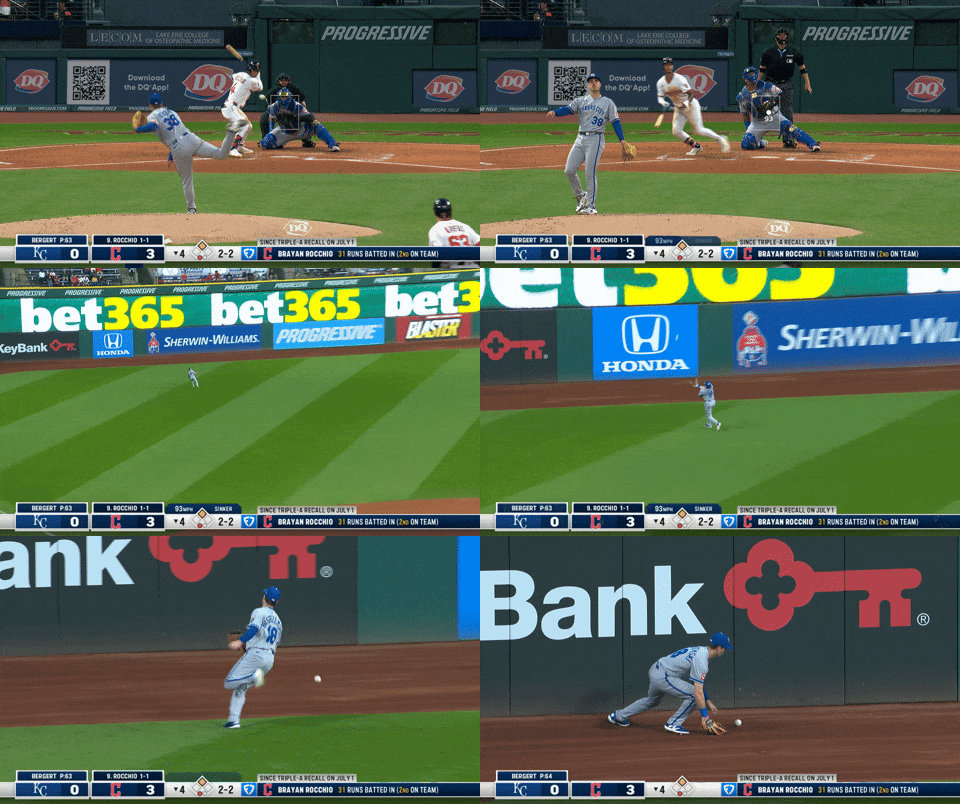
Mike Yastrzemski has been everything the Royals could have hoped for since he joined the team at the trade deadline. He leads off against righties, gets platooned against lefties, and plays his habitual right field. He’s been the team’s second-best hitter behind Bobby Witt Jr., a huge boon as they chase slim playoff odds. Also, when he goofs something up, his reactions are very relatable:

You can see what happened there right away. Yaz’s first step was in, but the ball was actually over his head, and tailing towards the foul line so strongly that he couldn’t reach it. Sure, it was only his second start of the year in left field. Sure, he hasn’t played left for more than a handful of games since 2019. And sure, the ball had plenty of slice on it. But he’d probably tell you the same thing you’re thinking: Major league outfielders, particularly solid ones like Yastrzemski, should make that play. Read the rest of this entry »


Let’s Imagine a Different Coby Mayo

James A. Pittman-Imagn Images

Every year, the Baltimore Orioles turn out a crop of strapping young hitters who just got done obliterating minor league pitching. You’ve probably heard of many of them. Adley Rutschman, Gunnar Henderson, Jackson Holliday, Colton Cowser, Jordan Westburg, Samuel Basallo, the list goes on. All six of those guys will be everyday regulars next year; the only reason they aren’t now is because Rutschman and Westburg are on the IL. But lost in that percolation of prospects is Coby Mayo, whose early major league career hasn’t quite gone as expected. I wondered why – and what Mayo could do to capitalize on his promise.

A year ago, Mayo was comprehensively dominating pitchers meaningfully older than him. He posted a 139 wRC+ in Triple-A at age 22, following up on an equally scintillating 2023 season. He was a preseason Top 100 prospect. His raw power was immediately evident to all observers. He looked like he’d be a key piece of the 2025 Orioles’ playoff run. But that run never materialized, and neither did Mayo’s thumping, mid-lineup offense. Instead, he’s hitting .184/.259/.327 and batting ninth for the last-place Birds.

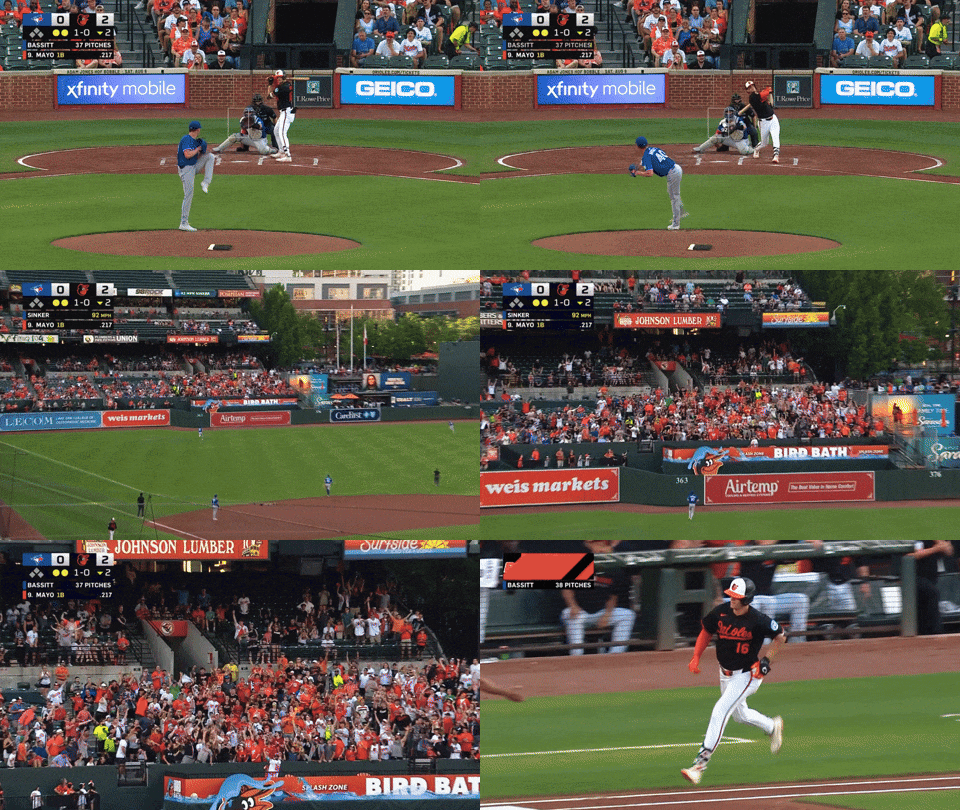
If you watch Mayo play, one thing jumps off the page: his unconventional uppercut swing. I’m not even quite sure how to describe it, but here’s a video of it at its best:

Swing mechanics aren’t my area of expertise, so I’ll just say it has a little funk to it and move on. The point is that he uses that swing to clobber the ball, and he really does accomplish what he sets out to, bad season notwithstanding. He has elite bat speed, and even in this miserable season, he’s posted good raw power indicators; his EV90, barrel rate, and launch angle suggest that he’s going to be elevating and celebrating plenty over the years to come. Read the rest of this entry »