Ben Lindbergh and Meg Rowley banter about a Shohei Ohtani survey, early WBC action, Andrew McCutchen’s new team, Payton Tolle’s triple-digits t-shirt, ABS-driven changes to Alex Bregman’s and Bo Naylor’s listed heights, wonky player cards, why teams start spring training days so early, Dodgers pitching problems, and the prevalence of inventive slides, then preview the 2026 Seattle Mariners (50:22) with The Seattle Times’Ryan Divish, and the 2026 Miami Marlins (1:34:43) with MLB.com’s Christina De Nicola, plus a few postscript updates (2:17:42).
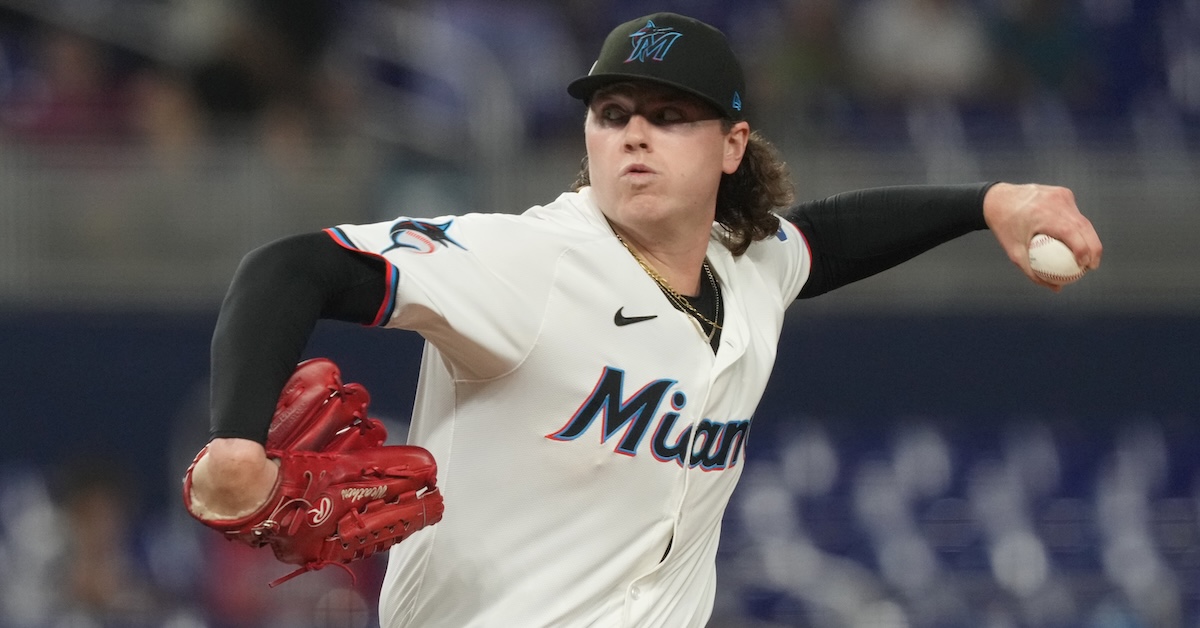
Thomas White is one of the game’s top pitching prospects. Drafted 35th overall in 2023 by the Miami Marlins out of an Andover, Massachusetts high school, the 21-year-old southpaw is ranked ninth on our newly-released 2026 Top 100 Prospects list as a 60-FV prospect. Moreover, only two pitchers rank in front of him, neither of whom throws left-handed.
The 6-foot-5, 240-pound hurler has grown as a pitcher since he was first featured here at FanGraphs in an August 2024 Sunday Notes column. Which isn’t to say he hadn’t already been making a name for himself. White, who was taking the mound for the High-A Beloit Sky Carp when I first spoke with him, ranked as Miami’s no. 4 prospect that summer, with Eric Longenhagen citing both his mid-90s fastball and plus slider when assigning him a 45+ FV. Our lead prospect analyst did include a caveat in that writeup: “He has impact starter upside and carries with him the risks typical of a volatile teenage pitching prospect.”
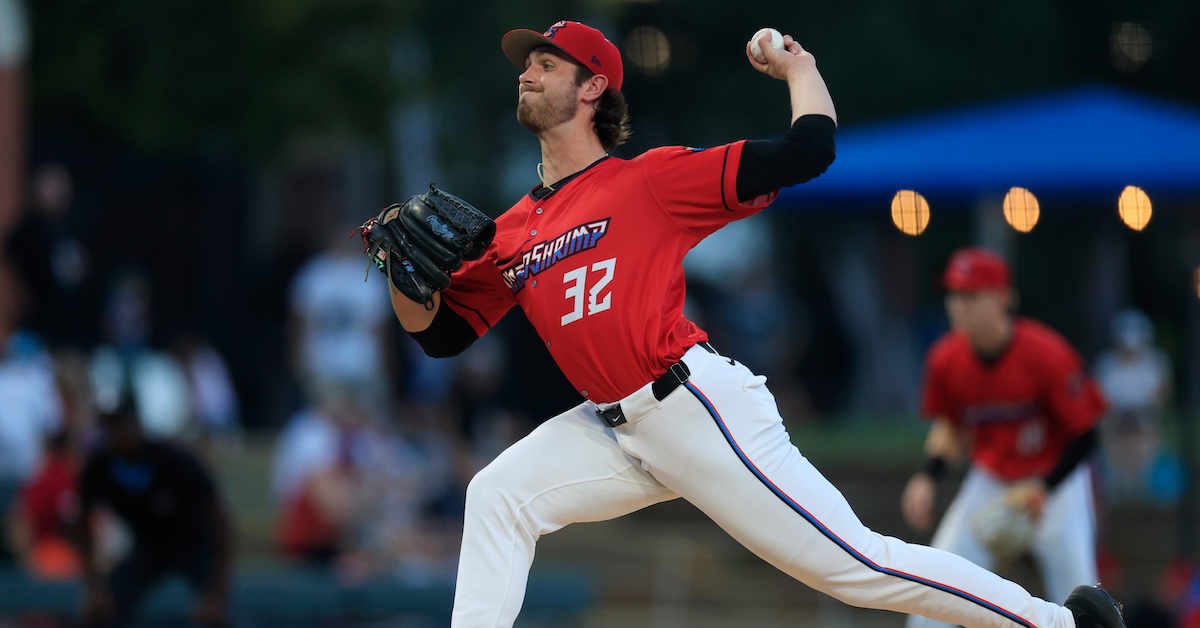
A year-and-a-half later, White is coming off of a 2025 season during which he dominated hitters to the tune of a 2.31 ERA, a 2.27 FIP, and an eye-opening 38.6% strikeout rate across three levels. He finished the year with the Triple-A Jacksonville, and while he is expected to return there to start the upcoming campaign, he shouldn’t be a Jumbo Shrimp for long. Possessing one of the highest ceilings among his prospect contemporaries, White is on the doorstep of the big leagues.
White discussed the continued development of his arsenal, and the mechanical tweaks he’s recently made to his delivery, in a recent phone conversation.
———
David Laurila: We first talked before a game at West Michigan, when you were playing in the Midwest League. Outside of being 18 months older and presumably 18 months smarter, has anything changed for you as a pitcher?
Thomas White: “I mean, there has been a lot of mechanical stuff and a little bit of approach. Other than that, nothing revolutionary, I would say.” Read the rest of this entry »
For pitchers, it’s really not optimal to show up late to spring training. Roll up to Arizona or Florida sometime in early March, and then you’re behind all your friends, still ramping up when it’s supposed to be go time. Maybe you find your form sometime in May. Maybe your season never gets off the ground. Such a fate is to be avoided, if at all possible.
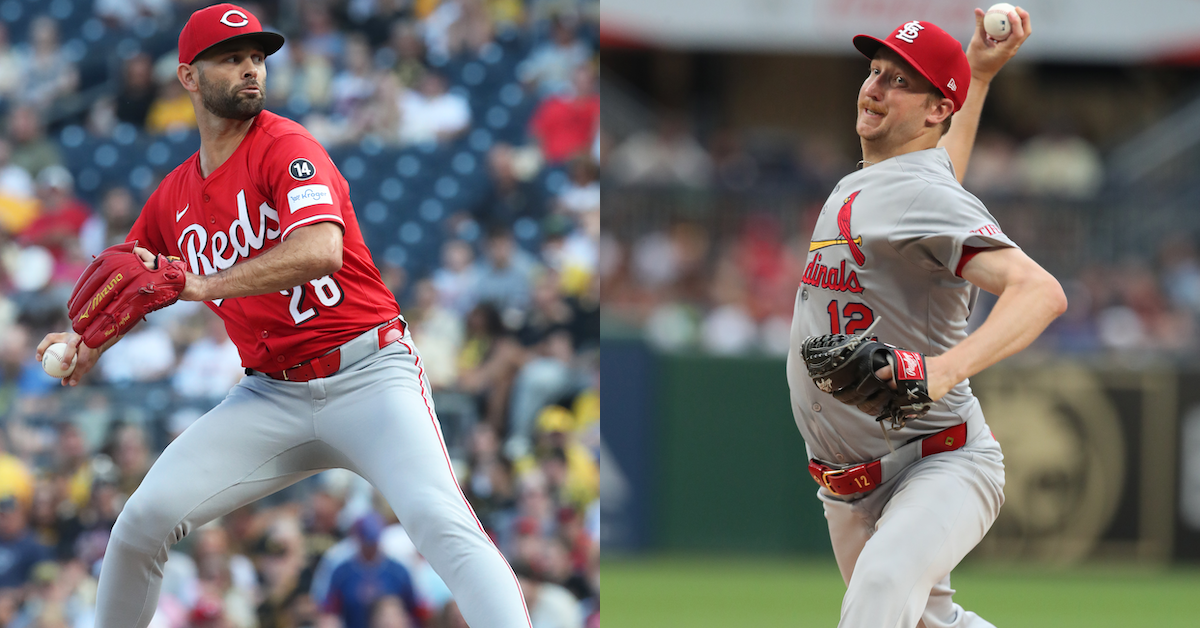
And so with pitchers and catchers reporting Tuesday, Monday was, in effect, the final day to sign to ensure a regular build-up. Appropriately, there was a predictable run on the straggling starting pitchers of the free agent market. Nick Martinez went to the Rays; Erick Fedde returned to the White Sox; Chris Paddack found a life raft with the Marlins. Also, even though José Urquidy signed with the Pirates last Thursday, we’re bringing him to the party, too. Let’s talk about each of these signings in that order.
Nick Martinez Signs With Rays (One Year, $13 Million)
Martinez is the biggest name of the bunch, and he accordingly received the largest deal — $13 million for a year’s work — as reported by MLB.com’s Mark Feinsand. Of the remaining pitchers available, his 2.1 ZiPS projected WAR was third best.
It’s unclear if he’ll assume his typical swingman role in Tampa Bay. The RosterResource crew sees him slotting into the back of the rotation, a place he thrived in the second half of 2024 with the Reds. Despite averaging just 92.6 mph on his four-seam fastball that season, Martinez leveraged a wide mix and impeccable command to deliver a 3.21 FIP over 142 1/3 innings, good for 3.4 WAR. On the strength of that campaign, he received (and accepted) the qualifying offer, bequeathing him a hefty $21.05 million for 2025.
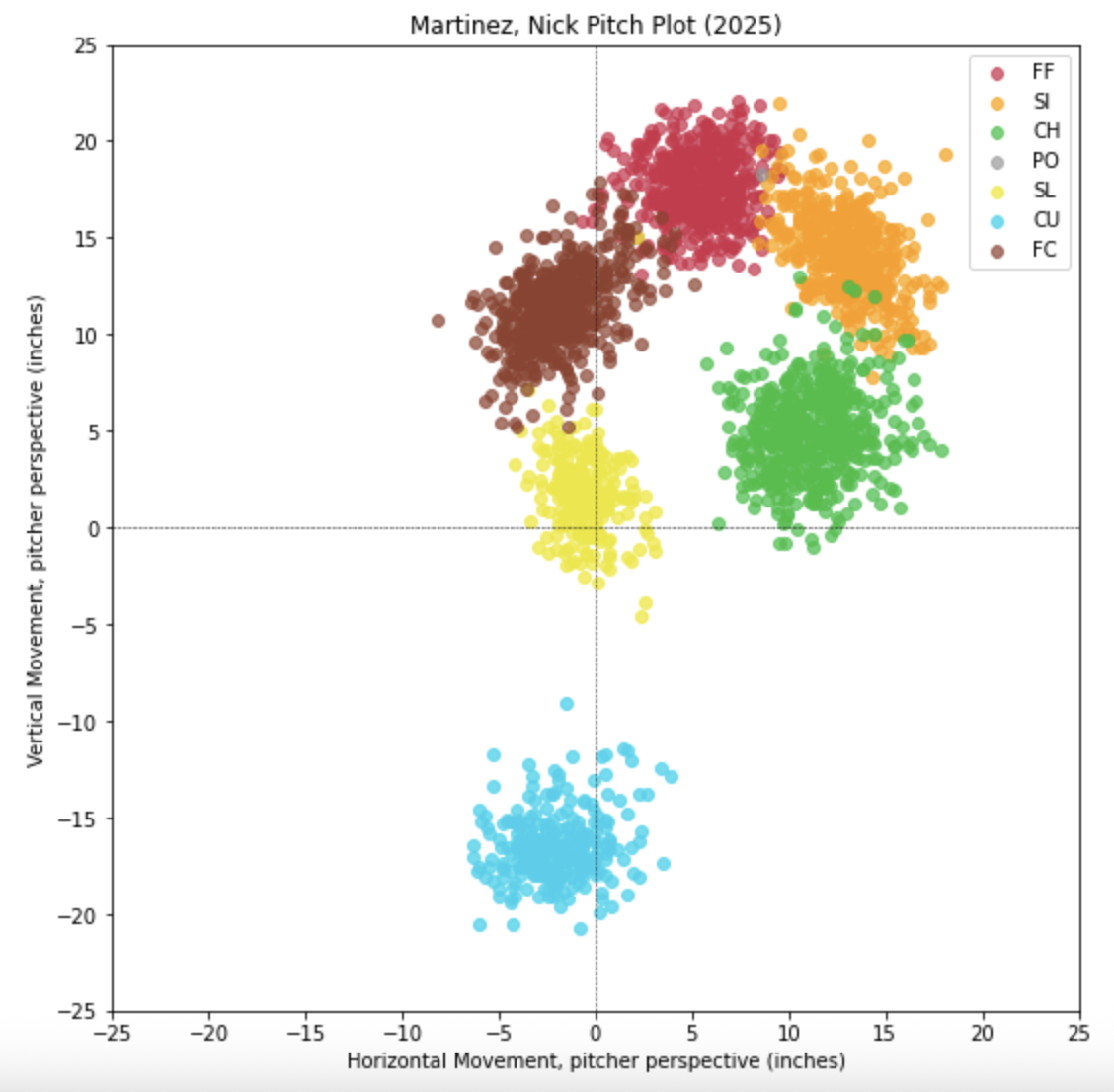
Last offseason, I speculated that Martinez was a good candidate to repeat his surprising success due in large part to his ability to blend his pitches together. These arsenal effects, I thought, would lead to sustainable soft-contact generation, allowing for continued success in spite of a so-so strikeout rate.
In some sense, I was half-right: New arsenal metrics from Baseball Prospectus, introduced months after the publication of that article, reinforced my thesis. Martinez’s 2025 Pitch Type Probability (a measure of unpredictability) ranked in the 94th percentile among pitchers with at least 1000 pitches thrown; his Movement Spread and Velocity Spread also clocked in well above average. True to form, he limited damage on contact, holding hitters to a 34.5% hard-hit rate (90th percentile) and a .275 BABIP.
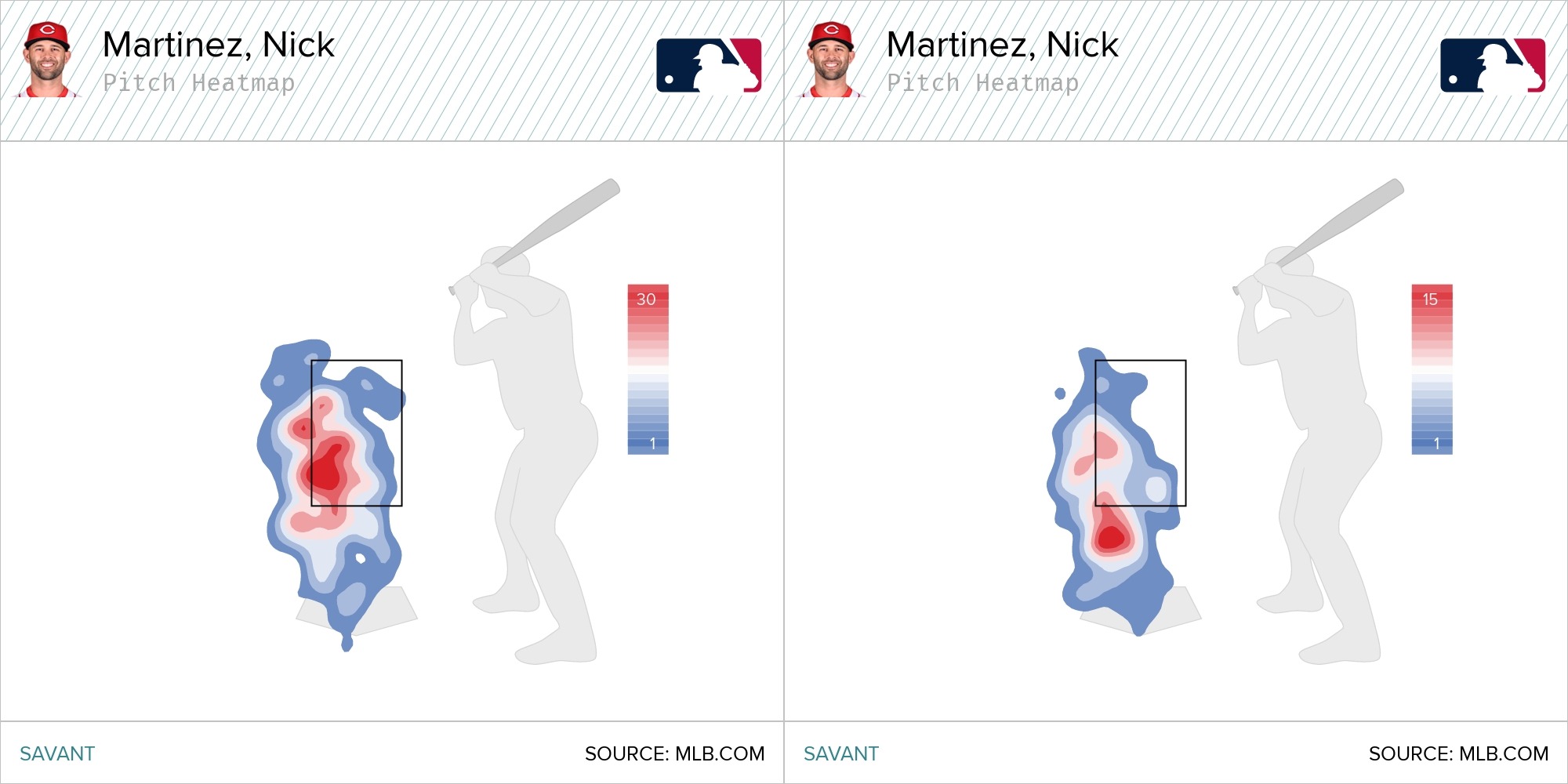
And yet Martinez’s 2025 season was a bust; his ERA jumped from 3.10 to 4.45, with the poor peripherals to back it up. After running a 3.2% walk rate in 2024, some control regression was expected. But his bat-missing went from acceptable to dire, his strikeout rate dropping nearly four percentage points. The main culprit was the changeup, which generated a huge amount of chase in 2024 and fell all the way back to Earth in 2025. The shape did not change significantly, but his command of the pitch slipped considerably. Check out how much more plate his changeup caught against left-handed hitters this season (left) versus last (right):
The changeup unlocks the entire Martinez experience, and its performance will determine whether the Rays will be getting a durable but unexciting innings-eater or a guy you might trust to start Game 3 of a Divisional Series. Either way, he improves the Tampa Bay staff for 2026, giving the team insurance against the wild whims of Joe Boyle. And in the case of a Boyle breakout, Martinez can easily shift back into his familiar swingman role.
Erick Fedde Signs With White Sox (Contract TBA)
It was mad ugly for Fedde in 2025. He started the year in St. Louis, pitching a little over 100 innings of exactly replacement-level ball; at the trade deadline, the Braves picked him up for a handful of gumballs, hoping he’d hoover up some innings in a lost season. Three weeks later, they straight up released him; the Brewers brought him in for a few mopup opportunities before hitting him with a DFA on the final day of the regular season.
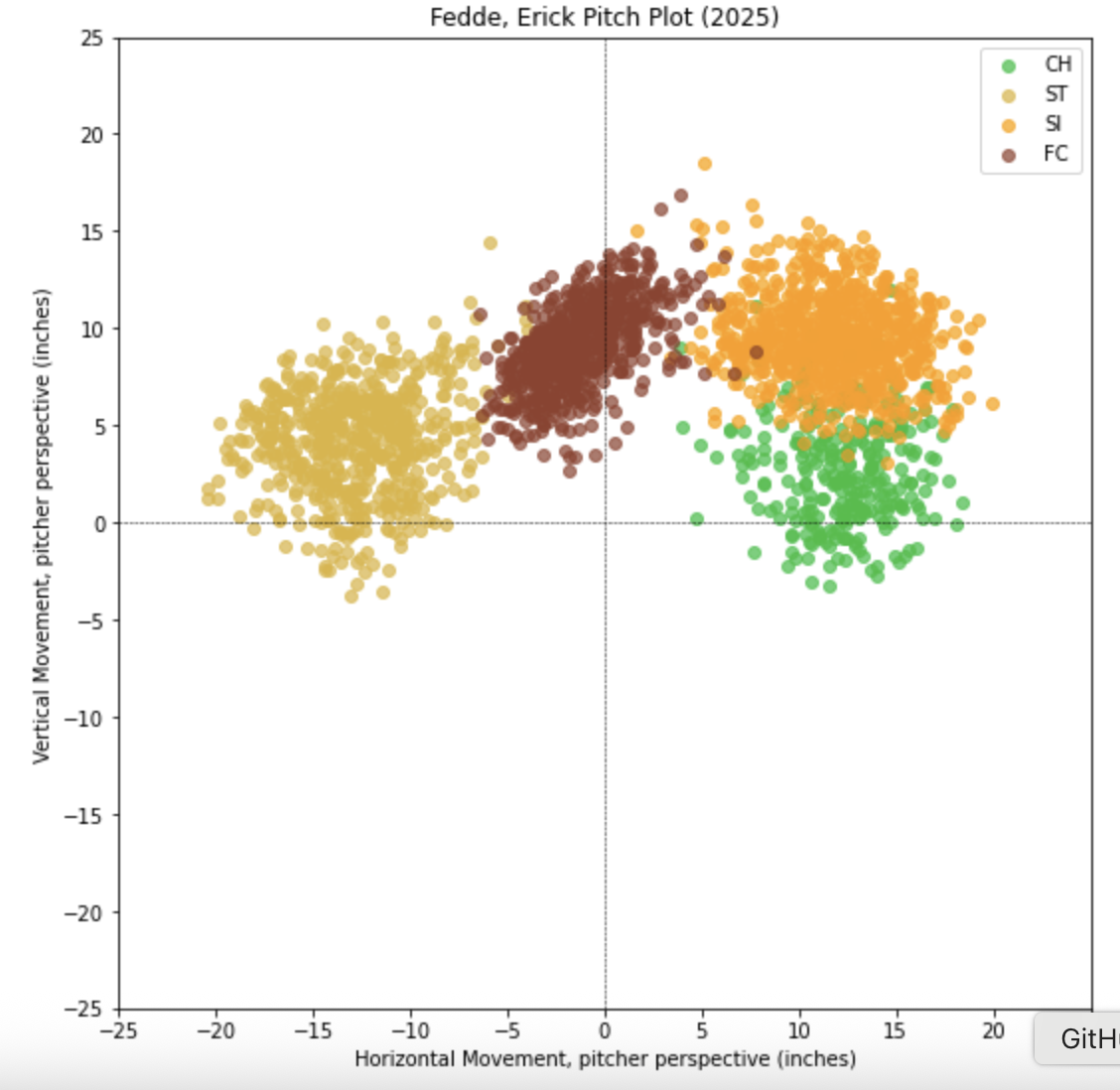
That’s not what you want. Fedde’s east-west attack fell apart in 2025; excluding Rockies hurlers, his 13.3% strikeout rate was worst in baseball (minimum 100 innings pitched.) Perhaps fatally, his walk rate ballooned as he opted to pitch around hitters instead of challenging them in the zone.
But what better place to resurrect his career? Those handful of months on the South Side in 2024 were the best he’s pitched since his triumphant return from the KBO. In 21 pre-trade deadline starts that year, Fedde bullied righties with his sinker-sweeper combo, and jammed enough lefties with his cutter to viably work his way through lineups. A 3.11 ERA earned him a deadline promotion to a contender, and he proceeded to pitch roughly as well as a Cardinal, though the team ultimately missed the playoffs.
Fedde was still pretty good against righties in 2025, but lefties smoked him to the tune of a .389 wOBA. His cutter lost a crucial couple inches of glove-side bite, and so the pitch tended to finish middle-up instead of on the inner edge. A perfectly straight 90-mph cutter is fodder for tanks; with no four-seam option on the table, Fedde was faced with the difficult choice of getting aggressive with subpar stuff or aiming at too-fine targets.
If getting back with pitching coach Brian Bannister can help Fedde gain back those two inches of break on the cutter, the White Sox can expect him to deliver on his presumably modest deal.
Chris Paddack Signs With Marlins (One year, $4 million)
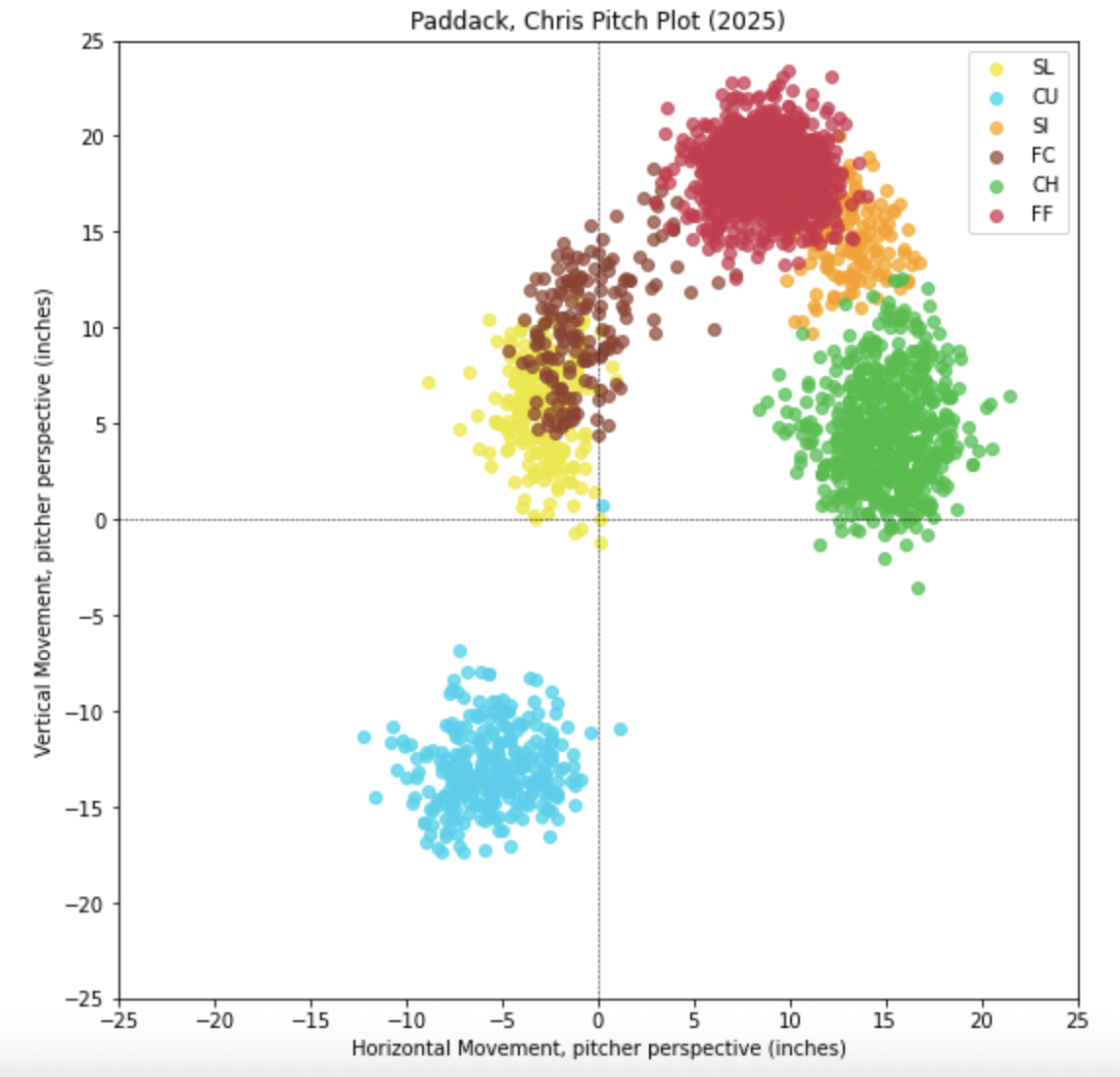
Paddack’s plan of attack is pretty straightforward, venturing not much further than a carry fastball and a butterfly changeup. When you throw a carry fastball nearly half the time at mediocre velocity, you’re going to give up a lot of home runs. So it’s been for Paddack his entire career, and never more so than in 2025, when he gave up a career-high 31 chucks across his 158 2/3 innings of work.
With Martinez and Fedde at least, you can squint at them and see an unlikely path to a 3-WAR season. Paddack, however, presents no such upside. He is what he is: a guy with reliably excellent command and not enough stuff to miss bats or stay off barrels. This blurb is already pretty negative, but still, I must admit that I am surprised that he received a guaranteed big league deal. (And for $4 million, no less.)
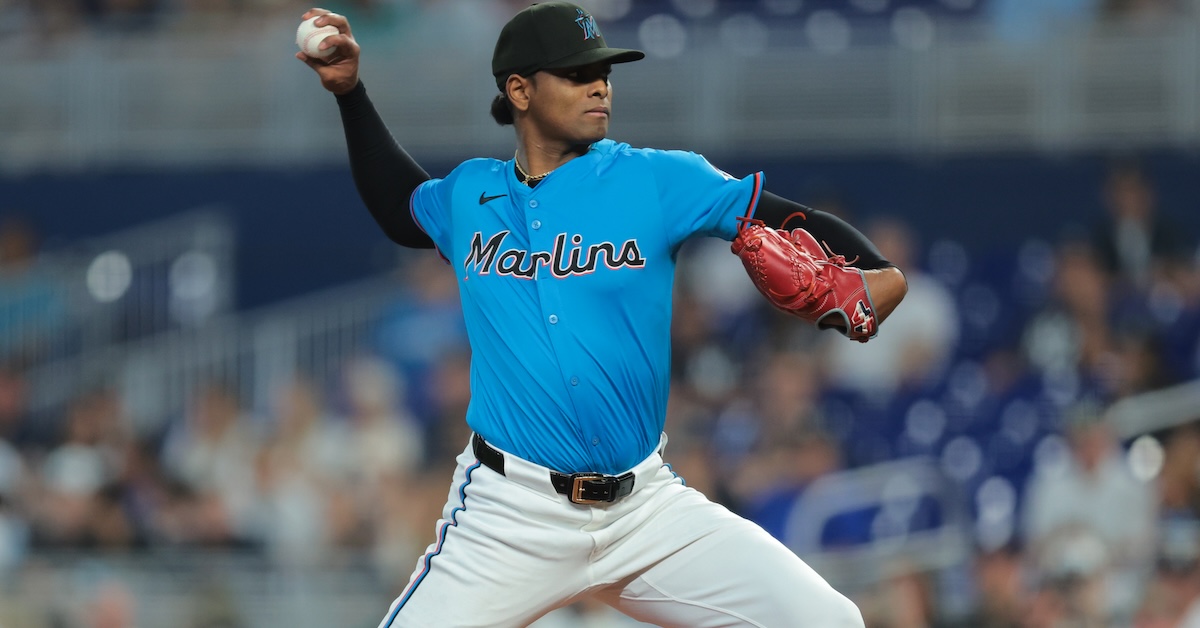
I’m not even really sure I understand this signing for the Marlins. RosterResource projects this signing to kick Janson Junk into a long relief role. Junk is, to my eye, a better version of Paddack, featuring similarly excellent command and a carry fastball from a high arm angle. But Junk can throw a pretty good breaking ball; Paddack’s extreme pronation bias prevents him from spinning the ball with any effectiveness. Unless the Marlins are planning to imminently ship out Sandy Alcantara, I don’t see what Paddack brings to their club at present. Perhaps he could work as an unconventional relief arm, throwing only fastballs and changeups.
José Urquidy Signs With Pirates (One Year, $1.5 million)
Remember him? Urquidy’s last full season of work was all the way back in 2022, when he racked up 164 1/3 innings for a World Series-winning Astros club. In the three years hence, he’s battled shoulder problems and then, finally, a torn elbow ligament, causing him to miss the entire 2024 season and nearly all of 2025.
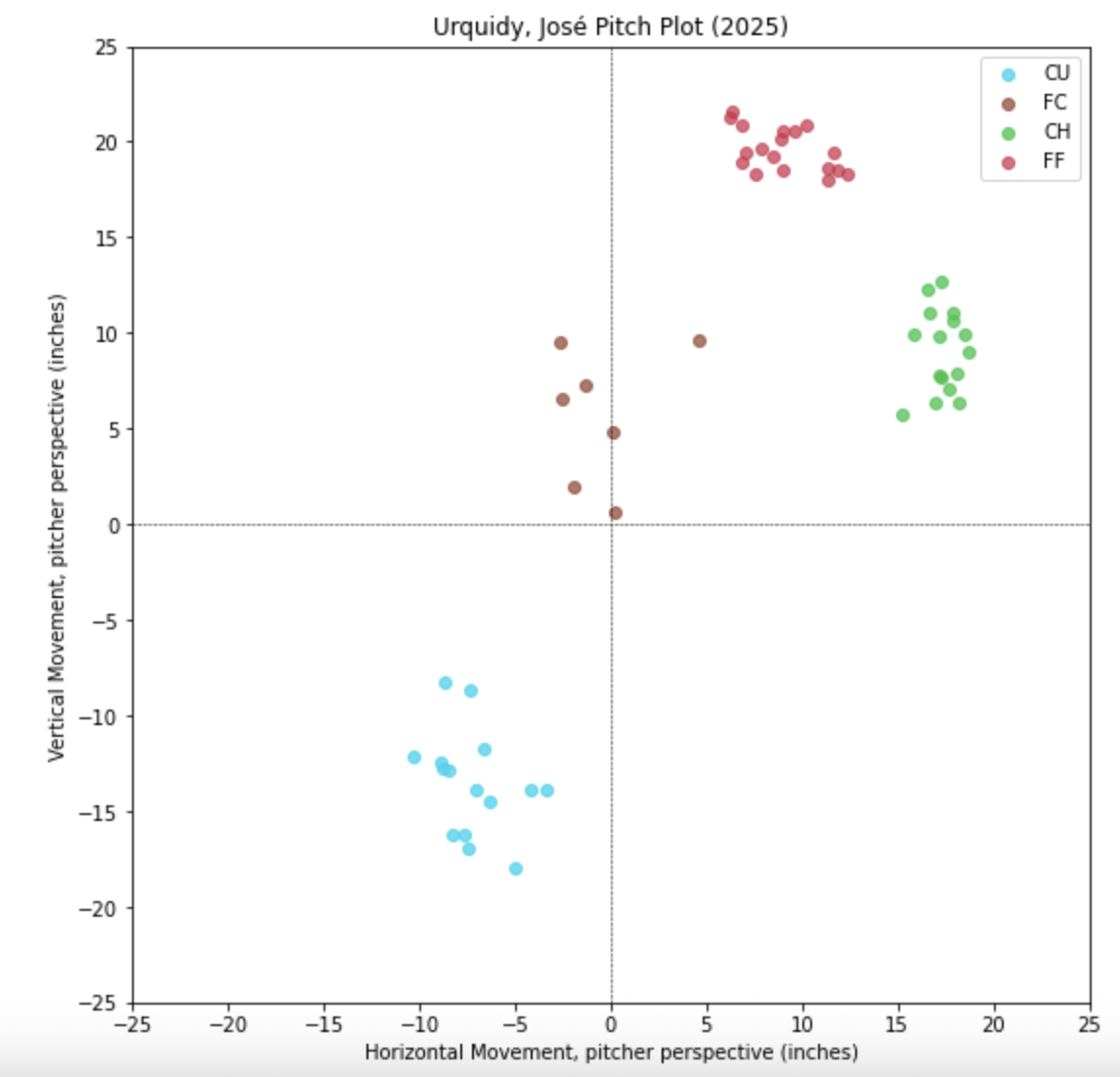
Crucially for the purposes of providing analysis in this blurb, Urquidy did briefly resurface in Detroit for 2 1/3 innings of work in September, allowing us to compare his stuff to where it was before the injury. Surprisingly, it was mostly the same. Both before and after, Urquidy possessed a four-seam fastball with crazy carry (nearly 20 inches of induced vertical break), a changeup with respectable vertical separation, and a slow two-plane curveball, and his fastball velocity was nearly identical, 93.1 mph in 2023 and 93.0 mph in 2025. But there was one pivotal difference: Urquidy’s sweeper, which was completely incongruous with the rest of his arsenal and racked up a bunch of whiffs in 2023, did not resurface in his brief big league stint last year.
Like Paddack, the arsenal characteristics (93-mph carry fastball) will ensure a bushel of tanks. Can Urquidy limit damage around the homers enough to hold the fort down until the return of Jared Jones? I think it might come down to the state of that sweeper. Otherwise, I’m not sure he has an out pitch against same-handed hitters. As far as backend bets go, there are worse ideas than giving $1.5 million to a guy who reliably beat his FIP for years prior to the injury. The Pirates aren’t asking for much, and Urquidy seems reasonably likely to meet those low expectations.
Last summer, an article titled Mark Gubicza Tackles a Challenging Career Quiz ran here at FanGraphs. In it, the Los Angeles Angels broadcaster did his best to answer matchup-specific questions from his playing days —- he pitched in the big leagues from 1984-1996 — such as which batter he allowed the most hits to, and who took him deep the most times. Along with taking a stab at the answers, Gubicza shared entertaining anecdotes about some of the hitters that were mentioned.
He isn’t the only pitcher-turned-broadcaster I challenged with (a version of) the quiz. Later in the season, I sat down with David Cone who, much like his 1980s-1990s contemporary, had fun stories to share.
I first asked the New York Yankees broadcast analyst which batter he faced the most times. Cone failed to come up with the correct answer, first guessing Will Clark (76 plate appearances), and then Juan Gonzalez (57), to who he recalled surrendering several gophers.
The answer is Roberto Alomar, against whom he matched up 93 times. What does he remember about facing the Hall of Fame second baseman?
“The thing that stands out — and he was a teammate of mine, too — is that Robbie was one of the best at picking up tipped pitches,” Cone told me. “Maybe a pitcher was doing something with his glove, and you kind of knew that Robbie would see that. But a lot of times he was using it as a bluff. Alex Cora does it to this day. You want the pitcher to think you have something on him, which gets into his head. It’s psychological warfare, and Robbie was the best at that.”
Davy Andrews recently wrote about Steven Kwan’s defense, which, as my colleague chronicled, has been demonstrably stellar. Not only has the 28-year-old Cleveland Guardians left fielder been awarded a Gold Glove in each of his four MLB seasons, the metrics back up the accolades. There hasn’t been a better defender at his position, and that goes for the senior circuit as well as the American League.
And then there is Kwan’s bat. The 2018 fifth-round pick out of Oregon State University isn’t a basher, but he is a solid contributor to the Guardians offense. Since debuting in 2022, the erstwhile Beaver has slashed .281/.351/.390 with a 112 wRC+. Moreover — this is no secret for most FanGraphs readers — he seldom goes down by way of the K. Kwan’s 9.5% strikeout rate over the past four campaigns is the lowest among qualified hitters not named Luis Arraez.
Grant Fink knows his left-handed stroke as well as anyone. Cleveland’s hitting coach tutored Kwan in the minors before moving into his current role, and they work together in the offseason. I asked Fink about two-time All-Star when the Guardians visited Fenway Park last September.
“If you look at his profile as a hitter in the major leagues, it is based on accuracy and ball flight,” Fink told me. “His key is making sure that his body is moving in a way where he can get his barrel to the ball in multiple places in the zone, and that he is making contact in the right windows to produce that consistent ball flight. Read the rest of this entry »
This year’s Hall of Fame ballot included three former Philadelphia Phillies position players, none of whom received the necessary 319 votes (out of 425 cast) to gain election. Chase Utley fared best with 251 votes (59.1%), while Bobby Abreu got 131 (30.8%), and Jimmy Rollins received 108 (25.4%). As did my colleagues Jay Jaffe and Dan Szymborski, I put checkmarks next to Abreu’s and Utley’s names, but not Rollins’s.
How did other BBWAA voters choose among the Phillies trio? A comprehensive answer isn’t possible — not everyone makes their ballots public — but we do know about the 260 voters whose selections were shared on Ryan Thibodaux’s Ballot Tracker. Here is the breakdown as of yesterday afternoon courtesy of the Tracker’s Anthony Calamis:
66 voted for none of the three.
25 had all three.
52 had only Utley.
9 had only Abreu.
3 had only Rollins.
63 had Utley and Abreu, but not Rollins.
42 had Utley and Rollins, but not Abreu.
As for the players’ relative merit, that is in the eye of the beholder. Reasonable arguments, both for and against, can be made for all three former Phillies by prioritizing specific statistics and accolades — or even reputations (none of Abreu, Rollins, or Utley have been tainted by scandal). Read the rest of this entry »
I don’t know why, but I’ve spent more time thinking about the Miami Marlins than any other team this winter. It started when the Marlins came to the end of the season with a not-terrible 79-83 record — three games better than the Braves! — with some interesting pieces looking forward.
Frankly, it’s impressive that Yankees general manager Brian Cashman can get anything done while locked in a staring contest with agent Scott Boras over the terms necessary to re-sign outfielder Cody Bellinger. As for Miami’s side, I deeply respect the Marlins pro scouting department for looking at all the work they did scouring New York’s farm system for potential targets during the Cabrera talks and refusing to let all that effort go to waste.
Weathers, like Cabrera, still has three seasons of team control remaining before he hits free agency. This is not a rebuilding team trading contracts set to expire before its next window of contention opens. Rather, the Marlins, who are in the early stages of transitioning from rebuilding to contending, have such a surplus of starting pitching that they feel comfortable trading not one, but two established starters in favor of stockpiling additional position player talent in the minors. When Michael Baumann wrote up the Cabrera trade, he speculated that we might see debuts this coming season from Thomas White and Robby Snelling, two of Miami’s top pitching prospects who both graduated to Triple-A last year. By trading Weathers in addition to Cabrera, the Marlins are all but committing to giving one or both of them meaningful innings in the majors in 2026. Read the rest of this entry »
The following article is part of Jay Jaffe’s ongoing look at the candidates on the BBWAA 2026 Hall of Fame ballot. For a detailed introduction to this year’s ballot, and other candidates in the series, use the tool above; an introduction to JAWS can be found here. For a tentative schedule, see here. All WAR figures refer to the Baseball Reference version unless otherwise indicated.
2026 BBWAA Candidate: Gio Gonzalez
Pitcher
Career WAR
Peak WAR Adj.
S-JAWS
W-L
SO
ERA
ERA+
Gio Gonzalez
28.3
26.2
27.2
131-101
1,860
3.70
111
Source: Baseball-Reference
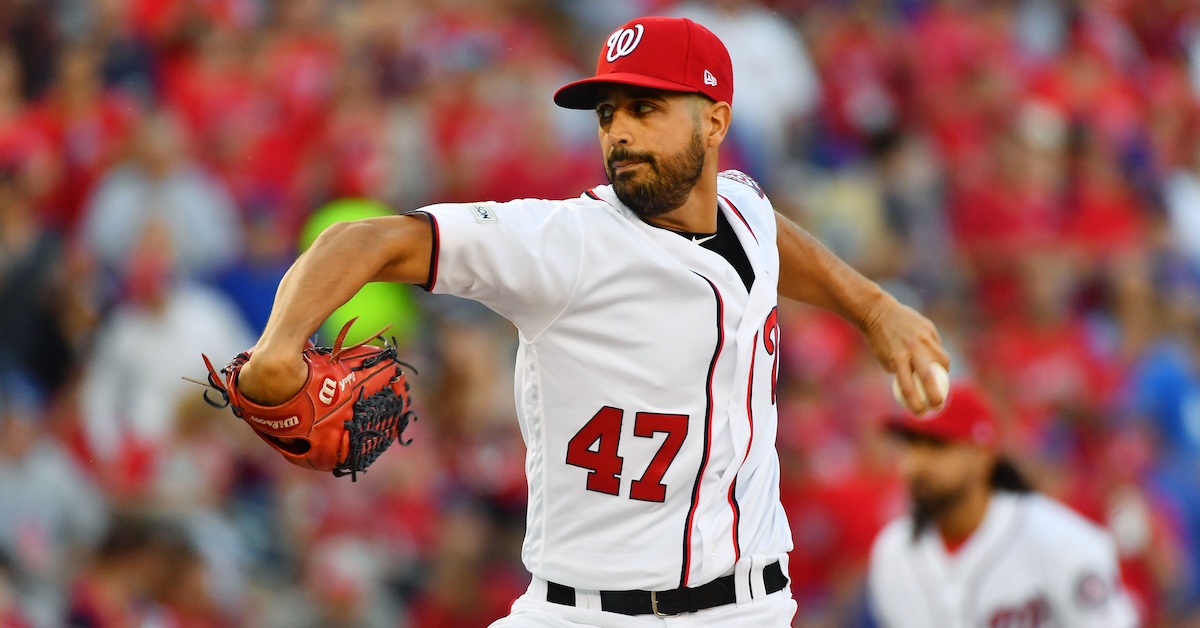
The baseball industry loves its pitching prospects — and sometimes seems to love dreaming on them by using them as trade chips almost as much as it does actually letting them pitch. Considered to have one of the best curveballs in the game from the outset of his professional career, Gio Gonzalez was traded three times before he’d thrown a major league pitch, and five times during a career that ended just after he turned 35. Along the way, the undersized southpaw made two All-Star teams, received Cy Young votes twice, and helped his teams reach the playoffs five times. While he wasn’t always easy to watch given his high walk rates, his ability to miss bats was a testament to the quality of his stuff.
…
Giovany Aramis Gonzalez was born on September 19, 1985 in Hialeah, Florida, a city in Miami-Dade County where roughly three-quarters of the population is of Cuban ancestry. He’s the oldest of six children of Max and Yolanda (Yoly) Gonzalez. Max, a first-generation Cuban-American, installed billboards and owned a scooter shop, while Yoly, an immigrant from Cuba, worked at various jobs to help the family make ends meet.
Gio was just four years old when his parents introduced him to baseball. Growing up, he played sandlot baseball with neighborhood kids in a narrow, rocky strip of land behind the family’s townhouse. “We broke so many windows that I found a guy who would replace them for 15 bucks apiece,” Yoly recalled in 2011.
“Max grew up tough, never got to play as much ball as he wanted and, when it rained on too-rare Sundays when he had a game as a child, he broke down in frustration and cried. But he never stopped studying the sport,” wrote the Washington Post’s Thomas Boswell in 2012. When his eldest son showed an aptitude for the game, Max taught him the curveball that would become his signature. Read the rest of this entry »



 Sponsor Us on Patreon
 Give a Gift Subscription
 Email Us: podcast@fangraphs.com
 Effectively Wild Subreddit
 Effectively Wild Wiki
 Apple Podcasts Feed
  Spotify Feed
 YouTube Playlist
 Facebook Group
 Bluesky Account
 Twitter Account
 Get Our Merch!