Archive for Featured

Guessing the Fate of April’s Underachieving Pitchers

Earlier this week, I made my on-the-record guesses for what would happen with some of April’s underachieving hitters. Now we’ll turn to look at the disappointing pitchers and the potential for more helpings of crow for me to eat come October.

Chris Sale, Boston Red Sox

Last year, through the late-season shoulder problems, I counseled people not to panic so soon on Sale. He’s Chris Freaking Sale after all. When the White Sox put him in the rotation in 2012, there was a lot of doom-and-gloom about how his pitching motion and his frame meant he wouldn’t survive long as a starting pitcher. But from 2012-17, Sale was one of the most durable starters in baseball and now he drinks overflowing pints out of the skulls of those pundits.

But now, I am quite worried, especially in the short-term. He’s shown he can occasionally dial it up as he did in the Yankees matchup, hitting 96-97 through most of the game. But his velocity is generally down, severely so in most games. He went three months without a start below an average of 95 mph last year. This year he’s only had individual pitches passing this mark in a single game (the Yankees one).

If this is the Sale that we have now, I do expect him to adjust in the long-term. But the Sale of 2018 had a highly edited repertoire. He’s essentially a fastball-changeup-slider pitcher who is amazing at changing the look of these pitches. He could throw his fastball anywhere between 88-98 and have it look like five different pitches depending where it was. In 2019, he’s Pavarotti with an octave taken away. His fastball is more one-note and hitters have realized it; of every 10 fastballs that batters swing at, one in 10 of those swings-and-misses from previous years are now being hit.

“But Dan, he’s just being cautious because of his shoulder!” That makes me even more worried if 10 months later, he’s still having to pitch in a way that makes him a less effective pitcher because of a shoulder issue. Elbow problems are bad, but shoulder problems are a whole new level of scary, like going from a haunted house at an elementary school carnival to a Saw movie. I’m hopeful in the long-term, but it’s a problem for Boston getting back into the race. Read the rest of this entry »


Shortstops Are Hitting Like Never Before

Take a look at a 2019 WAR leaderboard and you’ll see some familiar names at the top. Cody Bellinger is having a whale of a season. Christian Yelich is hitting like Barry Bonds and is somehow second in the majors in baserunning runs as well. Mike Trout — well, you know Mike Trout. Look a little closer though, and you might notice something strange. There are four shortstops in the top 10 for WAR this year, and they’re not the usual suspects. Paul DeJong, Elvis Andrus, Jorge Polanco, and Javier Báez are all having great seasons so far, and if you had them as the four best shortstops in baseball this year, you’re a better prognosticator than I am.

Cast your eyes a little further down the board and you might see an interesting trend. Marcus Semien is 11th in WAR. Tim Anderson, Trevor Story, Xander Bogaerts, and Adalberto Mondesi are in the top 25, and Fernando Tatis Jr. isn’t far behind. Perennial stalwarts Andrelton Simmons, Corey Seager, and Carlos Correa are off to good starts. Shortstop, in fact, has produced more WAR than any other position this year.

Now, to some extent, that’s a referendum on how important shortstop is defensively. Only catcher has a higher positional adjustment than shortstop, and as a result only catchers have been worth more defensive runs this year. However, dismissing the prevalence of shortstops atop the WAR leaderboard as a defense-based illusion sells this current crop short. We could very well be looking at the best-hitting shortstop season of all time.

Let’s start at the very top with wRC+. This year’s shortstop class has produced a 107 wRC+ so far. That isn’t the actual best in baseball history, but it’s second only to 1874, and hoo boy are stats from 1874 weird. In that season, shortstops walked .9% of the time, struck out 1.2% of the time, and delivered a batting line of .305/.311/.372 in only 660 games. Let’s be reasonable here and throw out everything before the turn of the century. Cut those out, and the leaderboard looks like this:

Best Shortstop Offensive Seasons, 1901-2019
Year wRC+
2019 107
1904 101
1908 96
1909 96
2018 95
1905 94
1917 93
1910 93
1907 93
2016 93

2019 shortstops are on top, and it isn’t particularly close. Strip out everything pre-integration, and the recent rise of slugging shortstops jumps out even more:

Best Shortstop Offensive Seasons, 1947-2019
Year wRC+
2019 107
2018 95
2016 93
1947 90
2007 90
1964 90
1949 89
2005 88
2017 88
2002 88

Ask most baseball fans for the best shortstop-hitting season in history, and they’ll point to 2002. This was indeed a year of great shortstop hitters — Alex Rodriguez hit .300/.392/.623 on his way to a 10-WAR season, and Derek Jeter, Nomar Garciaparra, and Miguel Tejada all had sterling years. That’s all well and good — it was a top 10 season on the above leaderboard, after all — but 2002 also had 585 plate appearances of Neifi Perez’s .236/.260/.303 line, as well as a shockingly low-offense season from Rockies shortstop Juan Uribe, who hit .240/.286/.341 while playing half of his games at Coors.

This season has its fair share of laggards (Brandon Crawford is slugging .212), but it also has 16 shortstops with a batting line at or above league average. Freddy Galvis is hitting .297/.317/.485 and is the 14th-best-hitting shortstop this year. That 114 wRC+ would have been sixth-best in 2002. The depth of shortstop right now is simply stunning. Read the rest of this entry »


Top 35 Prospects: Los Angeles Dodgers

Below is an analysis of the prospects in the farm system of the Los Angeles Dodgers. Scouting reports are compiled with information provided by industry sources as well as from our own (both Eric Longenhagen’s and Kiley McDaniel’s) observations. For more information on the 20-80 scouting scale by which all of our prospect content is governed you can click here. For further explanation of the merits and drawbacks of Future Value, read this.

All of the numbered prospects here also appear on The Board, a new feature at the site that offers sortable scouting information for every organization. That can be found here.

Dodgers Top Prospects
Rk Name Age Highest Level Position ETA FV
1 Keibert Ruiz 20.8 AA C 2020 60
2 Dustin May 21.7 AA RHP 2020 55
3 Gavin Lux 21.4 AA 2B 2021 55
4 Will Smith 24.1 AAA C 2019 50
5 Alex Verdugo 23.0 MLB RF 2019 50
6 Tony Gonsolin 25.0 AAA RHP 2019 45+
7 Jeter Downs 20.8 A+ 2B 2021 45+
8 Josiah Gray 21.4 A RHP 2021 45
9 Omar Estevez 21.2 AA 2B 2020 45
10 DJ Peters 23.4 AA CF 2020 45
11 Diego Cartaya 17.6 R C 2023 40+
12 Dennis Santana 23.0 MLB RHP 2019 40+
13 Connor Wong 22.9 A+ C 2020 40+
14 Jacob Amaya 20.7 A SS 2022 40+
15 Jeren Kendall 23.2 A+ CF 2021 40+
16 Mitchell White 24.3 AA RHP 2019 40
17 Cristian Santana 22.2 A 3B 2021 40
18 Michael Grove 22.4 A+ RHP 2022 40
19 Edwin Rios 25.0 AAA 1B 2019 40
20 Matt Beaty 26.0 MLB 1B 2019 40
21 Yadier Alvarez 23.1 AA RHP 2020 40
22 Gerardo Carrillo 20.6 A+ RHP 2022 40
23 Jordan Sheffield 23.9 A+ RHP 2019 40
24 Miguel Vargas 19.5 A 3B 2022 40
25 Carlos Rincon 21.5 A+ RF 2021 40
26 Carlos Duran 17.7 R RHP 2024 40
27 Robinson Ortiz 19.3 R LHP 2023 40
28 Josh Sborz 25.4 AAA RHP 2019 40
29 Andy Pages 18.4 R RF 2023 35+
30 Zach Willeman 23.1 A RHP 2022 35+
31 Cody Thomas 24.6 AA OF 2021 35+
32 Leonel Valera 19.8 A SS 2023 35+
33 John Rooney 22.3 A LHP 2020 35+
34 Jerming Rosario 17.0 R RHP 2024 35+
35 Drew Jackson 25.8 MLB SS 2019 35+
Reading Options
Detail Level
Data Only
Full
Position Filter
All

60 FV Prospects

Signed: July 2nd Period, 2014 from Venezuela (LAD)
Age 20.8 Height 6′ 0″ Weight 200 Bat / Thr S / R FV 60
Tool Grades (Present/Future)
Hit Raw Power Game Power Run Fielding Throw
55/70 50/50 30/40 30/20 50/60 55/55

Watching Ruiz catch is like watching video of Alan Shepard play golf on the moon. Things seem to be moving at a different pace for Keibert, especially on defense. He has a thick, unimpressive build and is a mediocre athlete, but almost all of his baseball skills are elite. He’s one of the better receivers in the minors and is a better ball blocker than one would expect given his lack of athleticism, as if he has wild pitch precognition. Despite average pure arm strength, Ruiz is going to snipe a lot of would-be base-stealers because his throws are almost always right on the bag.

The skills-over-tools coloration of Ruiz’s profile continues on offense, where his hand-eye coordination and bat control make him extraordinarily hard to strike out. He struck out in just 8% of his plate appearances last year as a 19/20-year-old at Double-A Tulsa. Because Ruiz can make contact with just about anything, he tries to, and his lack of selectivity will likely limit his big league power output and perhaps his ability to reach base. But he has a very rare skillset for a catcher and a good chance to be an All-Star.

55 FV Prospects

2. Dustin May, RHP
Drafted: 3rd Round, 2016 from Northwest HS (TX) (LAD)
Age 21.7 Height 6′ 6″ Weight 180 Bat / Thr R / R FV 55
Tool Grades (Present/Future)
Fastball Slider Changeup Cutter Command Sits/Tops
55/60 60/70 45/50 50/60 45/60 93-96 / 98

May’s flamboyant ginger curls and Bronson Arroyo-esque leg kick are maybe the third and fourth most visually captivating aspects of his on-mound presence once you’ve gotten a look at his stuff. His mid-90s fastball plays up due to great extension, and further incorporation of a running two-seamer has given May’s heater enough tail to miss bats in the strike zone. His vertically-breaking slider (May calls it a slider, but it has curveball shape) has one of the better spin rates in the minors and enough vertical depth to miss bats against both left and right-handed hitters. It’s May’s out pitch, but he also has a developing cutter and its movement is a great foil for his two-seamer. After trying several different changeup grips in 2017, it seems like May is still searching for a good cambio, but his fastball and breaking ball command should suffice against lefties for now.

The leg kick makes May slow to home and he may be vulnerable to the stolen base because of it, which forces him to vary his cadence home in an attempt to stymie runners. Now at Double-A, what was once a prospect with mid-rotation upside has become one with mid-rotation likelihood.

3. Gavin Lux, 2B
Drafted: 1st Round, 2016 from Indian Trail Academy HS (WI) (LAD)
Age 21.4 Height 6′ 2″ Weight 190 Bat / Thr L / R FV 55
Tool Grades (Present/Future)
Hit Raw Power Game Power Run Fielding Throw
35/55 55/60 40/55 55/55 50/55 45/45

Lux has become almost the inverse of what he was in high school. Drafted as a glove-first shortstop, he has developed throwing issues that we believe will push him to second base. His early-season onslaught at Rancho Cucamonga could have been interpreted as a Cal League mirage, but Lux continued to hit and hit for power at Double-A Tulsa after promotion and scouts have future plus grades on his raw power.

Now much more physical and strong than he was when he was drafted, Lux is the latest Dodgers player to enjoy a beneficial swing change. His hands have become more active before they fire, and his swing has more lift now, resulting in a ground ball rate that fell from 52% in 2017 to 42% in 2018. His bat is quick enough to catch velocity up in the zone and Lux is strong enough to punish it. The changes haven’t had a negative impact on his feel for contact and he remains a selective hitter, as well. We’re somewhat concerned about the throwing issues but there’s middle infield speed and athletic ability here, and we hope those get ironed out because if they do, Lux could be an All-Star.

50 FV Prospects

Drafted: 1st Round, 2016 from Louisville (LAD)
Age 24.1 Height 6′ 0″ Weight 192 Bat / Thr R / R FV 50
Tool Grades (Present/Future)
Hit Raw Power Game Power Run Fielding Throw
35/40 55/55 40/55 55/50 50/55 60/60

In the 2016 draft, Smith was a scout’s favorite on a loaded Louisville club that had eventual top-10 overall picks Corey Ray and Brendan McKay as the headliners. At that point, he was a 55 runner with a 55 glove behind the plate and a plus arm, but didn’t offer much offensive impact due to a gap-to-gap approach. He made a late charge and rose from a third round pick to eventually being taken by the Dodgers in the compensation round.

In the pros, the Dodgers did with Smith what they’ve done with many other hitters, teaching him how to properly lift the ball and be aggressive in his swing mechanics. This agreed with Smith, unlocking dormant raw and game power while lifting the ball much more often. His contact rate was about the same until a late 2018 promotion to Triple-A, where he was exposed a bit. Scouts think there’s an exploitable hole in his swing and that he’s more of a .240-type hitter if he wants to keep hitting for power in games. He’s still the same runner, defender, and thrower, and can reasonably play almost any position on the field, so even .240 with 20 homers would be a very valuable piece to a contending team, even more so than Austin Barnes.

Drafted: 2nd Round, 2014 from Sahuaro HS (AZ) (LAD)
Age 23.0 Height 6′ 0″ Weight 205 Bat / Thr L / L FV 50
Tool Grades (Present/Future)
Hit Raw Power Game Power Run Fielding Throw
55/60 55/55 40/45 45/40 50/50 60/60

Verdugo has spent the bulk of each of the last two seasons at Triple-A, a victim of the Dodgers terrific outfield depth. So excellent is his natural feel to hit that it’s amazing many scouts preferred him on the mound while Verdugo was in high school. He’s a career 12% strikeout hitter, whose rates haven’t really moved even as the Dodgers have altered his swing to make it more explosive and try to get Verdugo to hit for more power. His stance is super wide open, the way Justin Turner’s is, before Verdugo takes a long, slow stride toward the pitcher, leading with his heel, and then uncorks a max-effort hack that sometimes sends him reeling into the ground.

It’s incredible that Verdugo is athletic enough to make so much contact with this swing, but he still doesn’t lift the ball very much, and probably maxes out with doubles power. We don’t think he fits in center field, and the lack of power is largely why he’s down here, though it also sounds like part of the reason teams have been asking for other Dodgers prospects in trades is due to some past off-field stuff.

45+ FV Prospects

6. Tony Gonsolin, RHP
Drafted: 9th Round, 2016 from St. Mary’s (LAD)
Age 25.0 Height 6′ 2″ Weight 180 Bat / Thr R / R FV 45+
Tool Grades (Present/Future)
Fastball Slider Curveball Splitter Command Sits/Tops
60/60 45/45 50/50 55/55 45/45 91-95 / 98

A two-way college player, Gonsolin was a ninth round senior sign whose velocity spiked in pro ball when he focused on pitching, moved to the bullpen (he has since moved back into the rotation, after he was yo-yo’d back and forth in college), and was touched by the Dodgers excellent player dev group. At times his fastball has been in the upper-90s, cresting 100, but it was in the low-90s this spring and he was placed on he injured list thereafter with an oblique issue.

Gonsolin’s four-pitch mix looks like it was designed in a lab and considering the way his stuff works together, it may have been. He’s an extreme overhand, backspinning four-seam guy, and he works up at the letters with it. It’s complemented by a deep-diving, 12-6 curveball. He’ll also work a slider to his glove side and it has shocking, horizontal length considering Gonsonlin’s arm slot. But the headline offering here is the changeup, a split-action cambio that bottoms out as it reaches the plate. Gonsolin uses it against both left and right-handed hitters and it’s one of the best changeups in the minors. It’s a non-traditional style of pitching for a starter, so some eyeball scouts think he ends up in the bullpen. If so, it’s probably in a valuable multi-inning role. Age and some relief risk just barely kept him off our top 100.

Drafted: 1st Round, 2017 from Monsignor Pace HS (FL) (CIN)
Age 20.8 Height 5′ 11″ Weight 180 Bat / Thr R / R FV 45+
Tool Grades (Present/Future)
Hit Raw Power Game Power Run Fielding Throw
25/55 45/50 20/50 45/40 40/50 55/55

He was just 19 for most of the season, but Downs had a strong 2018 at Low-A Dayton, where he hit .257/.351/.402 with 37 steals (a 78% success rate) and 35 extra-base hits. He’s a bat-first middle infielder who has a non-zero chance to stick at shortstop, and he’s likely to continue to see time there until he reaches the upper levels of the minors, at which point the Dodgers will make a decision as to where he fits best. Scouts in other orgs think it will be second base or the outfield. Most of Downs’ physical abilities hover near average but he does a little bit of everything, which, so long as he stays on the middle infield, gives him a good chance to be an average everyday player.

45 FV Prospects

8. Josiah Gray, RHP
Drafted: 2nd Round, 2018 from LeMoyne (CIN)
Age 21.4 Height 6′ 1″ Weight 210 Bat / Thr R / R FV 45
Tool Grades (Present/Future)
Fastball Slider Changeup Command Sits/Tops
55/60 50/55 40/50 40/50 92-95 / 96

Gray is an athletic, undersized conversion arm with big time arm-acceleration. His arm action is a little stiff, but it’s fast, and generates a fastball in the 92-96 mph range (mostly 3s and 4s) with riding life. Gray’s size and the drop and drive nature of his delivery combine to create flat plane that plays well up in the zone. He’ll miss bats at the letters with his heater. Thanks to his athleticism, Gray repeats, and throws more strikes than is typical for someone fairly new to pitching who has this kind of stuff, with a notable proclivity for locating his fastball to his arm side.

The slider can slurve out and even get kind of short and cuttery at times, but when it’s well-located and Gray is on top of the ball, it’s a plus pitch. His changeup, which he seldom uses at the moment, is easy to identify out of the hand due to arm deceleration, and is comfortably below average.

Because of the strike throwing, fastball efficacy, and ability to spin the breaking ball give him a good shot to play a big league role, and we’ve moved Gray up beyond where we had him pre-draft. The athleticism, small school pedigree, and position player conversion aspect of the profile indicates there’s significant potential for growth as Gray gets on-mound experience. He projects as No. 4 starter, with a chance to be more because of his late-bloomer qualities.

9. Omar Estevez, 2B
Signed: July 2nd Period, 2015 from Cuba (LAD)
Age 21.2 Height 5′ 10″ Weight 185 Bat / Thr R / R FV 45
Tool Grades (Present/Future)
Hit Raw Power Game Power Run Fielding Throw
35/55 45/50 40/50 45/40 40/45 50/50

Estevez was a resounding success repeating Hi-A while still just 20, and coupled it with moments of brilliance with the big league club during the spring of 2019. He continues to split time at both middle infield spots and he’s fine at both positions, but what’s exciting about Estevez is the bat. He’s very short to the ball, but his swing still has natural lift to his pull side, and he can pull most anything because of how short the swing is. He’s probably going to get to his raw power in games because of this, which makes him a potential everyday middle infielder despite a lack of physical explosiveness in other areas.

10. DJ Peters, CF
Drafted: 4th Round, 2014 from Western Nevada (LAD)
Age 23.4 Height 6′ 6″ Weight 225 Bat / Thr R / R FV 45
Tool Grades (Present/Future)
Hit Raw Power Game Power Run Fielding Throw
30/35 65/70 45/55 60/50 45/50 60/60

It’s rare for a player with this toolset to fall to the fourth round, even if it is a junior college hitter with strikeout issues. Peters has continued to perform amid his swing and miss red flags. He’s homered 28 times on average during each of his full seasons despite striking out in roughly a third of his at-bats. There’s little precedent for hitters who K this much to have consistent success in the big leagues. Michael Taylor, Keon Broxton, Lewis Brinson, and Ian Happ are some examples of center fielders with power who strike out about that much, and they’ve had periods of ineffectiveness.

Of course, Peters’ upside is enticing if he gets to his mammoth raw power anyway, which to this point, he has. This is predicated on him playing center field, which considering Peters is built like a young Adam Dunn, is no guarantee. He’s a plus runner underway but it takes a while for him to reach top speed. Right now, that is more detrimental from home to first than it is roaming the outfield, but it’s likely that a frame like this moves to a corner eventually. The Dodgers, who love Peters’ work ethic, sent him back to Double-A for the second straight year. He may have hot stretches where he hits for tons of power, and ice ages when he strikes out a ton. We think it’s a high-variance profile with a shot to make some All-Star teams while other years will be lean, and closer to replacement level.

40+ FV Prospects

11. Diego Cartaya, C
Signed: July 2nd Period, 2018 from Venezuela (LAD)
Age 17.6 Height 6′ 2″ Weight 200 Bat / Thr R / R FV 40+
Tool Grades (Present/Future)
Hit Raw Power Game Power Run Fielding Throw
25/50 45/55 20/45 40/30 40/55 60/60

This is a very physical teenager with some of the best present raw power in his signing class and a good chance to play a premium defensive position at catcher. Cartaya has a strong, physically mature build that inspires Salvador Perez comparisons. He has excellent lateral mobility despite his size, and his receiving was alright, but not great, when he caught pro-quality stuff at showcases.

He checks all the other beloved catcher skillset boxes: Cartaya is poised and engaged with his pitchers, he has a great arm, he looks built to meet the position’s physical demands, and makes an attempt to frame pitches when he can. There’s a chance he outgrows the position but he’s deceptively athletic for his size, and we’d call it unlikely. There’s not as much room for power projection here as there is for most others this age, but there’s enough to profile at catcher. Cartaya’s approach is geared for well-timed, pull-side gap contact. He’s a potential regular who’ll likely spend his first pro season in Arizona, as he’s too physical for the DSL.

12. Dennis Santana, RHP
Signed: July 2nd Period, 2012 from Dominican Republic (LAD)
Age 23.0 Height 6′ 2″ Weight 160 Bat / Thr R / R FV 40+
Tool Grades (Present/Future)
Fastball Curveball Changeup Command Sits/Tops
55/55 60/60 50/50 45/50 90-94 / 96

A conversion arm whose command took a significant step forward in 2017, his fourth year devoted to pitching, Santana made his major league debut in 2018 before succumbing to a rotator cuff injury for the rest of the season. He began 2019 in the bullpen, throwing about 45 pitches per outing, but his last two appearances were starts.

His changeup and command have developed enough to consider him a long-term starter but the power curveball, which suffered a stark downtick in spin rate before he was shut down last year, is his best pitch. The shoulder stuff, a short stride, and early-season deployment in the bullpen have us somewhat concerned about Santana’s long term health and role, but on stuff he’s a potential No. 4 starter.

13. Connor Wong, C
Drafted: 3rd Round, 2017 from Houston (LAD)
Age 22.9 Height 6′ 1″ Weight 180 Bat / Thr R / R FV 40+
Tool Grades (Present/Future)
Hit Raw Power Game Power Run Fielding Throw
35/40 50/50 40/45 55/50 45/50 50/50

An athletic, multi-positional player who spent his early college career at shortstop, Wong now sees time behind the plate, as he did throughout most of college, and at second and third base. Like most of the hitters in this org, he hits the ball in the air a lot and strikes out at a concerning rate. That, along with a few defensive flaws that may still be corrected with time, especially as he learns to handle upper-level stuff in the dirt, probably limit Wong to a unique kind of utility role or a backup catcher and infielder role similar to Austin Barnes’, which is a bit better than just a flat 40 FV prospect.

14. Jacob Amaya, SS
Drafted: 11th Round, 2017 from South Hills HS (CA) (LAD)
Age 20.7 Height 6′ 0″ Weight 180 Bat / Thr R / R FV 40+
Tool Grades (Present/Future)
Hit Raw Power Game Power Run Fielding Throw
35/55 40/45 30/40 55/55 45/55 50/50

A $250,000 11th rounder from a high school east of Los Angeles, Amaya is a diminutive infielder with excellent secondary skills and sneaky power for his size. Though not especially rangy at shortstop, Amaya has plus hands and actions and enough arm strength to stay on the left side of the infield. A lack of power and physical projection makes him appear, on the surface, like he’ll max out as a utility guy, but he makes up some offensive ground because his eye for the strike zone is so good. Instinctive and fundamentally sound, even if Amaya is only a utility type, his chances of getting there are high, and if his secondary skills hold water into the upper levels of the minors perhaps he’ll be more than that.

Drafted: 1st Round, 2017 from Vanderbilt (LAD)
Age 23.2 Height 6′ 0″ Weight 190 Bat / Thr L / R FV 40+
Tool Grades (Present/Future)
Hit Raw Power Game Power Run Fielding Throw
30/40 55/55 40/50 70/70 50/60 50/50

Wielding uncommon tools for a college prospect, perhaps the most explosive since George Springer was at UConn, Kendall was on the short list of 2017 1-1 candidates when his college season began. Then he didn’t hit during his junior year and slid toward the back half of the first round, where the Dodgers couldn’t pass on his tools. Badly in need of a swing change, Kendall’s cut still isn’t quite dialed in and he’s struggling to make contact at Hi-A. He’s a high-risk, high-variance prospect, the kind who might have a 4 WAR season in him because of the power and speed, but not be playable at other times. 2019 is a big year for Kendall and his stock, and it is off to an inauspicious start.

40 FV Prospects

Drafted: 2nd Round, 2016 from Santa Clara (LAD)
Age 24.3 Height 6′ 4″ Weight 207 Bat / Thr R / R FV 40
Tool Grades (Present/Future)
Fastball Curveball Changeup Cutter Command Sits/Tops
55/55 55/55 40/40 55/60 45/45 93-95 / 97

Injured (Tommy John) and in the bullpen for much of college, several teams were out on White when the Dodgers made him a 2016 second rounder. He has had fits and starts of injury in pro ball, and his velocity has waxed and waned. It was back up this spring, in the 93-95 range, but the lost reps have robbed White of changeup and command refinement. His stuff is good, though. The cutter/slider and curveball are both impact pitches, and just on stuff White belongs a half grade higher on this list, because he has No. 4/5 starter or high-leverage relief stuff. But the injury history and velo fluctuation are bothersome, and so too is the way White’s strike-throwing has plateaued. He may have some years as a high-leverage reliever or mid-rotation starter, but there’s a good chance for some leaner years, as well.

Signed: July 2nd Period, 2016 from Dominican Republic (LAD)
Age 22.2 Height 6′ 2″ Weight 190 Bat / Thr R / R FV 40
Tool Grades (Present/Future)
Hit Raw Power Game Power Run Fielding Throw
30/45 60/65 40/55 40/40 45/50 60/60

Several of the next few hitters on this list are talented, if flawed, corner infield bats. Santana’s flaw is his approach, as he’s posting near bottom-of-the-scale walk rates of about 3%. There’s little to no recent precedent for a third baseman who is this aggressive having sustained success as a regular unless they have elite bat-to-ball skills, and while Santana has big time bat speed, he’s not a contact savant. He has shown some ability to make mechanical adjustments, though, much to the chagrin of those entertained by his former cut, which looked like a Vaudeville comedian was miming a baseball swing.

Santana has started to see time at first base and he profiles as a corner bench bat or platoon partner. He’s ahead of Rios and Beaty because he’s a good deal younger and has the best glove of the three, but if you think handedness is of more significant importance, then you could argue Santana should be at the back of the group.

18. Michael Grove, RHP
Drafted: 2nd Round, 2018 from West Virginia (LAD)
Age 22.4 Height 6′ 3″ Weight 200 Bat / Thr R / R FV 40
Tool Grades (Present/Future)
Fastball Curveball Changeup Command Sits/Tops
50/55 50/55 40/45 40/50 90-93 / 95

Grove was working 92-96 with a good slider when he blew out his elbow two months into his sophomore season at West Virginia. He didn’t pitch as a junior, but clearly the Dodgers stayed on him, scouted the bullpen sessions he threw as the draft approached, and liked what they saw; they popped him in the second round. He spent the rest of the year finishing rehab and working on a changeup in the bullpen.

Back in games this spring, Grove has been 93-95, up to 96.6, with a 12:30 spin axis, which teams like LA and Houston seem to prefer, as 12:30 is almost pure backspin, a component of fastball rise. Grove has two different breaking balls, a low-80s curveball and an upper-80s slider, but it’s clear changeup development is the priority right now. The Dodgers sent Grove straight to Hi-A and it appears he’ll be on an innings limit and throw shorter outings so he can pitch all year rather than go six or seven innings at a shot and be shut down sometime during the summer. He’s well-built, athletic, throws hard, and has good measurable spin, and the Dodgers have a pretty good track record of developing arms, including several with college injuries. Though scouts we spoke with who saw Grove this spring thought he lacked feel, that could be chalked up to rust, and we like Grove as a riser.

19. Edwin Rios, 1B
Drafted: 6th Round, 2015 from Florida International (LAD)
Age 25.0 Height 6′ 3″ Weight 230 Bat / Thr L / R FV 40
Tool Grades (Present/Future)
Hit Raw Power Game Power Run Fielding Throw
40/40 70/70 55/60 20/20 40/40 60/60

At a hulking 6-foot-3, Rios body comps better to taller NFL running backs like Eddie George than your typical baseball player. He has arguably the most raw power in this system but has struggled to get to it in games because his swing is grooved and he’s a bit of a free swinger. Of this little corner bat triumvirate, Rios has the most concerning peripherals, but he also has the most power and experience at multiple positions as he’s played first, third and both corner outfield spots. 2019 is his first option year, and he’ll be a powerful bench bat/corner depth option for the next half decade but likely won’t hit enough to be a regular.

20. Matt Beaty, 1B
Drafted: 12th Round, 2015 from Belmont (LAD)
Age 26.0 Height 6′ 0″ Weight 210 Bat / Thr L / R FV 40
Tool Grades (Present/Future)
Hit Raw Power Game Power Run Fielding Throw
50/55 55/55 45/50 40/40 40/40 50/50

Coming off a strong 2017 during which he was named Texas League Player of the Year, Beaty only played 34 games in 2018 due to a torn thumb ligament that required surgery. Of this 3B/1B group, Beaty has the most modest physical ability but the best feel fo hit. His lateral mobility issues arguably limit him to first base alone, but he continues to get reps at third and in left field. He’s a swing change candidate who might benefit from more lift but, at age 26, that seems unlikely. He’s a lefty bench bat option.

Signed: July 2nd Period, 2015 from Cuba (LAD)
Age 23.1 Height 6′ 3″ Weight 175 Bat / Thr R / R FV 40
Tool Grades (Present/Future)
Fastball Slider Curveball Changeup Command Sits/Tops
65/65 55/55 55/60 40/40 30/35 94-97 / 99

The first draft of this list left Alvarez off entirely until we sourced Trackman data for this org and felt compelled to reinsert him in a prominent spot. The World Team starter in the 2017 Futures Game (and the owner of some of the most dastardly stuff in the minors, which he generates with absurd ease), Alvarez spent 2018 injured, disgruntled, and ineffective. He walked nearly a batter per inning. His 2019 still hasn’t really gotten off the ground. He was added to the 40-man in November but had arm soreness in the spring and didn’t pitch in a big league spring game while he worked on his mechanics in minor league camp. His first start of the year was a disaster, and he was shut down and put on the IL immediately after. This situation is officially mess, but a supremely talented one.

Signed: July 2nd Period, 2016 from Mexico (LAD)
Age 20.6 Height 6′ 0″ Weight 160 Bat / Thr R / R FV 40
Tool Grades (Present/Future)
Fastball Slider Curveball Changeup Command Sits/Tops
55/55 50/55 55/60 30/40 30/45 93-96 / 97

Carrillo generated a lot of scout interest around the trade deadline, with some of his starts on the Arizona backfields very well-attended at the end of July. He was maintaining velocity deep into games and has nasty breaking stuff. He’s physically mature, a little bit stiff, and struggled with fastball control this spring. There’s relief risk here, but Carrillo’s stuff is essentially what Grove’s was when he was the same age, so he’s tracking like a second round college arm.

Drafted: 1st Round, 2016 from Vanderbilt (LAD)
Age 23.9 Height 5′ 10″ Weight 190 Bat / Thr R / R FV 40
Tool Grades (Present/Future)
Fastball Curveball Changeup Cutter Command Sits/Tops
60/60 60/60 45/45 50/55 40/40 90-96 / 97

A biceps strain limited Sheffield to just 34 innings in Rancho Cucamonga and another nine in the Fall League, so he’s back in Hi-A as a 23-year-old, and officially in the bullpen. But the stuff is good. It seems as though the upper-90s velocity is gone, but it’s still plenty hard and Sheffield has three quality pitches, even if the changeup just acts as a ground ball inducer. He could be a late-inning guy, and pretty quickly now.

24. Miguel Vargas, 3B
Signed: July 2nd Period, 2017 from Cuba (LAD)
Age 19.5 Height 6′ 3″ Weight 200 Bat / Thr R / R FV 40
Tool Grades (Present/Future)
Hit Raw Power Game Power Run Fielding Throw
25/55 50/55 30/45 45/40 40/45 55/55

So conservative was Vargas’ swing when he first arrived in the states that Dodgers coaches were trying to make adjustments to his lower-half use in the middle of games in the hopes that it would unlock power that was clearly dormant in his hands. He has good control of the strike zone and feel to hit for a teenager but despite playing some second and third, he may ultimately wind up at first base. If that’s the case, a change that enables the power is necessary.

25. Carlos Rincon, RF
(LAD)
Age 21.5 Height 6′ 3″ Weight 190 Bat / Thr R / R FV 40
Tool Grades (Present/Future)
Hit Raw Power Game Power Run Fielding Throw
30/40 60/65 40/55 40/40 40/45 45/45

After posting an uninspiring line over three months of Midwest League play, Rincon went to the Cal League for the season’s final month and went nuts. He hit 15 homers in just 29 games, slugging .818 during that span. The hitting environment in California caricatured his pop, but there’s impact power here if Rincon can get to enough of it to profile in right. He’s posted above-average walk rates over his last 600 plate appearances, which takes some pressure off the hit tool. This is a traditional, power/whiff right field profile who is starting to prove he has an approach.

26. Carlos Duran, RHP
Signed: July 2nd Period, 2017 from Dominican Republic (LAD)
Age 17.7 Height 6′ 7″ Weight 250 Bat / Thr R / R FV 40
Tool Grades (Present/Future)
Fastball Curveball Changeup Command Sits/Tops
50/55 50/55 40/50 45/55 90-94 / 96

A teenage leviathan, Duran has present arm strength (he’ll bump 96) and spins the occasional plus curveball. His arm slot creates movement on his fastball, which should pair well with his sinking change once it becomes more consistent. Duran threw a lot of strikes last year and only walked three hitters in 42 innings. His body, even at 6-foot-7, is already maxed out and he may not grow into more velocity, but his secondary stuff and control are already fairly well in place. The fastball plane doesn’t pair well with Duran’s breaking ball, but he otherwise has pretty safe starter traits.

Signed: July 2nd Period, 2016 from Dominican Republic (LAD)
Age 19.3 Height 6′ 0″ Weight 180 Bat / Thr L / L FV 40
Tool Grades (Present/Future)
Fastball Curveball Changeup Command Sits/Tops
45/50 45/55 45/50 40/50 89-94 / 96

Ortiz didn’t make a leap in 2018. His arm swing sometimes causes his fastballs to sail or makes it tough for him to get on top of his curveball, but there’s a fairly advanced three-pitch mix on a teenage lefty here. He is not all that physically projectable, so don’t anticipate him adding significant zip on his fastball. Command and secondary pitch refinement are likely to dictate his ceiling.

28. Josh Sborz, RHP
Drafted: 2nd Round, 2015 from Virginia (LAD)
Age 25.4 Height 6′ 3″ Weight 225 Bat / Thr R / R FV 40
Tool Grades (Present/Future)
Fastball Slider Command Sits/Tops
55/55 55/55 50/50 92-95 / 96

Sborz is your typical middle relief prospect. He sits in mid-90s and benefits from mechanical deception. His breaking ball doesn’t spin a lot but it’s spin-efficient and has depth and effectual movement. Sborz has better control than most relievers and spent time developing as a starter.

35+ FV Prospects

29. Andy Pages, RF
Signed: July 2nd Period, 2017 from Dominican Republic (LAD)
Age 18.4 Height 6′ 1″ Weight 180 Bat / Thr R / R FV 35+

Signed late during the 2017-2018 international amateur calendar year, Pages hit for power in the DSL, came to the states toward the end of the summer, and stood out to scouts. He does indeed have impressive raw power for his age and size and, for whatever it’s worth, his early-career peripherals are strong. The defensive limitations will make it a tough profile but Pages’ career is off to a good start considering he’s not physically remarkable.

30. Zach Willeman, RHP
Drafted: 19th Round, 2017 from Kent State (LAD)
Age 23.1 Height 6′ 2″ Weight 175 Bat / Thr R / R FV 35+

Walker Buehler is the most prominent example of a Dodgers prospect throwing harder upon returning from Tommy John surgery but Willeman is the latest, as he was sitting 95 or better when he finally threw pro innings in 2018. His repertoire is pretty deep but his pitch quality is inconsistent, a bi-product of two college seasons in the bullpen and time lost due to surgery. He has a cutter, curveball, and changeup and the latter two could each be above-average at peak. Willeman is stocky and his delivery has some effort. He stayed back in extended to start 2019 and is a 23-year-old with just 19 affiliated pro innings, so he belongs in a FV tier below other, similarly-aged, relief prospects.

31. Cody Thomas, OF
Drafted: 13th Round, 2016 from Oklahoma null
Age 24.6 Height 6′ 4″ Weight 215 Bat / Thr L / R FV 35+

A two-sport athlete in college, Thomas has really only been playing baseball full time since 2016, so while he’s advanced in age he isn’t in experience. With that in mind, Thomas’ 20 annual homers despite sky-high strikeout rates are pretty impressive. He has power, he runs well, he throws well. It’s a traditional right field profile on its face, just one that is behind the developmental curve and of high risk because of the strikeouts. Thomas has to be added to the 40-man this offseason or risk being Rule 5 eligible, making him a trade candidate if a team likes his physical tools and has the 40-man space to let him simmer at Triple-A for another year or so.

32. Leonel Valera, SS
Signed: July 2nd Period, 2015 from Venezuela (LAD)
Age 19.8 Height 6′ 1″ Weight 165 Bat / Thr R / R FV 35+

An atypical Venezuelan shortstop prospect, Valera has a big, projectable frame, plus bat speed, and a laser arm. His feel to hit is lacking in a way that may be fatal to his profile, but he has the physical tools to be an everyday player if it develops.

33. John Rooney, LHP
Drafted: 3rd Round, 2018 from Hofstra (LAD)
Age 22.3 Height 6′ 5″ Weight 235 Bat / Thr R / L FV 35+

It’ll be interesting to see what the Dodgers player dev staff molds Rooney into, because there is indeed interesting raw material to work with. Rooney doesn’t throw all that hard, but his fastball plays up a bit thanks to good angle and extension, he has impressive changeup feel (and an incredible pickoff move) for a cold-weather, small school prospect. His curveball is hard, has good shape, but lacks bite and raw spin. On stuff, he looks like a depth arm, but there are some late-bloomer traits here. Realistically, he could grow into a backend starter.

34. Jerming Rosario, RHP
Signed: July 2nd Period, 2018 from Dominican Republic (LAD)
Age 17.0 Height 6′ 1″ Weight 175 Bat / Thr R / R FV 35+

A very young righty who signed for $600,000 last July, Rosario has a fastball in the 88-91 range and spins a good breaking ball on occasion. He’s mechanically inconsistent, which impacts his fastball command and causes the shape of his curveball to vary, but Rosario is the age of a high school junior and it’s unreasonable to expect more polish at this time. There’s debate about whether or not his frame is actually projectable as, while his measurables indicate that it is, he’s slight of build.

35. Drew Jackson, SS
Drafted: 5th Round, 2015 from Stanford (SEA)
Age 25.8 Height 6′ 2″ Weight 200 Bat / Thr R / R FV 35+
Tool Grades (Present/Future)
Hit Raw Power Game Power Run Fielding Throw
35/40 30/40 50/50 60/60 45/50 70/70

Jackson has plenty in the way of pure tools: he’s a plus runner with a plus-plus arm who’s average defensively at shortstop. He can play all over and has some raw power and lift to his swing, which the Dodgers added over the past few seasons. There isn’t a ton of feel to hit and scouts who were betting that getting away from Stanford, combined with his athleticism, would unlock more offensive potential are running out of time to be proven right, but Jackson is still a useful 25th man type of ballplayer.

Other Prospects of Note

Grouped by type and listed in order of preference within each category.

Some More Pitching Depth
Jeronimo Castro, RHP
Juan Morillo, RHP
Marshall Kasowski, RHP
Jamie Schultz, RHP
Shea Spitzbarth, RHP
Guillermo Zuniga, RHP
Braydon Fisher, RHP
Morgan Cooper, RHP
Riley Otteson, RHP
Orlandy Navarro, LHP
Stetson Allie, RHP

Castro throws hard, gets great extension, and he hides the ball really well. His changeup has movement and his slider plays up because of the deception. He’s got some helium. Morillo is a standard fastball/slider projection arm. He has average stuff but is 20, the age of a college sophomore. There’s disagreement about Kasowski, who struck out 111 in 64 innings last year. He sits 92-93 with life/rise and misses bats with the fastball, but some teams think that’s it, and that the secondaries are just okay. He’s 24 and did most of his damage at Low-A last year. Schultz is a fine big league middle reliever with three pitches — 95-97, plus curveball, and hard slider. He’s 27. Spitzbarth is a plus athlete with a plus changeup. The fastball plays a little better than its velo and he’ll probably be a solid middle reliever. Zuniga was throwing really hard last year, at times up to 99. He also has a monster curveball and some feel, but he’s a thick, 3 athlete, and his velo is down this spring. Fisher, Cooper, and Otteson all have good stuff but have dealt with injuries. Fisher had Tommy John within the last two weeks, so we won’t see him until late next year. Cooper still hasn’t pitched in pro ball and Otteson has been very wild when he has. Navarro has a below average fastball but a good split and curveball. Allie throws really hard and is still quite wild.

Hitters
Connor Joe, OF/3B
Sauryn Lao, 3B
Marcus Chiu, INF
Starling Heredia, OF
Jared Walker, 1B
Niko Hulsizer, OF

Joe has bounced around after being a Rule 5 selection, but is back with LA. He made substantive changes to his swing while there originally, and is a viable bench bat without a real position. Lao has power and somehow makes quality contact even when he takes awkward swings. His future position is also unclear but he has a shot to stay at third. Chiu has tumbled down the defensive spectrum a bit and is seeing time at first and third rather than the middle infield, but he has some pop, too. Heredia is tooled up but is striking out almost 50% of the time. Walker and Hulsizer have goofy, strength-driven power.

System Overview

You can’t talk about this system without talking about player development, which has not only helped prospects you knew about turn into stars, but also contributed to breakouts from late-blooming big leaguers like Chris Taylor, Justin Turner, and Max Muncy. Driveline Baseball recently attempted to quantify the effectiveness of player development. The Dodgers are at the top of their list, and we’d have guessed they were at or near it (the same goes for most of the teams in the black).

The type of hitter in this system is fairly monochromatic — they all have big power, lift the ball consistently, and strike out a lot — which is a sign that the player dev group is successfully installing what it wants to, since most of the big league Dodgers look like that as well. Might there one day be a biodiversity problem in LA’s hitting population that enables opposing pitching staffs to solve all their bats? People with teams we’d consider to be at the forefront of understanding the interaction between hitters and pitchers as it’s currently constituted don’t think so.

How about all the injured college arms? Walker Buehler, Jose De Leon, Morgan Cooper, Michael Grove, Mitchell White, Zach Willeman, and Jordan Sheffield all had stock-altering injuries as amateurs but were good values where they were drafted if you just care about stuff. You could argue only Buehler has become anything from that group, but binary, pass/fail thinking is too narrow when considering this stuff.

The discourse surrounding the club’s 2015 International signing class — and that general era of Dodgers international scouting — haunts LA in several ways. Yes, some of the names are ugly. Alex Guerrero, Erisbel Arruebarrena, Hector Olivera, Yaisel Sierra, Yadier Alvarez, and Starling Heredia have fallen short. But Ronny Brito, Yusniel Diaz, and Oneil Cruz fetched something in trade and Sauryn Lao, Carlos Rincon, and Omar Estevez are still around and of note. The top international brass from this era is gone (more on that in a second) and the new group (Dave Finley, Ismael Cruz, Francisco Camps, etc.) has started to get their feet in the major markets (the late signings of Pages, Duran, Vargas in 2017, Cartaya in 2018) while continuing to do well in Mexico.

Let’s talk about the timeline of the DOJ’s investigation. Andrew Friedman was brought on as the Dodgers’ president of ops in the fall of 2014, when most of the 2015 July 2 agreements had likely already been agreed upon by the international scouting staff Friedman inherited. Shortly after the Dodgers spent all that money on players like Alvarez, they let go of many of those international scouts. Who knew what, when they knew it, and what they did once they became aware of potential illegal activity during that 10 month span could be a problem for individuals who weren’t involved in the initial dirt.


Tyler Glasnow on Embracing (and Controlling) the Cut

Tyler Glasnow has a plus fastball — a somewhat-unique plus fastball — and he relies on it heavily. The Tampa Bay Rays righty is throwing it 66% of the time, the fourth-highest rate among qualified pitchers. A four-seamer delivered from Glasnow’s towering 6-foot-8 frame, the offering has an average velocity of 96.6 mph. It’s the pitch you’re going to read about here.

When I approached him on Saturday, I’d actually been thinking about his changeup. While it’s a pitch Glasnow throws infrequently, the always-insightful Daniel Russell wrote about it recently at Drays Bay, and I was intrigued. When I’d spoken to Glasnow last August, we talked primary breaking balls; his seldom-used change-of-pace wasn’t even mentioned.

Glasnow threw me a changeup on Saturday. When I suggested it as a topic, he said we should talk about his fastball instead, for the aforementioned reason: he rarely throws his changeup.

The following day, Glasnow threw nine of them in a dominating performance against the Red Sox at Fenway Park. That’s as many changeups as he’d thrown in his first five starts combined; hence his subterfuge. It was part of the plan going in.

Is it also his plan going forward? I asked that question following the game. Read the rest of this entry »


T-Shirt Cannons and a New Legal Frontier

Last year, we talked about the so-called “baseball rule,” which protects baseball teams from liability for injuries caused by foul balls. To wit:

As explained in the Restatement, there exists in the law a doctrine called “assumption of the risk.” In the context of baseball, that basically means that if you sit in an area without protective netting and you know it’s a possibility that a foul ball might come your way, you can’t sue the team for getting injured by that foul ball. As one court put it in a case called Edward C. v. City of Albuquerque, a fan “must exercise ordinary care to protect himself or herself from the inherent risk of being hit by a projectile” — even if that projectile is traveling upwards of 100 mph.

There’s a really excellent write-up on this that you can read here. In short, however, this “baseball rule” represents the majority rule in the United States. If a foul ball comes your way at a ballpark, the law basically says you should have seen it coming. You’ll probably find language on your ticket saying you assume the risk of injury by foul ball, like the Yankees have on theirs.

But baseballs aren’t the only projectiles spectators will encounter during baseball games. Earlier this month, the Associated Press reported on a lawsuit filed against the Houston Astros for a fan injury caused by a T-Shirt Cannon:

A woman has sued the Houston Astros for more than $1 million, saying that a T-shirt cannon by the team’s mascot at a game last season broke her finger.

The Houston Chronicle reports that Jennifer Harughty alleges that the mascot, who is named Orbit, “shattered” her left index finger during a game last July when a T-shirt fired from a “bazooka style” cannon into the stands struck her finger.

The Astros said in a statement Tuesday the team is “aware of the lawsuit with allegations regarding Orbit’s T-shirt launcher. We do not agree with the allegations. The Astros will continue to use fan popular T-shirt launchers during games. As this is an ongoing legal matter, we will have no further comment on this matter.”

The Chronicle reported court records said Harughty was seated in the middle of the first deck behind the third base line when the incident occurred. The lawsuit said the fracture required two surgeries to repair.

Read the rest of this entry »


Kris Bryant May Have Turned the Corner

The past weekend was a very good one for Kris Bryant. While helping the Cubs take two games out of three in Arizona, he sandwiched his second and third home runs of the season around a rally-sparking double. It’s the first time in nearly a year that the former MVP has connected for extra-base hits in three straight games, and after a season marred by left shoulder woes, a possible sign that his power is returning.

Facing the Diamondbacks’ Robbie Ray in the third inning on Friday night, Bryant hammered a 3-2 fastball over the left centerfield wall for a two-run homer:

The home run went an estimated 444 feet and had an exit velocity of 111.1 mph according to Statcast, making it Bryant’s hardest-hit homer since July 16, 2017 (113.0 mph off Ubaldo Jimenez). It’s also the third ball this year that Bryant has hit with an exit velocity of at least 110 mph, two more than all of last season, the least productive of his career.

Bryant’s second homer, a two-run opposite field shot off Luke Weaver, was less majestic (102.0 mph and an estimated 374 feet), but every bit as necessary in the Cubs’ 15-inning, 6-5 win:

The last time Bryant collected extra-base hits in three straight games was May 16-19 of last year, the last a date that figures prominently in our story. He had just two other streaks running at least that long in 2018, compared to six in each of the previous two seasons.

To review: from 2015-17, Bryant was one of the majors’ top players, batting .288/.388/.527; his slugging percentage and 94 homers both ranked 16th in the majors, while his 144 wRC+ ranked 12th, and his 20.6 WAR was third behind only Mike Trout (25.8) and Josh Donaldson (21.8). During that time, he won the NL Rookie of the Year and an MVP award, and helped the Cubs to three straight postseason appearances, including their first championship since 1908.

The first seven weeks of 2018 surpassed even that high standard (.305/.427/.583, 169 wRC+, eight homers), but Bryant’s production took a downturn after suffering a bone bruise in his left shoulder, which is believed to have happened when he slid headfirst into first base (!) on May 19 (not the first time he’s injured himself in such fashion). Though it would be just over a month before he went on the disabled list for the first of two stays totaling 57 days, he hit just .252/.338/.382 (96 wRC+) with five homers in 272 PA from May 20 onward, decidedly non-Bryant-like numbers. By Dr. Mike Tanner’s calculations, from the point of that May 19 date, Bryant’s exit velocity dipped by five miles per hour, and his average fly ball distance decreased by 28 feet.

After rest and rehab for his shoulder, Bryant declared in February, “I’m back to who I am,” but until he got to Arizona, his power and overall production had been similarly meager (.232/.364/.366, 102 wRC+). Even now, his .229/.353/.417 (108 wRC+) line isn’t particularly robust. He’s walking more often relative to last year’s overall numbers (12.1%, up from 10.5%) while suffering a fall-off in batting average on balls in play (.264, down from .342). His exit velocity — never his strong suit despite his power — is up relative to last year, but so is his groundball rate:

Kris Bryant via Statcast
Season GB/FB GB% FB% EV LA Hard Hit%
2015 0.76 34.2% 45.2% 89.6 19.4 43.3
2016 0.67 30.5% 45.8% 89.3 20.9 38.9
2017 0.89 37.7% 42.4% 87.1 16.9 36.4
2018 0.84 34.0% 40.7% 85.8 17.7 33.5
2019 1.00 40.0% 41.3% 88.8 16.7 34.7
SOURCE: Baseball Savant

Thus far in 2019, Bryant has produced 75 batted balls, five short of the point where the stat starts to stabilize, so we can’t make definitive assertions, but one thing that stands out is that while his pull rate is about the same as last year, an increasing percentage of those pulled balls have been grounders, which are far less productive than pulled fly balls:

Kris Bryant When Pulling the Ball
Season BBE Pull% wOBA Pull-GB% wOBA Pull-FB% wOBA
2015 365 41.6% .596 21.4% .246 9.0% 1.095
2016 452 46.7% .579 20.4% .193 13.9% .969
2017 427 41.2% .542 23.9% .211 7.5% 1.086
2018 285 48.1% .503 24.6% .222 9.5% .936
2019 75 46.7% .297 30.7% .097 5.3% .494

Even when Bryant does pull fly balls, he’s not getting typical results, though since we can literally count those times on one hand thus far — four of them according to our splits, which are based on Sports Info Solution data, but only three via Statcast’s data — that’s less important than the sheer drop in frequency. That two of those pulled fly balls were in Arizona, namely the homer off Ray and Sunday’s sacrifice fly off Matt Andriese, may be a sign he’s coming around.

Bryant has gone to the opposite field with more frequency and productivity than before, at least in the air, though it hasn’t come close to matching his results when he pulls the ball:

Kris Bryant When Going Oppo
Season BBE Oppo% wOBA Oppo-GB% wOBA Oppo-FB% wOBA
2015 365 23.8% .330 3.0% .320 18.4% .279
2016 452 19.7% .174 2.0% .293 14.4% .090
2017 427 22.5% .280 2.6% .239 17.3% .192
2018 285 20.0% .303 3.9% .273 11.9% .195
2019 75 32.0% .406 5.3% .219 24.0% .425

A few weeks ago, The Athletic’s Sahadev Sharma noted that Bryant’s mechanics were out of whack, quoting scouts describing him as “lunging,” with one saying, “He’s falling all over the plate.” Via Sharma, from the start of 2016 to the day of the aforementioned shoulder injury, Bryant had slugged .731 on pitches Statcast defines as being over the heart of the plate (I get .728 using the same parameters). For the remainder of the 2018 season through April 25, the point prior to the Arizona series, he slugged just .474 on such pitches. With this weekend’s pair of homers, he raised that nearly-yearlong figure to .514; separating his full 2018 and ’19 seasons, the numbers are .558 and .615, respectively.

Beyond that, while he whiffed on 3.4% of such pitches last year, he’s up to 4.8% this year, 0.1% off the career high from his rookie season, before he successfully tamed his swing, but only one of this year’s 21 swings and misses from the heart of the plate has taken place since April 19, yet another good sign.

It would be premature to say that Bryant is back to where he was as a hitter, and it’s probably worth noting that even with Chase Field’s humidor in place, fly balls are traveling farther there this year than last (331 feet, up from 329), and farther than at Wrigley Field in either season (321 this year, 315 last year). Still, for a Cubs team that has been scoring 5.5 runs per game but is struggling to escape the pull of .500, the possibility that he’s turned the corner could be a major key in the NL Central race.


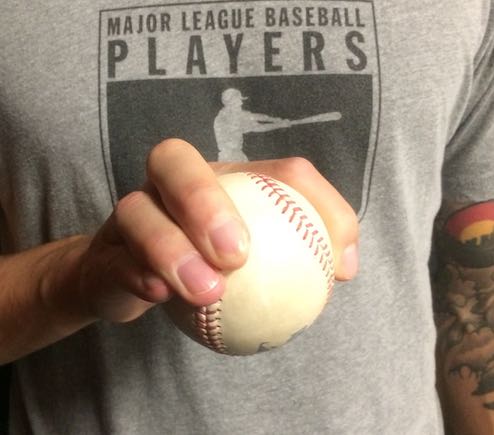
Kevin Gausman, Bob Scanlan, and Matt Shoemaker Reflect on Their Splitters

Pitchers learn and develop different pitches, and they do so at varying stages of their lives. It might be a curveball in high school, a cutter in college, or a changeup in A-ball. Sometimes the addition or refinement is a natural progression — graduating from Pitching 101 to advanced course work — and often it’s a matter of necessity. In order to get hitters out as the quality of competition improves, a pitcher needs to optimize his repertoire.

In this installment of the series, we’ll hear from three pitchers — Kevin Gausman, Bob Scanlan, and Matt Shoemaker — on how they learned and developed their splitters.

———

Kevin Gausman, Atlanta Braves

“I want to say I started throwing it my sophomore year of high school. I had a coach at the time who had pitched — his name is Chris Baum — and he had been trying to teach me a circle changeup. I couldn’t really figure it out, so he showed me this fosh, this split-change, that I throw now.

Kevin Gausman splitter grip.

“It was a pretty frustrating pitch at first, because it’s tough to gain consistency with. He kind of told me from Day One, ‘Hey, if you keep throwing it, you’ll eventually have a feel for it.’ I trusted him, and he was right. It’s a big weapon for me.

“The only thing I’ve really changed is where my thumb is on the ball. I’ll kind of mess around with it when I want to throw a strike, or when I don’t want to throw a strike. Moving the thumb affects the speed, and how much break, and tilt, you get on the pitch. If my thumb is under it, it’s going to be a little bit straighter. When my thumb is on the side of it, it might be a little bigger, with more fading action. Read the rest of this entry »


The Atlantic League Utilizes the No-Shift Rule for the First Time

One of the most popular idioms in the English language is “guinea pig.” It’s simple — we’ve probably all used it — and yet it means so much. To be a “guinea pig” is to be the subject of something new or different. It can be as simple as being the first to try a new toothbrush, and range to something as weighty as testing a new drug.

In baseball terms, the Atlantic League is serving as Major League Baseball’s guinea pig this season. In a deal struck in early-March, the two organizations agreed to change certain rules for the Atlantic League’s 2019 championship season as a way to test said modifications before MLB considers implementing them itself.

One of the more contentious rule changes was the prohibition of the infield shift. The rule itself, as explained in the press release, was simply the requirement of “two infielders to be on each side of second base when a pitch is released.” If the rule is broken, “the ball is dead and the umpire shall call a ball.”

Well, last Thursday, the Atlantic League’s Opening Day, the anti-shift rule was utilized in a game between the Southern Maryland Blue Crabs and the Sugar Land Skeeters. Former big leaguer James Loney (remember him?) was at the plate in the bottom of the fourth inning. On the first pitch from Blue Crabs righty Daryl Thompson, Loney hit a soft ground ball to second baseman Angelys Nina, who easily threw him out at first to begin the inning. Read the rest of this entry »


Sunday Notes: Daniel Norris is Missing One of His Friends

Daniel Norris has a lot of friends. They include a fastball, a slider, a changeup, and a curveball. The Detroit Tigers southpaw doesn’t actually converse with them — not in the way that Mark “The Bird” Fidrych once talked to the baseball — but they are nonetheless part of his coterie. They are his compadres. His amigos.

Norris is known for his unconventional ways. A few years back he gained a certain amount of notoriety for living in a VW van. His beard — since shorn — is often bushy, his soliloquies on life thoughtful. Moreover, his responses to reporters’ questions have rarely been of the paint-by-numbers variety. A few hours before he fanned the first big-league batter he faced — David Ortiz, in September 2014 — I happened to ask Norris if he’s imagined what his debut would feel like. His response was, “I have, and it will be like that times 10.”

A few days ago, I asked the now-26-year-old about his arsenal. The answer I received didn’t disappoint. Read the rest of this entry »


Joey Gallo Is Really Scalding the Ball

Roughly one month into the 2019 season, we’re still in Weird Stats territory. So long as we are, it’s worth appreciating the extreme numbers some players are putting up before they vanish into the ether, and few players are more reliably extreme than Joey Gallo. I checked in on him in last week’s visit to the furthest reaches of hitter performance, but since then, something else he’s doing — not unrelated — has captured my attention.

While it seems that Gallo has been around forever — he was a first-round pick in 2012, made his first top-100 lists in ’14, and debuted in June of the following year — he’s still just 25 years old and has two full seasons and some fragments under his belt. In both of those seasons (2017 and ’18), he reached the 40-homer level, struck out about 36% of the time (with over two Ks for every hit), walked a good deal, and finished with batting averages in the low .200s. For all of the extremes, he produced WARs of 2.8 in both seasons, with better defense as a near-full-time outfielder in the latter season (as opposed to shaky third base play in the former) which offset his wRC+ drop from 121 in 2017 to 110 in ’18. That’s a solidly above-average player before you factor in the added entertainment value he brings with his light-tower power. Here, have a 442-foot homer:

In this young season, Gallo has been something quite a bit more than solidly above average, hitting .284/.393/.689 through Wednesday. He entered Thursday ranked second in the AL in slugging percentage, tied for fifth in homers (eight), sixth in wRC+ (172), and tied for 11th in WAR (1.0). I’ll get to some of the less flashy particulars below, but what drew me in last week was his 62.5% home run-to-fly ball ratio, more than double a 2017-18 rate (28.8%) that ranked fourth in the majors; he’s since dropped to 50.0%, and will continue to fall even if he does remain the highest among qualifiers. What caught my eye in following up was his average exit velocity to date: 99.1 mph, tops in the majors.

2019 Average Exit Velocity Leaders
Rk. Player BIP LA EV FB/LD EV GB EV
1 Joey Gallo 44 19.0 99.1 102.7 91.0
2 Aaron Judge 48 12.6 97.9 99.7 96.2
3 Nelson Cruz 45 19.4 96.1 97.6 94.2
4 Carlos Santana 60 6.9 95.2 95.3 95.7
5 Yoan Moncada 71 12.3 95.2 98.7 91.8
6 Franmil Reyes 52 14.6 95.2 97.7 90.0
7 Christian Walker 55 15.2 95.0 99.0 90.6
8 Christian Yelich 74 14.8 95.0 98.9 92.6
9 Anthony Rendon 57 20.0 94.8 97.7 92.2
10 Josh Donaldson 55 9.5 94.5 100.3 90.3
SOURCE: Baseball Savant
Stats through April 24. Minimum 40 balls in play

Admittedly, exit velocity is not the be-all and end-all of Statcast measures. Launch angle matters, for one thing; 99 mph with a 15 degree launch angle, for example, produces an expected batting average of .726, while 99 mph with a -15 degree launch angle produces an average of .206. A writer-friend who knows much more about Statcast than I do suggested that hard hit rate (balls with an EV of 95 mph or above) might be a more useful gauge of Gallo’s current hot streak, but intuitively, it’s more difficult to grasp what a 50% hard hit rate means, or, in Gallo’s case, a 65.9% rate, without additional context (it’s second in the majors). A 99.1 mph average exit velo? That’s a lot of smoked baseballs. In Gallo’s case, 25 of his 44 balls in play have been hit at 105 mph or higher. Read the rest of this entry »

