Author Archive

Seattle Adds Fixer-Upper in Carl Edwards Jr.

In what is shaping up to be a very busy pre-Thanksgiving Hot Stove League, the Mariners announced on Wednesday that they have agreed with relief pitcher Carl Edwards Jr. on a one-year contract. Edwards will receive a base salary of $950,000, with the potential to make another $500,000 in performance incentives tied to appearances and games finished.

This is the type of move that you will likely see more of in Seattle this winter. The Mariners are rebuilding, and though it’s not the type of rebuild that tears everything down to the foundation, they probably won’t be competitive in 2020. Whether you call it a rebuild or a retool or a reimagining, finding low-cost pickups and reclamation projects are typically smart things for teams to do. It’s also a healthy situation for players seeking to rebuild their value and get better contracts down the road.

Seattle’s bullpen is a prime place for these types of low-risk additions. Spending on relievers tends to be the worst bang-for-the-buck signings when it comes to wins, so it’s natural to look for these kinds of transactions to fill out the relief corps. The Mariners are also a good candidate for this as they’re currently projected in our Depth Charts to have the worst bullpen in baseball. Read the rest of this entry »


The Oakland A’s Are Now the Moneyglove Franchise

Matt Chapman lead the way for a superb Oakland defense. (Photo: Keith Allison)

“Don’t let yesterday use up too much of today.” – Will Rogers

The successes of the Moneyball era sowed the seeds of Oakland’s later struggles. While the modernization of baseball’s front office structure was an inevitable process, the success of the Moneyball A’s and the fame that resulted from their efforts likely sped up this evolution. How many movies about a company’s improvement in personnel management get made into a film starring Brad Pitt?

But as more franchises cast off the shackles of baseball beliefs from the 1940s, the A’s quickly found themselves less able to easily leverage knowledge as a considerable advantage over other teams. I tend to believe that teams’ overwrought claims about the Dickensian workhouse state of their finances are unadulterated nonsense, but I don’t think it’s controversial to say that the A’s are one of the poorer organizations in the league. Adding plodding, OBP-heavy Ken Phelps All-Stars and grabbing pitching prospects on the cheap was never going to be a sustainable strategy long-term in a world where the Yankees and Dodgers are rich and smart.

Instead, the A’s have been forced to reinvent their win conditions repeatedly. In their latest iteration, the team has relied on churning out defensive superstars, whether by drafting them (Matt Chapman), helping them improve (Marcus Semien), or by finding under-appreciated defensive talent just as they once drooled over walks (Ramón Laureano). Read the rest of this entry »


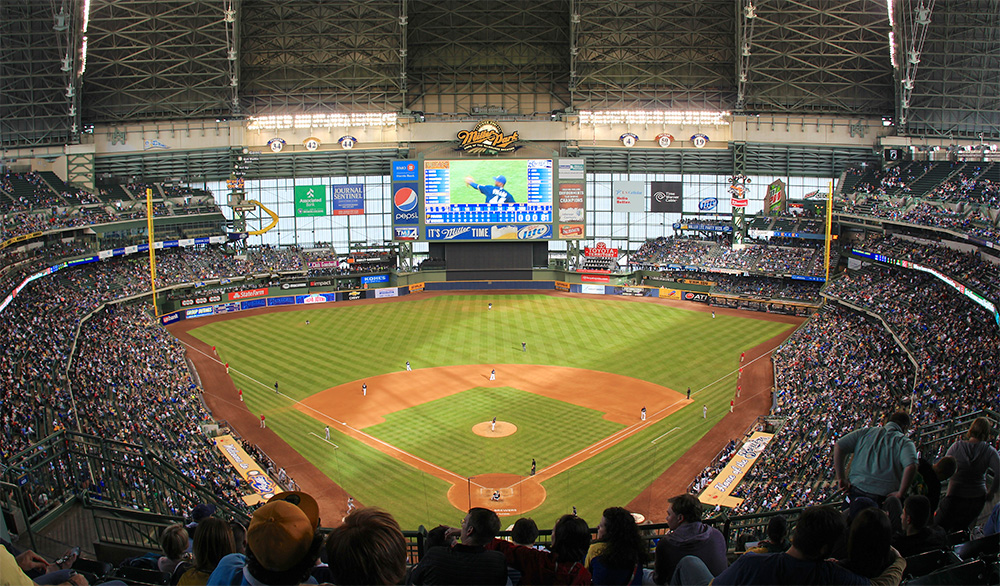
The Brew Crew Continued to Thrive While Thwarting Cubs

Milwaukee managed a rewarding rebuild without hitting rock bottom. (Photo: daveynin)

“I am sick to death of cleverness. Everybody is clever nowadays.” – Oscar Wilde, The Importance of Being Earnest

From the point of view of the 2010s Cubs, one could argue that their true antagonist has been the Milwaukee Brewers rather than their historical rivals, the St. Louis Cardinals. In two consecutive Septembers, it was Milwaukee that twisted the knife, first by catching up and taking the division on the back of an eight-game winning streak in 2018, and then by winning 11 out of 12 in 2019 to leave Chicago choking in the dust. They even managed that last one without Christian Yelich, a feat not unlike the magician’s grand reveal at the end of a particularly exciting illusion.

The Setup

As far as rebuilds go, the mid-decade one by Milwaukee was not too traumatic. In 2014, the Brewers burst out of the gate unexpectedly, winning 10 of their first 12 games, giving them first place in the NL Central. Despite projected win totals in the mid-70s, Milwaukee’s 20-8 April gave the club enough of a cushion that when the inevitable regression toward the mean occurred, it didn’t fall out of first place until the start of September. Four months of below .500 ball (53-55) eventually did them in, and a rough September dropped their final record to 82-80.

After struggling in 2015, the Brewers had the courage to do what a lot of teams in a similar position do not: rebuild before the roster was devoid of talent. Philosophically, rebuilding from a situation in which you’re not completely out of options ought to give a team more flexibility in the rebuild and a less painful fallow period. While I’m no expert in home repair, I would guess that it makes sense to replace the roof before you’ve got six inches of water in your kitchen. Read the rest of this entry »


Dan Szymborski FanGraphs Chat – 11/21/19

12:03
Avatar Dan Szymborski: And away we go!

12:03
Peter Thomas: How’s that ZiPS 101 article coming?  I know it feels to you like self promotion, but there are sooooo many projection skeptics out there who could be converted if they better understood the process.

12:04
Avatar Dan Szymborski: Not even thinking about it until my two big year-end/winter projects (the elegies and the ZiPS are done).

12:04
Avatar Dan Szymborski: I had process writing.

12:04
Jeff: What’s $/WAR at these days and how can I help make it better for the owners?

12:04
Avatar Dan Szymborski: Depends who you ask. Based on ZiPS projections, I still get the best predictor of salaries players get in the mid 7s.

Read the rest of this entry »


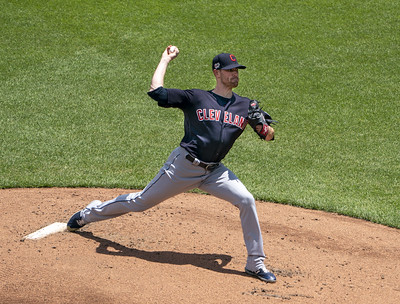
The Indians Forgot To Look Behind Them

In 2019, ZiPS’ faith in Shane Beiber proved to be justified. (Photo: Keith Allison)

“Overconfidence is a powerful source of illusions, primarily determined by the quality and coherence of the story that you can construct, not by its validity.” – Daniel Kahneman

If the 2019 Indians thought they the lone contenders in the AL Central, the Minnesota Twins very quickly disabused them of that notion. Cleveland still fought their way to a 93-69 record, but after a quiet offseason, the loss of some key players, and a final run at the playoffs destroyed by a five-game losing streak, this is a team that ought to be haunted by their what-ifs. Much of the team’s core remains intact (at least for now), but with key contributors approaching free agency, these Indians may have peaked.

The Setup

If a baseball season is a marathon, the 2018 Indians were allowed to use a car. They grabbed first place in the AL Central in late April and never relinquished it. The Minnesota Twins ran afoul of the Regression Gods, and the rest of teams in the division were still firmly in the moribund section of their respective rebuilds. With the bullpen not rocking as it had in previous years, Cleveland traded top prospect Francisco Mejía to the San Diego Padres for Brad Hand and Adam Cimber, players who could reinforce the bullpen past 2018. Also added were Leonys Martin and Josh Donaldson, players the team believed could have upside for the playoffs. Read the rest of this entry »


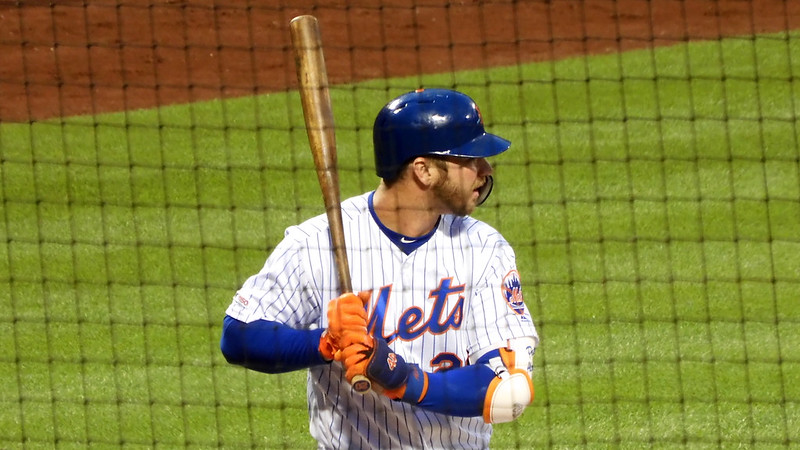
The Mets Were a Shockingly Watchable Mess

When it comes to Pete Alonso, ZiPS is a believer (Photo: slgckgc)

“The timid man calls himself cautious, the sordid man thrifty.” – Publius Syrus

The Mets always feel like an organization on the verge of a giant, hilarious meltdown. But for all the drama that can surround the franchise — whether it’s the manager and a pitcher threatening a beat writer or the team’s strange obsession with Tim Tebow — it frequently puts a competent product on the field. So it was in 2019, as the Mets outlasted most of the National League in the fight for the last playoff spot, eventually finishing a respectable 86-76. The Mets enter the offseason with most of that squad returning, but uncertainty about how much they are actually willing to spend will limit the team’s upside.

The Setup

Is there a franchise with a more pronounced tendency to back their way into success? The Mets didn’t fully commit to Michael Conforto until an All-Star appearance in 2017 made their apparent casual disinterest untenable, and there always seemed to be a bit of annoyance at “having” to play Brandon Nimmo. Despite a .329/.381/.471 debut from Jeff McNeil, the Mets spent much of the winter bringing in veterans who man the positions McNeil was likely to play in the majors. In 2020, McNeil and Conforto will be keys to the team’s success, as will a hopefully healthy Nimmo.

After Sandy Alderson’s contract expired, the Mets turned the page on the era and hired Brodie Van Wagenen, the co-head of the baseball division of CAA Sports. Ignoring for a moment the potential conflicts of interest involved in moving from an agency to the front office, Van Wagenen was a bold hire. I don’t usually think of the Mets as visionaries, but I’d rather teams try something new than go with the safe veteran choice. Aside from those aforementioned conflicts, much of the skillset of a good agent ought to extend to being a good front office executive. Agents have to negotiate contracts, so generally ought to have a keen grasp of how players are valued around the league, and the job of player representation necessarily involves some knowledge of modern analytics. Call me biased, but anyone who knew to go out and hire Russell Carleton and Andrew Perpetua has to be at least somewhat knowledgeable. Read the rest of this entry »


The Chicago Cubs Are in Gentle Decline

This Cubs team had their moment in 2016, but it is starting to look like their best days may be behind them. (Photo: Arturo Pardavila III)

“Who doesn’t enjoy going downhill? That’s when you get to stop pedaling.” – Christian Finnegan

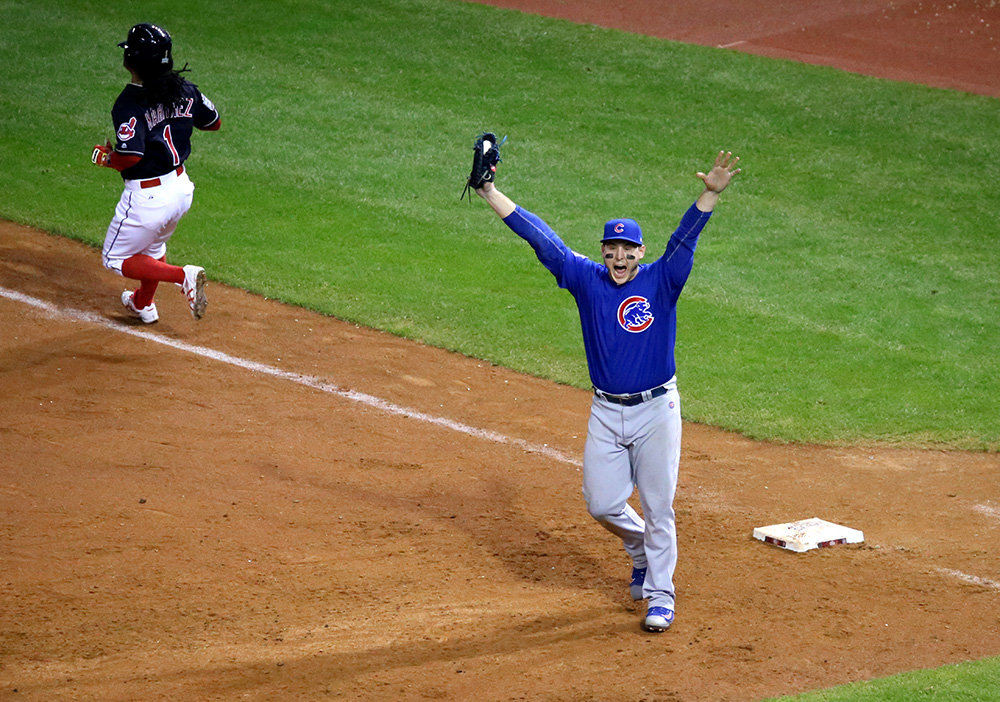
Every successful thing has a peak. The Romans had the Pax Romana. Napoleon had the Battle of Austerlitz. The Simpsons had the Who Shot Mr. Burns? cliffhanger. For the early 21st-century Cubs, it was Michael Martinez grounding out on a mild November evening, giving the team its first World Series championship since 1908. Moistened by celebratory alcohol, this was almost certainly the peak for these Cubs, and even a second championship probably wouldn’t touch the magic of this moment.

Since 2016, the Cubs finished each season a bit less successfully than the previous one. The 2017 team dropped four of five to the Dodgers in the NLCS, and the 2018 team’s end came in a wild card game against the Colorado Rockies. The 2019 team didn’t even make it into October.

The club’s dynasty was built on developing players from within and using their big-market financial heft to play in free agency. These two ingredients have faded into the background in recent years as the team’s farm system has been weakened from trades and graduations while ownership has increasingly embraced a more frugal financial strategy. The Cubs are a team in decline, to the point at which they’re just any old NL Central contender, not a behemoth pushing around the Cardinals or Brewers or Reds. Read the rest of this entry »


The World Champion Red Sox Pivot to Meh

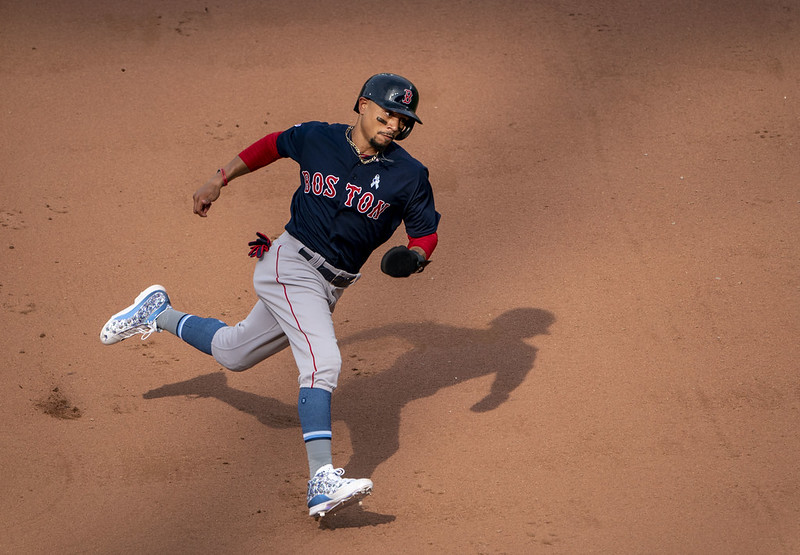
Mookie Betts had another sterling year, but his future in Boston is murky. (Photo: Keith Allison)

“Idleness is fatal only to the mediocre.” – Albert Camus

The 2018 Boston Red Sox won 108 games and dominated the postseason, going 11-3 and winning the World Series. The 2019 Red Sox…did not. It’s hard to call an 84-78 season an unmitigated disaster. Still, the Red Sox were out of the divisional race by June, resulting in president of baseball operations Dave Dombrowski getting his pink slip. Replacing Dombrowski is Chaim Bloom, poached from the Tampa Bay Rays, and a public mandate to get the payroll under the luxury tax threshold. Boston, perhaps more than any near-playoff team in 2019, faces an uncertain future.

The Setup

Winning the World Series is every team’s (eventual) goal, and no matter what the Red Sox had done to follow-up on their big 2018 win, nobody was going to take down that flag. For the sequel, the Red Sox decided to go the route of keeping the band mostly together and hoping people would buy the Greatest Hits album. Whether or not it was due to excessive thrift — the Red Sox were safely over the luxury tax threshold — the team did little in the offseason aside from re-signing 2018 midseason acquisitions Nathan Eovaldi and Steve Pearce.

There’s an argument to be made that a roster that wins 108 games one year ought to be at least a serious contender the following year without too many alterations. The danger of that argument, however, is that a team is far more likely to win 108 games when an excessive number of things go right than when the majority of things go sour. Boston’s farm system wasn’t likely to provide much in the way of reinforcements in 2019, making the cost of either inaction or losing players to free agency higher than it would be for teams with greater internal depth.

When it came to the bullpen, inaction would have been an upgrade. Boston’s relief corps was far from the portable fire-starter of this year’s champs, ranking 13th in WAR and sixth in FIP in 2018, but it wasn’t a particularly deep group. The team let Craig Kimbrel and Joe Kelly go, something that 2019 hasn’t exactly forced the organization to regret. Still, the Red Sox needed to replace those contributions somehow, as Kimbrel and Kelly combined from two of the bullpen’s 4 WAR. But Boston didn’t do any of that, instead opting to move the returning relievers up a place, a bit like Darth Vader did with empire personnel every time he lost his temper and force-choked a commanding officer.

The Projection

As someone from Baltimore who grew up rooting against the Yankees, it irked me a bit that even while the Red Sox were winning the World Series, ZiPS thought the Yankees were the better team. That pattern continued in 2019; ZiPS forecast the Red Sox to finish four games behind the Yankees at the start of the season. Of course, Boston’s projected 94 wins were the fourth-most in baseball, so it’s not as if the projection system’s baseline expectation was a disappointing season.

There were, however, some troubling signs in the margins. The rotation projected for a more-than-healthy 18.1 WAR, but ZiPS also saw an enormous gulf after the front five starters. Beyond that group, ZiPS saw non-prospects Matthew Kent and Chandler Shepherd and journeyman reliever Ryan Weber as the team’s best spare options, a troubling ranking considering the propensity pitchers have for breaking. ZiPS loved it some Mookie Betts but saw the team’s lineup as top-heavy, and after Michael Chavis, was unimpressed with the offensive depth. ZiPS’ mean projection for the team was four games worse than the Yankees, but its 10th percentile projection was 10 games worse, which was more a reflection the weakness of the “break glass in case of emergency options” than of the riskiness of the team’s talent.

The Results

Boston started the season by dropping eight of 10 games, failing to win a series outright until they swept the Tampa Bay Rays in late April. Through the end of April, Red Sox starting pitchers posted a 4.73 FIP, better than the likes of teams such as the Orioles, but firmly in the bottom-third of the league. Chris Sale, Nathan Eovaldi, and Rick Porcello all struggled at the start of the season, enough for manager Alex Cora to use a six-man rotation for much of the first half in an attempt to give the starters more rest. Sale recovered somewhat as the season went on, though he never pitched at his usual level of awesomeness; a sore elbow ended his 2019 season early, but as of now, it looks like he has managed to avoid Tommy John surgery. David Price also bowed out early due to a cyst on his wrist that made throwing breaking pitches painful.

A roaring comeback never came for Porcello or Eovaldi. Porcello’s ERA didn’t dip below five after the midseason, and he likely only kept his spot in the rotation because of the various misfortunes of others. Eovaldi missed part of the season with sore biceps, and in order to facilitate a quicker return to action, Boston used him in relief for a spell.

As may have been expected given the team’s lack of depth, once the rotation’s Fab Five fell to ruin, the pitching picture was painted with a bleak palette. Outside Boston’s planned 2019 rotation, the team’s starting pitchers combined for a 6.79 ERA and 23 homers in 119.1 innings. The situation was dire enough that the team banked on Andrew Cashner being able to continue his surprisingly adequate 2019.

He didn’t.

Things were a good deal brighter offensively. Dustin Pedroia was only able to make it into six games, but any contribution was notable. Betts and J.D. Martinez regressed somewhat from their 2018 seasons, but no more than ought to have been reasonably expected by an impartial observer.

Xander Bogaerts had his best season yet, hitting .309/.384/.555 for a 141 wRC+ and 6.8 WAR, with all of those numbers representing career-bests. The Red Sox are lucky they were able to ink Bogaerts to a contract extension in April, as he would certainly have been much more expensive this winter.

It wasn’t all sunny, however. He wasn’t the worst performer on the offense, but Andrew Benintendi was arguably the most disappointing one. In a season that saw 53 players hit 30 or more home runs, Benintendi failed to find another 15 long balls in his bat. He turned some of his liners into fly balls, but a more aggressive approach at the plate hurt his contact numbers more than it helped his bottom line offensive stats. Benintendi looked a lot more like the middle-of-the-pack starter of 2017 than the star-level performer of 2018. He just turned 25 this season, so there’s still time, but as of this moment, I’d struggle to call him a player a team should build around.

In the end, the rotation’s struggles were too much for the offense to overcome. Realistically, even giving Betts and Martinez their 2018 lines wouldn’t have been enough to get the Sox to the playoffs.

What Comes Next?

This question is a pretty big matzah ball for the Red Sox (or whatever the Boston-equivalent of that Seinfeld colloquialism is). The Sox have expressed a public desire to get below the luxury tax threshold for the 2020 season. There’s always the chance that this is a bluff, and that ownership is not really as obsessed with this idea as they’re indicating, but it’s a dangerous game to signal to your paying customers that the product is going to get worse soon.

I’m not sure how this goal can be achieved by just cutting fat here and there. RosterResource projects the Red Sox to be over the luxury tax threshold even if they do nothing this offseason. That means no free agent replacement for Porcello and no veteran signings, short of other moves giving them additional space with which to play. The team is likely to trade Jackie Bradley Jr. and is not-so-subtly shopping Betts. The obvious problem here is that the Red Sox don’t have the in-house replacements to mitigate a JBJ loss, let alone Betts, who my colleague Ben Clemens just argued should not be traded. Betts will fetch real prospects, but if those theoretical prospects could effectively replace Betts in 2019, their current team would likely just play them instead of swapping them for the 2018 AL MVP.

Just as before the 2019 season, Eric Longenhagen and Kiley McDaniel have the Red Sox farm system last in future value. Triston Casas‘ first full professional season was enough to get his FV moved up to 50; the Red Sox didn’t have a 50 FV prospect coming into the season, so that’s something, I guess.

Chaim Bloom’s charge with the Red Sox is to restock the farm system while not throwing in the towel on 2020 or 2021. It’s going to be a challenge.

The Absitively, Posilutely, Way-Too-Early ZiPS Projection – Rafael Devers

Rafael Devers’ 2018 line (.240/.298/.433, 90 wRC+, 1.0 WAR) was underwhelming on its face. But it shouldn’t be forgotten that Devers was only 21 in 2018; any 21-year-old prospect who debuted with those numbers would have been hailed as a 2019 breakout candidate. That’s just what Devers did, hitting .311/.361/.555 with 32 homers, 54 doubles, and a spine-tingling 5.9 WAR. Devers rose to elite territory in average exit velocity (16th in the majors), and there’s still room in his swing to get more loft and turn some of those doubles into home runs. Devers is unlikely ever to be a serious Gold Glove candidate — I won’t say never because of Marcus Semien — but he made great strides in his defense in 2019, cutting his errors by a third.

Devers is a legitimate star at the hot corner and should be a foundational player for the Red Sox over the next decade or so. Coming into 2019, ZiPS had Devers as the seventh ranked third baseman in terms of career WAR remaining, behind Vladimir Guerrero Jr., Jose Ramirez, Alex Bregman, Manny Machado, Matt Chapman, and Kris Bryant. That’s a tough crowd to break into, but I would not be shocked to see Devers ascend into the top five.

ZiPS Projection – Rafael Devers
Year BA OBP SLG AB R H 2B 3B HR RBI BB SO SB OPS+ DR WAR
2020 .294 .349 .540 622 114 183 45 3 34 112 50 122 9 128 -3 4.5
2021 .296 .353 .557 609 114 180 46 4 35 114 52 122 8 133 -3 4.8
2022 .294 .353 .556 606 114 178 46 4 35 114 54 123 7 133 -3 4.8
2023 .292 .354 .560 602 114 176 45 4 36 114 56 124 7 135 -3 4.8
2024 .290 .353 .560 596 114 173 43 5 36 114 57 126 7 134 -2 4.8

Devers’ WAR obviously won’t be quite this stable — this is a projection after all — but that’s the forecast of a top third baseman.


A Deep Dive Into My National League Rookie of the Year Ballot

Voting for baseball’s various awards is a small part of BBWAA membership, but it’s an undeniably cool part of it, one of the things you dream of doing when you’re a kid. As a member of one of the BBWAA’s smallest city-chapters, I’ve been fortunate to be asked to vote in most of the years I’ve been in the BBWAA, and it’s a responsibility I take quite seriously. I loved baseball for decades before I was employed in the game’s orbit, so it’s important to me to get my microscopic contribution to its history right.

This year, my vote was for the National League Rookie of the Year award. While you only submit three names on your official ballot and I was reasonably sure of who those names would be, my rough draft contained 10 players. I make ballots that are longer than necessary for the express purpose of making sure I’m exercising proper due diligence. Going into my ballot for the 2017 National League Cy Young award, I did not expect Gio Gonzalez to rank fifth (he was eighth in WAR in the NL), but I felt — and still do — that it should be more than a FIP ranking. There’s a philosophical quandary when it comes to BABIP-type measures, after all, and it’s hard to entirely chuck out success that actually occurred simply because that success isn’t necessarily predictive.

Here’s my final 10-player ballot for National League Rookie of the Year. (Naturally, I only submitted three names, as that’s all the form has space for, and because I didn’t want to leave the BBWAA’s secretary-treasurer, Jack O’Connell, questioning my functional literacy.)

10. Kevin Newman (.308/.353/.446, 110 wRC+, 2.4 WAR)

Several other players could have taken the final spot on my imaginary ballot. Some readers will probably object to me leaving off Sandy Alcantara and his 2.4 WAR, but his worse xFIP (5.17) than FIP (4.55) meshes with something that ZiPS saw in Alcantara’s 2019. The system is exceptionally skeptical of Alcantara’s low HR/9, and while I don’t dismiss performance that isn’t predictive outright, there were a lot of excellent back-ballot candidates, and it was enough for him to miss the ballot. You can even shave another couple of runs off from his -0.2 WAR as a hitter.

Merrill Kelly lost -0.6 WAR as a hitter, enough to demote the reliable-if-unexciting innings-eater. Dakota Hudson‘s FIP-ERA difference was simply too large for me to overlook. Adrian Houser got too much of his value from low-leverage situations. Christian Walker’s numbers weren’t thrilling for a first baseman. Some of these objections are quibbles, but this was a very close decision. In the end, I went with Kevin Newman, who hit as well as Walker did while playing three infield positions. Given how volatile defensive numbers are, I didn’t want to be overly reliant on one year’s worth of data at short, which is what I’d have ended up doing in a straight WAR ranking.

9. Mike Yastrzemski (.272/.334/.518, 121 wRC+, 2.2 WAR)

Of the players on the ballot, Li’l Yaz is the one of whose future performance I’m most skeptical. Teams have been wrong about minor league veterans many times in the past, but I’m still not sure they were completely wrong about Yastrzemski. A .251/.342/.442 career line in Triple-A doesn’t scream starting major league corner outfielder, but I can’t deny that his performance actually happened. He also put up his 2.2 WAR in relatively few plate appearances. And it’s worth noting that ZiPS has always liked his defense in the corners, and there’s a real chance that his true ability may be closer to his DRS (+8) than his UZR (+0.8), adding a few runs of value. Read the rest of this entry »


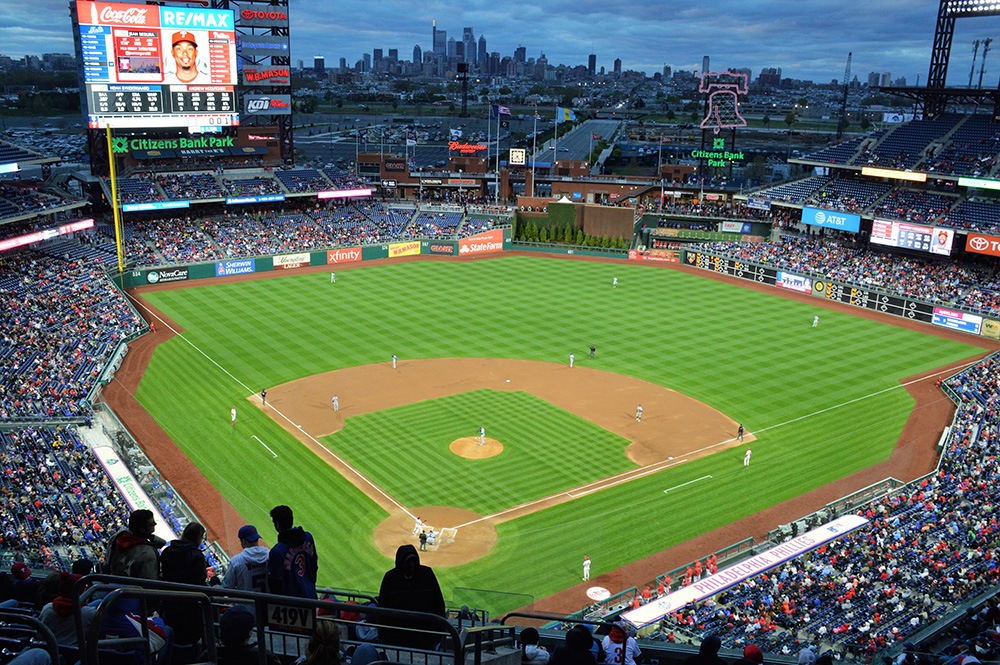
The Phillies Tread Water in First Year of Harper Era

The Phillies were ready to launch out of their rebuilding phase and into contention, but 2019 had other plans. (Photo: Michael Stokes)

“Unhappiness lies in that gap between our talents and our expectations.” – Sebastian Horsley

If you had any questions about where in their rebuilding cycle the Phillies saw themselves as being, the signing of Bryce Harper and the trade for J.T. Realmuto should have been big clues. Philadelphia planned to build on 2018, a surprisingly competitive season that ended in an even more surprising total collapse and residual, Fortnite-related stress. Instead, the Phils ended up winning just one more game than last year, a failure that ended manager Gabe Kapler’s brief reign.

The Setup

The Phillies had every reason to look forward to the offseason after 2018. The year may have ended on a sour note due to a late collapse, but there were plenty of optimism. Unlike the team’s luck-infused 71-91 record in 2016, its surge to an 80-82 record had some real force behind it. With the exception of Carlos Santana, the entire starting lineup was still in their 20s, Aaron Nola had stepped into Cy Young contender territory, and the team’s young bullpen arms were beginning to work out.

And most importantly, the Phillies had “stupid money.” These aren’t even my snarky words, but a direct quote from ownership. In an offseason when most teams were looking to refinance their mortgages, the Phillies planned to build a fancy new casino. No free agent was out of reach, and while it took them until nearly March to close the deal, the team landed Harper on a 13-year, $330 million contract.

But the Phillies weren’t aggressive in the market otherwise. Andrew McCutchen was brought in for three years and $50 million, and David Robertson was scooped up for two years to make the front end of the team’s bullpen look a bit scarier. But one thing was missing in free agency: another starting pitcher to join Nola. Read the rest of this entry »