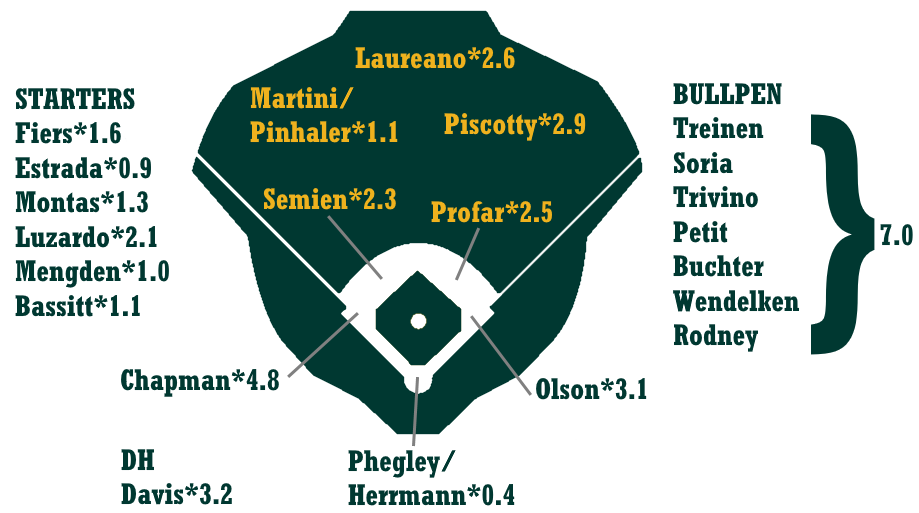
The Cincinnati Reds did more than hire a new manager over the offseason. They also revamped their coaching staff. Two of the additions will be entrusted with optimizing the offense. Turner Ward, formerly with the Dodgers, is now the hitting coach. Donnie Ecker, who came over from the Angels, will serve as the assistant hitting coach. Neither will be faced with the challenge of helping Billy Hamilton turn a corner. The Reds non-tendered the enigmatic speedster, who subsequently signed with the Royals, back in November.
I recently asked Dick Williams about the decision to cut ties with Hamilton, who slashed .245/.298/.333 in his five seasons as Cincinnati’s centerfielder. Before we get to that, here is the team’s President of Baseball Operations on Ecker:
“We’ve had some really interesting sessions the last couple of days, where coaches have gotten up and talked about their areas. Donnie Ecker is a movement specialist. He has a bio-mechanical approach to the swing. We had some great hitters in the room, like Barry Larkin and Eric Davis. Donnie gave a bio-mechanical explanation of some of the things he sees in hitters, using descriptions and examples that all of us could understand.”
Would Ecker, along with Ward, have been able to transform Hamilton into the productive hitter he’s thus far failed to become? Read the rest of this entry »
In January, the two of us (along with Managing Editor Meg Rowley) had the opportunity to attend Driveline Baseball’s Pro Day in Kent, Washington. We were itching to get out of the house and watch baseball in some form, even if it was just to see dudes in shorts throw live batting practice. But because Driveline is as much a laboratory as it is a training facility, it was unlike any player workout or showcase we’ve been to, and we want to share our experience with readers.
We realize, though, that readers may require some context for the day, as they may not have a great idea of what a “normal” scouting showcase entails. So we’re going to talk about that and then about how Driveline’s pro day was different, touching on the pros and cons of each format along the way.
Finally, we’re going to talk about some of the players we saw, but with a little twist. Dozens of scouts were in attendance for the pro day, and one of Driveline’s stated goals for the event was to make things as easy for them as possible. They circulated a ton of information to aid with player evaluation (more on that shortly), and included us on the distribution list. Kiley, who spent a lot of time during the event schmoozing with baseball folks, was handed the data and asked to provide a preference list of pitchers from the pro day based solely on these numbers. Conversely, Eric sat fidgeting in a chair behind home plate while everyone threw, and took notes by hand. He was not allowed to look at the data, and was required to compile his pref list like our forefathers did, based only on his eyeball evaluations.
A bit of background on player workouts. Most in-person scouting is done during some kind of live baseball game, be it your run-of-the-mill minor league game somewhere in middle America, or a college game on a Friday night. But there are several scenarios where scouting occurs outside of this context. A player might throw a bullpen session for scouts while attempting some kind of comeback, or pro players might participate in a backfield simulated game, where there are no stakes and coaches create artificial scenarios to simulate and instruct players on procedure during certain game situations. Sometimes sim games don’t even utilize an actual pitcher. Scouts are often at these sorts of events, too, trying to learn whatever they can about an individual player’s talent, or get injury updates or pitching probables for the week.
The most common type of workout though, is the kind of showcase one would see for high schoolers or international amateurs. International amateur showcases typically include traditional batting practice for the hitters, outfielders throwing to the various bases, infielders fielding a standard directional sequence of ground balls and throwing to first base, catchers showcasing half a dozen pop times, and everyone running the 60-yard dash. At big events, there are usually a few games after this. At workouts at an individual trainer’s academy, or for free agent hitters, there generally aren’t enough players for that.
At Driveline, some pitchers threw bullpens, but the entire session was being recorded by a TrackMan unit and a Rapsodo camera and radar monitor. In addition to measuring velocity like a handheld radar gun would, TrackMan and Rapsodo measure all sorts of other stuff that teams have found to correlate with pitching success, or that can be used as a player development tool to provide immediate feedback to the player or a coach, which means players can make adjustments in real-time.
After a few pitchers threw unopposed bullpens, the hitters training at Driveline took their version of batting practice against a high-speed pitching machine that was spitting out balls at about 88 mph, at times with cutting action. This is much different than a middle-aged man in a form-fitting baseball uniform chucking balls at hitters from behind a screen at the base of a mound. The logic behind this alteration is that hitters don’t see pitches as slow as traditional BP lobs are in games, and training in a way that replicates in-game conditions more closely will better prepare them. This makes sense, but scouts we spoke with after the event indicated they left with almost no feel for the hitters.
Driveline is limited because their facility is indoors, and while a HitTrax machine helped depict the flight path of batted balls when the hitters faced live pitching later in the day, the number of opportunities they had to really square balls up and show scouts raw power in the way scouts are used to were limited. Onlookers left Kent with more considered opinions on the size of Daniel Comstock’s butt than they did anything else about the hitters, who they also didn’t see run or field.
After hitters got loose against the pitching machine, the rest of the pitchers took turns warming up and facing live hitting, with every piece of technology in the room switched on. Usually a rowdy environment, several of the players and staff commented on the quiet in the building that day, at least before Eric Sim arrived. That’s not to say that it was boring. The event had good pace and energy despite the early silence and the stakes — a potential pro contract if you impressed the right person — were high.
Having set the scene, we’ll turn to our individual pref lists. We’d first like to acknowledge all the athletes who participated in the event, and the work they did to get there. We were made to understand that those who were chosen to throw and hit had to clear a certain talent and work bar, and we believe everyone there has the talent to play highly competitive baseball at some level, professionally or otherwise.
We’ve omitted Albertus Barber and Seth Baugh from these rankings because both players are draft eligible, rather than allowed to sign a pro contract. They’ll be on the 2019 Draft section of The Board before June. We’ve also omitted left-handed pitcher Luke Heimlich, who has been training at Driveline since high school and who, according to Driveline, threw during the event at the request of “a few teams.” Prior to the event, Driveline sent out a roster of scouts and media members expected to be in attendance, and the highest ranking individual on the list was Royals Pro Scouting Director Gene Watson, though none of us saw Watson at the facility and we’re unsure whether he was there. The Royals are the lone team to have an employee (General Manager Dayton Moore) express interest in Heimlich, who pleaded guilty to child molestation as a minor.
I thought Matzek threw some plus-plus sliders and had enough feel for locating his two breaking balls (I put a 50 on his curveball) that I was less worried about his fastball command. He was a scattershot 89-92 and has had issues locating his heater near the zone in the past, but he’ll be allowed to work more heavily off his breaking stuff now than he was as a prospect because that style of pitching is more widely accepted. He could help a team in a relief role.
Robbins was 92-95 and threw several plus changeups in the mid-80s. They had bat-missing action down-and-in on righties. Hitters were taking big, confident hacks throughout the day but looked most uncomfortable and tentative against Robbins, especially against his slider, which I thought was average in a vacuum.
Hagerty had been out of baseball longer than I’ve been in it and it’s amazing that he’s throwing this hard. He was up to 98 for me and threw a few plus breaking balls, but also sent some pitches into the screen. There’s risk he’s wild like he was when he was in pro ball a decade ago, but I’ll take that fastball. I thought Simpson had a solid four-pitch mix. He was up to 93, his fastball had some tail, I liked the depth of the repertoire, which I thought was mostly average, and he’s one of the younger arm who threw. Kelleher had arguably the best two-pitch mix there as he was up to 96 and had a tight slider with bat-missing, vertical depth. I was put off by how violent his delivery is and didn’t think he had feel for locating the slider in places that were enticing to a hitter. Reyes was also 91-93 with a bunch of 50s, but I thought his fastball’s angle was more hittable, and his age rounded up (he’ll be 27 in April) put him beneath Simpson.
When I saw Karsen Lindell in high school, he was throwing 86-88; now he’s 92-95. He threw some 50 breakers but they were less consistent than Reyes’ or Simpson’s. Beimel was up to 93 and lived right on the edge of the plate to his glove side for almost his entire session. His secondary stuff is fringy but there were some 50 sliders in there, which are fine if you’re locating them, and Beimel was. He is in incredible shape for 42. Moskos had similarly consistent command but he worked down, at or below the knees, with a two seamer. I put 45s on his two-seamer, cutter, and curveball.
Kiley’s Data-Driven Pref List
1. Kevin Kelleher, RHP (25)
2. Tyler Matzek, LHP (28)
3. Karsen Lindell, RHP (22)
4. Arturo Reyes, RHP (26)
5. Luke Hagerty, LHP (37)
6. Robert Robbins, RHP (24)
7. Lance Simpson, RHP (22)
8. Jackson Sigman, RHP (23)
9. Tyler Gillies, RHP (23)
For this pref list, I considered only the TrackMan data from the event, the pitchers’ ages, and their previous stat lines. I’ve disregarded anything I know about them from watching them in a scouting context, which was easy to do when it came to this event because I was at a terrible angle to grade pitches.
Kelleher’s fastball has plus velocity (95.7 average, 96.8 peak), plus-plus rise, and good plane, and he threw 18 of 22 of them for strikes, while operating up in the zone where his heater plays best. His slider averages 3070 rpms, which is about as high as that measure goes (Blue Jays righty Trent Thornton has the highest average breaking ball spin rate among prospects we’ve covered this offseason), and threw 5 of his 7 sliders for strikes. Both pitches grade out as a 60 by use of the rough metric I’ve created using TrackMan, and while it wasn’t a long look, Kelleher’s control would also be plus (I won’t try to grade command on just a couple dozen pitches). Kelleher has essentially no affiliated pro experience, and he’s 25, but there’s a lot of stuff to work with here.
Matzek graded out with a solid-average fastball, slider, curveball, and strike-throwing rate. Given his past struggles with strikes and his major league experience, he seems like a nice gamble to be an upper minors contributor at least. From this very limiting view of this limited event, he and Kelleher both seem to have big league potential.
Lindell had a plus fastball, average slider, below changeup, and threw strikes, so there’s a nice fit as a reliever at the lower levels given his age. Reyes is older but has Triple-A experience and his fastball/curveball combo is fringe-to-average, but his slider graded as plus.
Hagerty’s heater topped at 98.5 and his curveball was about average, but he’s 37, had below strike-throwing at the event, and his career initially fell apart due to the yips, so I’m not optimistic he gets a long big league look. Robbins performed well, threw strikes, and has an above average fastball, but the off-speed stuff didn’t grade out as well. Simpson flashed an average fastball/slider/changeup combo, but the control was lacking. Sigman throws from a low slot, had an average slider, and a good strike-throwing rate, so I rounded up on the fastball grade since the slot excuses the lesser velo (89.7 mph average). Gillies has an average fastball/slider combo and threw strikes with the heater.
Of the pitchers on our preference lists, Hagerty, Kelleher, Matzek, Reyes, and Robbins signed minor league deals following the event, while Simpson was invited to try out for a club. David Carpenter and Sam Selman, who also threw that day, signed MiLB deals as well.
When publishing our lists — in particular, the top 100 — we’re frequently asked who, among the players excluded from this year’s version, might have the best chance of appearing on next year’s version. Whose stock are we buying? This post represents our best attempt to answer all of those questions at once.
This is the second year that we’re doing this, and we have some new rules. First, none of the players you see below will have ever been a 50 FV or better in any of our write-ups or rankings. So while we think Austin Hays might have a bounce back year and be a 50 FV again, we’re not allowed to include him here; you already know about him. We also forbid ourselves from using players who were on last year’s inaugural list. (We were right about 18 of the 63 players last year, a 29% hit rate, though we have no idea if that’s good or not, as it was our first time engaging in the exercise.) At the end of the piece, we have a list of potential high-leverage relievers who might debut this year. They’re unlikely to ever be a 50 FV or better because of their role, but they often have a sizable impact on competitive clubs, and readers seemed to like that we had that category last year.
We’ve separated this year’s players into groups or “types” to make it a little more digestible, and to give you some idea of the demographics we think pop-up guys come from, which could help you identify some of your own with THE BOARD. For players who we’ve already covered this offseason, we included a link to the team lists, where you can find a full scouting report. We touch briefly on the rest of the names in this post. Here are our picks to click:
Teenage Pitchers
Torres was young for his draft class, is a plus athlete, throws really hard, and had surprisingly sharp slider command all last summer. White looked excellent in the fall when the Rangers finally allowed their high school draftees to throw. He sat 92-94, and his changeup and breaking ball were both above-average. Pardinho and Woods Richardson are the two advanced guys in this group. Thomas is the most raw but, for a someone who hasn’t been pitching for very long, he’s already come a long way very quickly.
The “This is What They Look Like” Group
If you like big, well-made athletes, this list is for you. Rodriguez was physically mature compared to his DSL peers and also seems like a mature person. The Mariners have indicated they’re going to send him right to Low-A this year. He could be a middle-of-the-order, corner outfield power bat. Luciano was the Giants’ big 2018 July 2 signee. He already has huge raw power and looks better at short than he did as an amateur. Canario has elite bat speed. Adams was signed away from college football but is more instinctive than most two-sport athletes. Most of the stuff he needs to work on is related to getting to his power.
Advanced Young Bats with Defensive Value
This is the group that produces the likes of Vidal Brujan and Luis Urias. Edwards is a high-effort gamer with 70 speed and feel for line drive contact. Marcano isn’t as stocky and strong as X, but he too has innate feel for contact, and could be a plus middle infield defender. Perez has great all-fields contact ability and might be on an Andres Gimenez-style fast track, where he reaches Double-A at age 19 or 20. Ruiz is the worst defender on this list, but he has all-fields raw power and feel for contact. He draws Alfonso Soriano comps. Palacios is the only college prospect listed here. He had three times as many walks as strikeouts at Towson last year. Rosario controls the zone well, is fast, and is a plus defender in center field.
Corner Power Bats
Nevin will probably end up as a contact-over-power first baseman, but he might also end up with a 70 bat. He looked great against Fall League pitching despite having played very little as a pro due to injury. Lavigne had a lot of pre-draft helium and kept hitting after he signed. He has all-fields power. Apostel saw reps at first during instructs but has a good shot to stay at third. He has excellent timing and explosive hands.
College-aged Pitchers
It’s hard to imagine any of these guys rocketing into the top 50 overall. Rather, we would anticipate that they end up in the 60-100 range on next year’s list. Gilbert was a workhorse at Stetson and his velo may spike with reshaped usage. Singer should move quickly because of how advanced his command is. Lynch’s pre-draft velocity bump held throughout the summer, and he has command of several solid secondaries. Abreu spent several years in rookie ball and then had a breakout 2018, forcing Houston to 40-man him to protect him from the Rule 5. He’ll tie Dustin May for the second-highest breaking ball spin rate on THE BOARD when the Houston list goes up. We’re intrigued by what Dodgers player dev will do with an athlete like Gray. Phillips throws a ton of strikes and has a good four-pitch mix.
Bounce Back Candidates
The Dodgers have a strong track record of taking severely injured college arms who return with better stuff after a long period of inactivity. That could be Grove, their 2018 second rounder, who missed most of his sophomore and junior seasons at West Virginia. McCarthy was also hurt during his junior season and it may have obscured his true abilities. Burger is coming back from multiple Achilles ruptures, but was a strong college performer with power before his tire blew.
Catchers
We’re very excited about the current crop of minor league catchers. Naylor is athletic enough that he’s likely to improve as a defender and he has rare power for the position.
Potentially Dominant Relievers
These names lean “multi-inning” rather than “closer.” Gonsolin was a two-way player in college who has been the beneficiary of sound pitch design. He started last year but was up to 100 mph out of the bullpen the year before. He now throws a four seamer rather than a sinker and he developed a nasty splitter in 2017. He also has two good breaking balls. He has starter stuff but may break in as a reliever this year.
Below is our list of the top-100 prospects in baseball. The scouting summaries were compiled with information provided by available data, industry sources, as well as from our own observations.
Note that prospects are ranked by number but also lie within tiers demarcated by their Future Value grades. The FV grade is more important than the ordinal rankings. For example, the gap between prospect No. 5 on this list, Victor Robles, and prospect No. 35, Sean Murphy, is 30 spots, and there’s a substantial difference in talent there. The gap between Travis Swaggerty (No. 56) and Adrian Morejon (No. 86), meanwhile, is also 30 numerical places, but the difference in talent is relatively small. You may have noticed that there are more than 100 prospects in the table below, and more than 100 scouting summaries. That’s because we have also included 50 FV prospects who didn’t make the 100; their reports appear below, under the “Other 50 FV Prospects” header. The same comparative principle applies to them.
As a quick explanation, variance means the range of possible outcomes in the big leagues, in terms of peak season. If we feel a prospect could reasonably have a best big league season of anywhere from one to five WAR, that would be “high” variance, whereas someone like Colin Moran, whose range is something like two to three WAR, would be “low” variance. High variance can be read as a good thing, since it allows for lots of ceiling, or a bad thing, since it allows for a lower floor. Your risk tolerance could lead you to sort by variance within a given FV tier if you feel strongly about it. Here is a primer explaining the connection between FV and WAR. For further explanation of the merits and drawbacks of Future Value, read this.
You’ll also notice that this year, we’ve added probable FV outcome distribution graphs for each prospect on our list. This is our attempt to graphically represent how likely each FV outcome is for each prospect. Using the work of Craig Edwards, we found the base rates for each FV tier of prospect (separately for hitters and pitchers), and the likelihood of each FV of outcome. For example, based on Craig’s research, the average 60 FV hitter on a list becomes a perennial 5+ WAR player over his six controlled years 26% of the time, and a 27% chance of accumulating, at most, a couple WAR during his six controlled years. We started with these base rates for every player, then manually tweaked them to reflect how we think the player differs from the average player in that FV tier, since a player in rookie ball and a player in Triple-A with the same FV grade obviously don’t have exactly the same odds of success. So, these graphs are based on empirical findings, but with the subjectivity of our opinions included to more specifically reflect what we think the odds are of various outcomes. This is just a concept we’ve been kicking around for a while, one we hope to continue to refine to try to better communicate things about prospects.
People in and around baseball used to call international amateur free agency “the Wild West” because in an effort to acquire as much talent as possible, teams bent or broke any number of rules as part of their search for loopholes in the signing rules. MLB has changed its approach in recent years, seemingly tackling issues as soon as they can after those issues arise, rather than trying to anticipate them. Some are actual issues, and some are “issues” — few in baseball thought hard-capping international bonus pools would curb abuses in the market, and instead viewed it as another way of limiting team expenditures.
Right now, the most significant issue in the international market is teams making multi-million dollar verbal agreements with players who often are as young as 14 years old. This has long been a problem; clubs work hard to extract marginal value from every avenue of talent acquisition, and this is especially true when their spending has a hard cap. A young prospect and his trainer will value the security of having a $2 million deal in hand early. Meanwhile, teams trust their scouts and cross their fingers that the player will grow into a $3 million-$5 million talent in the time between when the deal is agreed upon and when the kid actually signs. Read the rest of this entry »
With the 2019 NCAA Baseball season set to begin on Friday, we have updated our draft prospect rankings for this year, as well as the two drafts that follow. Each class can be found via this link to THE BOARD.
So what has changed since we last updated our rankings in the fall? There were more high school showcases throughout the autumn months, and college teams held fall practices and scrimmages, during which it was clear that some players had changed since the end of the previous season. Some January high school tournaments took place in warmer locales, and the junior college season began several weeks ago. We expect all of these rankings to change as the draft approaches, though our focus will be on the 2019 class for obvious reasons. The 2021 class rankings are mostly comprised of unsigned high school players from the 2018 draft, as well as a handful of high school players who have been identified early.
Does the 2019 class have any overarching themes, and how does it compare to other recent drafts?
It’s hard not to note the lack of exciting college pitching, though it’s also worth remembering that at this time last year, soon-to-be No. 1 overall pick Casey Mize was nowhere near the runaway, best-in-class arm he’d eventually become. We expect to have higher opinions of several college arms come June, but the list of guys who we’d bet on rising up our board is also just shorter than usual.
That’s not to say the entire class is bad. It currently appears well-stocked with college hitters (arguably the most widely-desired demographic by major league clubs), particularly college hitters who have a chance to stay up the middle.
Just how good is Adley Rutschman?
Rutschman, the Oregon State catcher, is currently our top prospect for the 2019 draft. At this point in the process, it’s natural for readers to ask if there’s a generational talent in this class, or if this year’s top prospect is better than past top picks. He’s better right now, for us and the scouts we talk to, than 2018 Georgia Tech catcher/Giants second overall pick Joey Bart, who is obviously an easier direct comparison than Mize, despite Mize going first overall last year. We have Rutschman as the only 55 FV player in this draft class; Bart was a 50 FV on our 2018 draft rankings, with the main difference being Rutschman’s superior hit tool. The rest of the tools are about the same. As you’ll see on our overall rankings later this week, Mize is at the lower end of the 55 FV tier, and we’d have Rutschman slightly above him, but sandwiched between the top catching prospect in the minor leagues (the Dodgers’ Keibert Ruiz) and the second one (Bart), which would slot Rutschman in the 21-40 overall range of a top 100, were he eligible.
Also, because the draft order is totally set, we can officially lay to rest the #PlayBadlyForAdley hashtag.
Will we have another Kyler Murray/Jordyn Adams situation?
It may not be as dramatic as the Murray soap opera has turned out to be, but there’s a good chance that we have two two-sport athletes with signability questions. High schoolers Maurice Hampton (No. 19 overall on THE BOARD, and a 4-star LSU WR recruit) and Jerrion Ealy (No. 38 for us, and a 5-star Ole Miss RB commit) are both premium two-sport talents whose signability major league teams will need to properly gauge and feel comfortable with if they’re going to take them, the way the Angels did with Adams last year and Oakland seemingly did not do with Murray.
Ealy’s narrative has already been quite dramatic, as he was once an Ole Miss commit before de-committing to consider other schools, including Alabama and Clemson. It was thought throughout the industry that if Ealy ended up in Clemson or Tuscaloosa, baseball would have no shot at him. He re-committed to Ole Miss last week; both he and Hampton are considered signable in the first round, at least.
What about two-way players?
Two of the names we find most intriguing as two-way possibilities are SoCal high school LHP/1B Spencer Jones and Houston-area MIF/CF/RHP Sanson Faltine III, also known as Trey Faltine. They’re both plus athletes with terrific breaking balls and presently fringy velocity (lots of 88-92), but they’re different hitters. Jones is a power projection bat while Faltine is more compact and speedy.
What about the next two classes?
2020 looks solid, led by two pitchers from the Georgia Bulldogs (right-handers Cole Wilcox and Emerson Hancock), and we’ve already identified about half of the top tier of talent (50 or better FV) that’s standard for a draft class. This class is also pretty balanced, with a solid mix of hitting and pitching, and prep and college talent, though the college talent leans heavily toward players from the SEC, ACC, and this summer’s collegiate Team USA. It seemed unusual this summer that there were so many 2020, and one 2021, prep pitchers getting into the mid-90s, but perhaps 15- and 16-year-olds hitting 95 mph is just normal now. 2021 is obviously leaning toward college talent at the moment, as many of the high school prospects are 15 years old today, so just a handful have emerged as elite talents (Brady House, Luke Leto, Nick Bitsko, Roc Riggio (!), Braylon Bishop, and Blaze Jordan).
Who has risen since the last rankings?
Missouri center fielder Kameron Misner was in the 90 to 100 area for us in the early fall, as he was a known tools type with injury issues who didn’t play over the summer, then started rising with a loud fall. San Jacinto JC (TX) right-hander Jackson Rutledge transferred from Arkansas and was in the mid-90s, touching 97 in the pen for the Razorbacks, but took a step forward at San Jac. He was solidly in the top 100 for us weeks ago until his season debut, when scouts told us it was a Nate Pearson starter kit, into the high-90s once again with two plus breaking balls and some starter traits, cementing his position further. TCU lefty Nick Lodolo finally had the velo bump in the fall we’ve been waiting years for. Florida righty Tyler Dyson started showing first round stuff in the fall as his rollercoaster is headed back up. Elon righty George Kirby is showing two pluses at times with some starter traits, and Campbell righty Seth Johnson is also in that general area, at another smaller North Carolina college.
On the prep side, Jacksonville-area third baseman Tyler Callihan slimmed down in the fall and got a little more athletic while also not looking bad in a short stint as a catcher, so his power bat is now in day one contention. Pennsylvania prep player, and younger brother of Reds center fielder Mike Siani, Sammy Siani also went from a solid follow to a real prospect with a loud showing in Jupiter in October.
How about all these Diamondbacks picks?
Because the Dbacks did not sign Matt McLain last year, got picks for losing Patrick Corbin and A.J. Pollock, and received a pick back from St. Louis in the Paul Goldschmidt deal, they’ll pick 16th, 26th, 33rd, 34th, 57th, 75th, 78th, and 94th in the upcoming draft. Not only does this mean Arizona will likely add eight 40 or better FV prospects to their farm system, it also means they have a ton of financial flexibility because their bonus pool size will be so large. Except for perhaps Atlanta, which also picks twice (at nine because they failed to sign Carter Stewart, and 21 as their normal pick), it could prove virtually impossible for teams to try to move over-slot high schoolers back to their second round picks, because the Dbacks will just be able to take them and meet their asking price if they want.
Will the current labor climate have any impact on the draft?
Amateur players get hosed by CBA negotiations because they don’t have a seat at the bargaining table, and the MLBPA (made up of players who have already been drafted and won’t ever have to be again) has continuously traded amateur players’ rights for its members’ own benefits, albeit insufficient ones. The lack of current free agent movement may begin to impact the decisions of high school athletes choosing between entering pro baseball now or waiting through three years of D-I college baseball before they re-enter the draft. If a college player is drafted at age 21 or 22 and takes two to three years to reach the Majors, their six-year service time clock will start when they’re 23-25 and they’ll hit the open market when they’re 29-31. The current state of free agency signals that those players may never have a big payday.
Mets first baseman Peter Alonso is a great example. He has done nothing but mash since he was a teen, but is the sort of prospect who doesn’t get paid out of high school, with clubs preferring to see less athletic corner types perform in college rather than take their prep versions in the first few rounds. Alonso kept hitting and now will be a 31-year-old R/R first baseman when he becomes a free agent. If 26-year-old superstars are struggling to get a fair shake in free agency, what kind of market can Alonso expect to have? We don’t know if this will impact the decision-making process of elite high school prospects, and perhaps a new CBA will soon make this a moot point. But it’s something we think players might start to consider.
Who could move up this spring?
We both picked a few guys we think will move up. Good luck to all the teams and players this spring. Eric: J.J. Goss, Faltine, Gunnar Henderson, Kyren Paris, Tanner Morris Kiley: Jackson Rutledge, Hunter Barco, Jack Kochanowicz, Kirby, Seth Johnson
Fans of prog rock are well familiar with Emerson, Lake & Palmer’s “Karn Evil 9.” The song, which is on the seminal 1973 album Brain Salad Surgery, includes the line, “Welcome back my friends, to the show that never ends.” Nearly 30 minutes long, Karn Evil 9 has been described, thematically speaking, as a battle between humans and computers.
Which brings us to the first major league free agent signed by the Orioles new-and-geeky front office regime. On Thursday, Mike Elias, Sig Mejdal and Co. welcomed Nate Karns back to The Show, inking him to a reported $800,000, one-year deal.
Karns has been a good pitcher when healthy. He hasn’t been healthy very often. The righty had labrum surgery back in 2010, and more recently he’s had thoracic outlet surgery and elbow issues. He didn’t pitch at all in 2018, and in 2017 he was limited to just 45-and-a-third innings. In the two years preceding the more recent of those, ahem, evil injuries, he showed plenty of promise. Pitching with Tampa Bay and Seattle, he went 13-7 with a 4.25 ERA and a 4.17 FIP.
My colleague Rain Watt will have more on Karns’s comeback tomorrow, so I’ll keep the rest of this look contained to the 31-year-old’s curveball. It’s his primary secondary, and a pitch he refined while going through a shoulder program after having his labrum repaired. Read the rest of this entry »
Below is an analysis of the prospects in the farm system of the Toronto Blue Jays. Scouting reports are compiled with information provided by industry sources as well as from our own (both Eric Longenhagen’s and Kiley McDaniel’s) observations. For more information on the 20-80 scouting scale by which all of our prospect content is governed you can click here. For further explanation of the merits and drawbacks of Future Value, read this.
All of the numbered prospects here also appear on The Board, a new feature at the site that offers sortable scouting information for every organization. That can be found here.
Signed: July 2nd Period, 2015 from Dominican Republic (TOR)
Age
19.9
Height
6′ 1″
Weight
215
Bat / Thr
R / R
FV
70
Tool Grades (Present/Future)
Hit
Raw Power
Game Power
Run
Fielding
Throw
65/70
80/80
65/70
40/30
45/45
60/60
The best prospect in baseball, Guerrero hit a superhuman .381/.437/.636 across 95 games (mostly at Double and Triple-A) despite being about six years younger than the other athletes in the Eastern and International Leagues. The ball doesn’t just sound different off of his bat; when he really lays into one, you can feel a thump inside your chest, as if someone set off a firework at home plate. It’s explosive, beautiful, and paradoxically violent considering that Vladimir is so childlike in his shape and demeanor. He plays with a vivacious enthusiasm, totally unashamed of his own at times bizarre mannerisms, as if the way he feels when playing elite pro baseball is how most of us did with a wiffle ball in our hands during adolescence. (Late during Fall League, he was cranky and petulant with umpires.)
But his is not a childlike stature. His listed 6-foot-1, 200 pounds is a farce, and on the few occasions that Guerrero and Peter Alonso (who is listed at 6-foot-3, 245) were standing near one another during Fall League, Vlad was clearly the larger human being. While he reaches an almost shocking top speed on the bases given his size, Guerrero does have lateral mobility issues that impact his range at third base. He is very likely to move to first base or DH at some point in his early 20s, but leaving him at third, even if he’s not very good there, might help motivate him to keep his weight in check for as long as possible, something that could be more important than the quality of his play in the field since Vlad had knee issues during the 2018 season.
Really though, it matters very little where he ends up playing. This is the best hitter in the minors and the stick will play anywhere. For at least two years now people around baseball, including the late Mel Didier, swore that Guerrero would be ready for and competing in the majors before he turned 20. Toronto’s desire to maintain control of his talent for as long as possible scuttled that notion late last summer when they chose not to promote him, and Vlad will turn 20 in March before this season even starts. He should be up early this year, and immediately become one of the game’s most exciting, productive hitters. He is the cornerstone of the Blue Jays franchise, and perhaps a cornerstone of our sport.
Drafted: 2nd Round, 2016 from Lakewood HS (FL) (TOR)
Age
20.9
Height
6′ 0″
Weight
200
Bat / Thr
R / R
FV
60
Tool Grades (Present/Future)
Hit
Raw Power
Game Power
Run
Fielding
Throw
45/60
60/60
40/55
45/45
45/50
60/60
There’s some contextual disappointment surrounding Bichette’s 2018 statline because he didn’t recreate his video game numbers from the year before, but he still netted an incredible 61 extra-base hits as a 20-year-old at Double-A. We remain skeptical of his long term viability at shortstop, where he continues to see most of his reps, but his arm is plus and teams are growing increasingly willing to put players with limited lateral quickness at short if it means shoehorning a special offensive talent into the position, and Bichette is one.
Ultimately, it probably doesn’t matter where he ends up playing defense because his bat is likely to profile. He has scintillating bat speed, and Bichette’s hand-eye coordination and bat control are an effective foil for the garage band noisiness of his swing, which hasn’t negatively impacted his ability to make contact in pro ball. Bichette ditches his leg kick with two strikes, something we’re not certain is all that helpful based on visual evidence. Ideally, Bichette will start lifting the ball more often (he has a league-average ground ball rate right now) and turn some of these doubles into homers, but it’s hard to justify making a change when he has been wildly successful so far. Status quo Bo is still a doubles machine who probably stays on the infield, and is a likely All-Star.
A 2017 Jansen breakout coincided with good health and a pair of prescription lenses. He walked more than he struck out across three minor league levels, and rose to Triple-A and into our overall top 100. He had a similarly strong 2018, which included a Futures Game invite, a .390 OBP at Triple-A, and then a strong 30-game big league stint in August and September, all reinforcing that Jansen’s 2017 breakout was legitimate. A solid if unspectacular defender, Jansen’s pop times were depressed during his big league cameo, hovering between 2.05 and 2.10, both below average for a catcher. But he’s an average receiver and ball-blocker, and is a perfectly acceptable defensive catcher without a disqualifying shortcoming.
Where Jansen shines is in the batter’s box. His hands work in a tight loop, giving Jansen the capacity to catch velocity and still lift the baseball, and he’s strong enough to muscle out balls to his pull-side, though to this point his approach has yielded more doubles than homers. He is a pull-only plodder and he’ll likely always be a low BABIP guy, and it’s possible major league pitchers will find ways to attack him in ways that limit his power output, but he’s going to make a lot of contact and reach base, which, at catcher, could make him an All-Star.
Drafted: 1st Round, 2017 from Central Florida JC (FL) (TOR)
Age
22.5
Height
6′ 6″
Weight
245
Bat / Thr
R / R
FV
50
Tool Grades (Present/Future)
Fastball
Slider
Curveball
Changeup
Command
Sits/Tops
70/80
60/65
50/55
45/55
35/45
95-100 / 104
We still know very little about Pearson compared to most 22-year-old pitching prospects. He popped up seemingly out of nowhere as a sophomore at a lesser Florida junior college but quickly entered the first round discussion when JuCo ball kicked off in January of 2017. As the draft approached, Pearson was showing better secondary stuff in games and bumping 100 mph in bullpen sessions for scouts. He forced his way up draft boards even though teams had little history with him, and some were skeptical of the new velocity or concerned it would lead to injury.
Pearson made seven short but dominant appearances in the Northwest League during the summer and was poised to begin 2018 at Hi-A Dunedin (an aggressive assignment), but he suffered an intercostal strain and began the season on the DL. In his final extended spring rehab start, he was sitting 94-96 and touching 98 with the fastball. He finally toed a Florida State League rubber that week and lasted 1.2 innings before a comebacker struck his wrist and forearm and fractured his ulna. The injury ended his regular season after just five outs.
After rest and some rehab during instructs, Pearson went to Arizona for the Fall League. His stuff was electric there, his fastball always sitting 95-99 and cresting 100 mph often. He threw a 104 mph fastball and a 95 mph slider during the Fall Stars game, and he was able to dump his upper-70s curveball in for strikes throughout his six-week tenure, though he threw no changeups. Pearson was also horribly wild at times. It’s fair to conclude that rust was to blame for his occasional wildness but because the pro side of the industry has seen so little of Pearson, it’s impossible to know for sure.
There’s a strong possibility that he just ends up in the bullpen, but if he does and he breathes one-inning fire like he did during Fall Stars, he basically has Aroldis Chapman’s stuff (though perhaps not the same extension or approach angle). Provided he stays healthy, Pearson’s future is bright, albeit unclear. He’s likely to be handled with care for a while in order to keep him healthy and manage his workload after what was essentially a lost 2018, but given the wide variance and top shelf stuff, there is still frontline starter potential.
Drafted: 1st Round, 2018 from Magnolia HS (TX) (TOR)
Age
19.2
Height
6′ 4″
Weight
190
Bat / Thr
R / R
FV
45+
Tool Grades (Present/Future)
Hit
Raw Power
Game Power
Run
Fielding
Throw
20/50
60/65
20/55
55/50
45/50
60/60
Groshans immediately stood out to scouts on the showcase circuit, showing a Josh Donaldson starter kit with similar swing mechanics, a plus raw power projection, a plus arm, and a third base defensive fit. He essentially held serve on that first impression and went 12th overall to the Jays out of the same Texas high school as the Jays’ second round pick, Adam Kloffenstein. Groshans isn’t quite the same level athlete as Donaldson, and there are contact concerns with an active swing like that, but there are some bat-to-ball skills and plenty of mistake power he can already tap into, as shown in a loud debut in the GCL. Many of the pro scouts who saw Groshans weren’t fans and saw below average tools in their looks when he fatigued late in the pro season, but the things to watch for here are the plate discipline and contact skills, because the position and power aren’t really up for debate right now.
Drafted: 2nd Round, 2014 from Sandalwood HS (FL) (TOR)
Age
23.4
Height
6′ 3″
Weight
220
Bat / Thr
R / R
FV
45
Tool Grades (Present/Future)
Fastball
Slider
Curveball
Changeup
Command
Sits/Tops
55/60
55/60
50/50
45/50
45/45
91-96 / 97
Reid-Foley has been a similar pitcher from his junior year of high school all the way to his fifth year of pro ball in 2018. His arm action and delivery are a little stiff, and his command isn’t quite enough to be a traditional starter, but he’s stayed healthy and flashes two plus pitches with knowledge of the right way to sequence them, if not always execute them flawlessly. The Jays will continue to run him out there as a starter — he made 31 starts and threw 163 innings last season across three levels — but most agree this is more of a multi-inning or high-leverage reliever, as opposed to a traditional starter. The pure stuff would fit any role on a staff, but the quality of the strikes (his command) is the issue, rather than the amount of strikes (his control), which was evident from his 5.13 ERA in his major league debut in 2018.
Smith was noticed early in his career at Maryland for showing early round tools as a defender who can stay in the middle infield with above average raw power and some feel to hit. The feel to hit came into question in his draft year, as his swing got a little too pull/power oriented, helping him slip to the fourth round. The Jays rave about Smith’s makeup and preparation, and how he spearheaded the adjustments to his swing to have a shorter path to the ball and increase his contact ability. He now has a flatter-planed swing, and one scout compared his offense to Jordy Mercer, while another thinks Smith is a 50 hitter with 50 game power. Most scouts think he’s fringy at shortstop despite a plus arm, and would shift him to second base long-term for the best fit, where he’s got a chance to be above average. An 85 to 100 wRC+ with solid average defense at second base is worth 2-something WAR, so while it isn’t sexy, there’s some performance here, real changes to explain it, and a pretty good chance to be a 50 or 55 FV big leaguer.
Drafted: 3rd Round, 2018 from Magnolia HS (TX) (TOR)
Age
18.5
Height
6′ 5″
Weight
220
Bat / Thr
R / R
FV
45
Tool Grades (Present/Future)
Fastball
Slider
Changeup
Command
Sits/Tops
50/60
50/55
40/50
35/50
89-94 / 96
Kloffenstein was the Blue Jays third pick in the 2018 draft from the same high school as Groshans, but it appears the Jays had the 12th and 88th overall picks evaluated much closer in talent than the picks themselves would indicate. Groshans got slightly below-slot bonus (17th highest in the draft) while Kloffenstein was well above-slot at $2.45 million (29th highest bonus). We ranked them 28th (Groshans) and 42nd (Kloffenstein) in our pre-draft rankings. Kloffenstein is a prototypical projection Texas arm, with a lanky frame, loose arm action, occasional mid-90s velo, and an above average breaking ball; some scouts saw parallels to Michael Kopech, projecting Kloffenstein to throw 100 mph in the next couple years. He didn’t pitch much in pro ball or instructs as Toronto was managing his innings and getting him used to the pro schedule. Kloffenstein’s main objectives will be to get more innings, stay healthy, and keep progressing, as he only showed mid-90s velocity and starter feel at times in the spring. Toronto’s bet is a bit speculative, based on projection more than performance.
Pardinho was one of the more celebrated 16-year-old pitchers to sign in recent memory, drawing a $1.4 million bonus in 2017, which was behind only Shohei Ohtani among his pitching peers in the class. Pardinho grew up in Brazil, which has a large Japanese population and he has some Japanese heritage; his windup clearly points to a Japanese influence.
The issue here is that Pardinho is listed at 5-foot-10 and 155 pounds, and isn’t much bigger than that right now, though he has a sturdy build. 18-year-old pitchers need to have big velocity, or projection to add velocity, to be top prospects since they generally start losing velocity in their mid-20s; that innate velocity, or projection for it, offers some margin for error. There are exceptions to this benchmark, like Zack Greinke, cases where a pitcher has been a pitchability type with above average stuff from his teenage days all the way into a big league career, but those instances are very rare. Pardinho will sit 92-95 and hit 96 mph early in outing and settle around 90-93 later. His curveball flashed above average as an amateur and he mixed in a slider that lagged behind, but those two pitches are both average to above now. They’re different pitches but still can run together at times, common for a younger pitcher. Parindho’s changeup is his fourth pitch now and it’s around average, but he separated himself with above average command projection, which helped him post gaudy numbers in his pro debut in the Appalachian League at 17.
Pardinho is undoubtedly advanced and projects as a No. 3 or 4 starter if things go well, but he was essentially pitching like a college senior in a league where a college senior can dominate and then never get to Double-A. Pardinho is a prospect because he’s advanced enough to pitch like a 22-year-old when he’s 17 years old. We’d just like to see either his stuff improve — or hold that velocity for the whole game — or see performance against more advanced hitters before we shoot him up the list like he’s the next Greinke.
Drafted: 5th Round, 2015 from North Carolina (HOU)
Age
25.4
Height
6′ 0″
Weight
175
Bat / Thr
R / R
FV
45
Tool Grades (Present/Future)
Fastball
Slider
Curveball
Changeup
Command
Sits/Tops
60/60
55/60
55/60
45/50
40/45
92-95 / 97
Thornton spent 2018 at Triple-A Fresno before he was effectively showcased in the Arizona Fall League. He has bat-missing, big league stuff, sitting 92-95 and touching 96 in multi-inning Fall League appearances, and sitting comfortably in the 95-96 range when he was asked to air it out for a single inning. Thornton also has elite breaking ball spin rates. His 12-6 curveball spins in excess of 3,000 rpm and his firm, upper-80s slider/cutter often approaches that mark, which is rare for a breaking ball that hard. He also has a unique delivery that disorients hitters, during which his arm wraps behind his lower back. His arm action is ugly but, short of a 7-day DL stint this year after he was hit with a comebacker, Thornton hasn’t been hurt as a pro.
His usage has been atypical, however. His starts were often spaced out by seven or eight days in 2018, and it’s unrealistic to expect him to have that kind of recovery time between turns on a big league pitching staff. If asked to throw every fifth day, his stuff may not be as nasty as it was this year. He projects as a No. 4 or 5 starter but may also be deployed in a multi-inning relief role.
Drafted: 1st Round, 2013 from Plano West HS (TX) (NYY)
Age
24.5
Height
6′ 1″
Weight
215
Bat / Thr
L / L
FV
40+
Tool Grades (Present/Future)
Hit
Raw Power
Game Power
Run
Fielding
Throw
45/50
55/55
55/55
50/45
45/50
40/40
McKinney’s batted ball profile shifted dramatically after the Yankees acquired him from the Cubs in the Aroldis Chapman deal. Since high school, he had been a feel-for-contact corner guy with batting practice power that didn’t manifest in games, but the Yankees got his ground ball rate down from 42% to 30% and he started to mash before they flipped him to Toronto for JA Happ. He hit for power in a prolonged big league look but struggled badly against breaking stuff, something that may be an issue moving forward. McKinney doesn’t have a whole lot of offensive wiggle room because he’s so limited on defense, but the hit/power combo suggests he is a Seth Smith-like corner platoon bat who’s ready right now.
Biggio opted to attend Notre Dame rather than sign with the Phillies out of high school, and he had two bad years there before turning in a solid junior season. He didn’t hit for power in pro ball until he reached Double-A in 2018, where Biggio exploded for 26 home runs, saw his walk rate climb all the way to 18%, and swiped 20 bags.
Nothing about Biggio’s swing is markedly different than it was in college. He’s tightened the circle made by his ritualistic, pre-swing bat swirl, and his hands load a little bit lower now than they used to, but mostly Biggio just has good feel for low-ball contact despite the upright nature of his swing, and has plus bat speed.
There’s skepticism surrounding Biggio’s ability to play second base, so the Blue Jays began expanding his defensive horizons last year with time at first and third base, as well as both outfield corners, which is where Biggio saw the most action in the Arizona Fall League. The uppercut nature of Biggio’s swing is going to lead to some strikeouts and his aggregate offensive profile looks much less promising in an outfield corner than it would at second base. If he could indeed play all of those positions, he’d be a very interesting Swiss Army knife with power, but realistically he profiles as a second-division regular or platoon outfielder.
Zeuch doesn’t have dominant stuff but he’s a keen sequencer with a firm grasp on how best to deploy his pitches to efficiently tally outs. He mostly pitches to contact with a low-90s sinker that has very steep downhill plane thanks to Zeuch’s height and fairly upright delivery. It’s helped him generate ground ball rates near 60% as a pro. Both of his breaking balls survive because Zeuch locates them. He’ll get ahead of hitters with his curveball and keep his slider just off the plate away from righties. Offspeed development remains key as Zeuch enters 2019 as a non-roster invitee. He may be a candidate for a true splitter, or modified version of it, rather than a straight changeup if the Jays want to try to turn him into Doug Fister, with whom Zeuch shares several other traits. Barring something unforeseen, like a new grip giving Zeuch a dominant secondary pitch, he projects as a backend innings eater.
Signed: July 2nd Period, 2014 from Dominican Republic (HOU)
Age
22.7
Height
6′ 3″
Weight
190
Bat / Thr
R / R
FV
40
Tool Grades (Present/Future)
Fastball
Slider
Curveball
Splitter
Command
Sits/Tops
60/70
50/60
45/50
40/55
30/40
92-96 / 98
Perez was part of the package Houston sent to Toronto in the unscrupulous Roberto Osuna deal. His stuff was down just a tad last year, with his fastball more often 93-95 than 94-97 based on our reports from the previous year. But Perez still has nasty stuff and managed to strike out 133 hitters in 115 innings, mostly at Double-A. His stiff, long arm action significantly inhibits Perez’s ability to throw strikes and he unanimously projects into a bullpen. But because he has three plus pitches (and we have the fastball projected as a 70 out of the bullpen), he could be a dominant late or multi-inning arm. He’s one of many new faces on Toronto’s 40-man and could debut in 2019.
Jimenez signed for $825,000 in 2017 out of Panama but is often compared to Venezuelan shortstops (like Vicuna, No. 28 on this list) for his advanced, non-flashy feel for the game. Vicuna is still the best defender in the system but Jimenez isn’t far behind him, with one scout grading his hands as a 70. We’re more bullish on Jimenez than Vicuna because there’s better rhythm, swing mechanics, and strength to his offensive game, so there’s a better chance for viable performance. Jimenez also gets high marks for his intelligence and makeup; he’s already fluent in English as a 17-year-old.
Signed: July 2nd Period, 2018 from Dominican Republic (TOR)
Age
17.2
Height
6′ 1″
Weight
190
Bat / Thr
R / R
FV
40
Tool Grades (Present/Future)
Hit
Raw Power
Game Power
Run
Fielding
Throw
20/45
50/60
20/50
45/40
30/45
50/55
Martinez was one of the most explosive talents in the 2018 July 2nd class, getting the second highest bonus at $3.5 million, behind only 22-year-old Marlins center fielder Victor Victor Mesa. Martinez is currently ranked behind a number of players in his class because we still aren’t sure how his contact skills will project. He has big bat speed and projects for at least 60 raw power, along with sticking somewhere in the infield. We aren’t sure how his body will develop, and thus the raw power and the position where he’ll land are open questions. More importantly, he takes a high-effort, torqued-up cut at the ball, and the Jays like that he has eye-hand contact, but there’s still a ways to go to turn this intriguing ball of clay into a more finished product.
Drafted: 30th Round, 2013 from Elk Grove HS (CA) (TOR)
Age
23.9
Height
6′ 4″
Weight
220
Bat / Thr
L / L
FV
40
Tool Grades (Present/Future)
Hit
Raw Power
Game Power
Run
Fielding
Throw
40/45
60/60
55/55
40/30
40/45
30/30
Tellez had a successful second tour of Triple-A in 2018, and reached Toronto in September just weeks after his mother, who had been fighting brain cancer for a while, passed away. His first six big league hits were doubles, a record, and then opposing pitchers began to make adjustments, and Tellez cooled, often chasing stuff out of the zone. He’s vulnerable to velocity up and was uncharacteristically tempted by soft stuff beneath the zone. He crushes mistakes and has natural low-ball ability, as well as feel for lacing hard gap liners to left field if fastballs away from him catch too much of the plate. It’s tough to hit enough to profile at 1B/DH, and we think Tellez is more of a platoon or second division regular. He should get an opportunity to be just that if something happens to Kendrys Morales and/or Justin Smoak.
Signed: July 2nd Period, 2016 from Venezuela (TOR)
Age
19.0
Height
5′ 11″
Weight
160
Bat / Thr
R / R
FV
40
Tool Grades (Present/Future)
Hit
Raw Power
Game Power
Run
Fielding
Throw
25/50
45/50
30/45
45/40
40/50
55/55
Moreno converted from shortstop to catching right around when he signed out of Venezuela, and while he’s just 5-foot-11 and 165 pounds, he’s taken to the change and scouts think he can stick behind the plate. He’s twitchy and has plus bat speed with good bat control but can get over-aggressive at times and needs to tighten his zone. Moreno’s high-energy approach endears him to scouts and teammates, and there’s a reasonable chance he’s a backup, with some possibility these tools can turn into a starter down the road.
Conine is the son of former Marlins great Jeff Conine and Griffin looked like a sure first round pick in 2018 after a dominating summer on the Cape. Thing haven’t gone so well for him since then. Conine bulked up and got a bit stiffer, had a brutal start to the 2018 season, but closed well, finding a better approach to make more consistent contact. The Jays scooped him up as another legacy prospect in the system, but he was popped for PED’s (ritalinic acid, a stimulant) in November and will serve a 50-game suspension to start 2019. At his best, Conine has 60 or 65-grade raw power from the left side, a plus arm that helps him fit in right field, and good enough contact skills for a 45 or 50-grade bat to allow him to get to his power. He can get too uphill, aggressive, and pull-happy at times, so there’s some concern, beyond the suspension, about how much of his Cape performance will show up in pro ball.
Signed: July 2nd Period, 2017 from Dominican Republic (TOR)
Age
18.4
Height
5′ 11″
Weight
170
Bat / Thr
R / R
FV
40
Tool Grades (Present/Future)
Hit
Raw Power
Game Power
Run
Fielding
Throw
25/55
45/50
30/50
50/40
40/45
55/55
Dominican Summer League stats are largely meaningless, but every year there is a prospect or two whose statline is so utterly dominant that it provokes immediate re-evaluation. Hiraldo, who was hitting .366/.429/.560 when July began, was one of those DSL hitters in 2018. When prompted about Hiraldo, pro scouts with coverage in the DSL reiterated what was said about him when he was an amateur. He was physically mature for his age, stocky, and strong, far more muscular than most of his DSL peers. He has plus bat speed, average power right now, and tracks pitches well and has some barrel control, so while Hirlado’s physical maturity should cause one to discount his statistical performance, he is a good offensive prospect.
There’s not much room left on his frame for good weight, and he has fairly limited power projection left. Scouts already anticipate a move off of shortstop to either second or third base. Hiraldo’s offensive talent could be sufficient to profile every day at either spot, just probably not as a star and probably not for several years considering the passive developmental track the Jays took with him last year when he probably should have been in the GCL for more than a 10-game August jaunt.
Drafted: 39th Round, 2016 from Faith Baptist HS (FL) (TOR)
Age
21.6
Height
6′ 0″
Weight
195
Bat / Thr
S / R
FV
40
Tool Grades (Present/Future)
Hit
Raw Power
Game Power
Run
Fielding
Throw
30/50
50/50
40/45
55/55
45/50
60/60
It seems like every year a hitter or two comes out of nowhere and causes quite a ruckus in Lansing. This year it was Young, who hit .285/.363/.445 with 50 extra-base hits and 44 steals for the Lugnuts. The travel ball circuit is not kind to economically disadvantaged families, and part of the reason Young was under-scouted as an amateur, as he told our own David Laurila, was because his family could not afford to attend heavily scouted showcases.
Another reason he may have slid toward the end of the draft was because he was constantly moving around. He was under the international scouting umbrella while he was young and living in the Bahamas, then spent his early high school years in Florida before relocating to Georgia for his senior season. It’s likely that three separate scouts in each org were responsible for scouting and gauging Young’s signability.
The Blue Jays got a deal done for $200,000 and Young has been a strong early-career performer. Pro scouts see him as a bit of a tweener but think there’s a chance he might be an everyday center fielder if absolutely everything comes together. He’s not a typical center field sprinter (our sources all have either a 50 or 55 on his speed) but he’s instinctive, and fine there for now. If Young does move to a corner, his hit/power combination is on the fringe of profiling. A switch-hitter, Young has power from the right side of the plate but he’s strikeout prone due to a lack of bat control. As a lefty, he has a gap-to-gap approach and good bat control, but not typical over-the-fence thump.
It’s possible that, even with middling offensive ability, Young could be such an excellent corner defender that he plays everyday anyway, and his makeup is universally lauded, so we like his chances of reaching and staying in the majors as some kind of role player.
Drafted: 1st Round, 2013 from Kentwood HS (WA) (PIT)
Age
23.9
Height
6′ 1″
Weight
195
Bat / Thr
L / R
FV
40
Tool Grades (Present/Future)
Hit
Raw Power
Game Power
Run
Fielding
Throw
45/50
45/45
20/35
30/30
50/60
60/60
The Blue Jays have a terrific young catching tandem in Danny Jansen and McGuire, who we project to play a glove-centric second fiddle to Jansen’s bat for the next half decade. McGuire has been lauded for his defense since high school, and he remains excellent back there, and has a plus arm. He has struggled in the past to lift the ball, and while he showed some movement in that regard last year, it’s unlikely that McGuire hits enough to profile as an everyday catcher.
Alford had a tumultuous and eventful amateur athletic career. He starred as a dual threat high school quarterback in Mississippi, and continued playing football in college even after the Jays, who at the time were able to offer Alford a now defunct two-sport deal structured to incentivize him to eventually commit to baseball, drafted and signed him. His college football career and home life were both tumultuous, as Southern Miss went winless during Alford’s first year under center, and several members of his family had legal troubles. Alford eventually transferred to Ole Miss, where he was asked to play safety, but that didn’t last long and he soon committed full time to baseball.
He’s dealt with constant injury as a pro and has issues with quality of contact when healthy. Though he’s a remarkable athlete with huge raw power and speed, we’re bearish on Alford’s ability to hit breaking stuff and do enough damage to play everyday. He projects as a bench outfielder. Because Alford has only been totally devoted to baseball since 2015, there’s a chance some of what currently impairs his on-field production can be remedied, but he has to stay on the field to develop that stuff.
Signed: July 2nd Period, 2014 from Dominican Republic (TOR)
Age
22.2
Height
6′ 1″
Weight
160
Bat / Thr
R / R
FV
40
Tool Grades (Present/Future)
Fastball
Curveball
Changeup
Command
Sits/Tops
55/60
50/55
40/45
40/45
92-95 / 97
A boiler plate middle relief prospect, Diaz was added to the 40-man this offseason and may debut in 2019. Though he has been developed as a starter to this point, command and repertoire depth limitations have scouts universally projecting Diaz to the bullpen. He has a slightly cross-bodied delivery, and he muscles up and slings in mid-90s fastballs and tilting, two-planed breakers. His changeup is firm, but continued reps in a rotation should help improve his feel for it and better prepare him to deal with left-handed hitters in the big leagues.
Drafted: 10th Round, 2016 from Corona HS (CA) (CLE)
Age
20.6
Height
5′ 10″
Weight
160
Bat / Thr
R / R
FV
40
Tool Grades (Present/Future)
Hit
Raw Power
Game Power
Run
Fielding
Throw
20/50
40/45
20/40
60/60
40/55
45/45
Taylor signed with Cleveland for $125,000 in the 10th round in 2016 out of a southern California high school. The report then was an explosive, quick second baseman with some tools who could use some refinement. That’s still mostly the report, but Taylor’s 2018 full season debut was excellent, hitting above league average in the Midwest League as a 19-year-old most of the year, despite a .270 BABIP. Some players naturally have a lower BABIP, but Taylor is a player who should have a higher-than-normal BABIP given his plus speed (44 stolen bases in 2018), solid plate discipline (11% BB to 19% K), and surprising game power for his size and age (nine home runs and 32 doubles).
Taylor can still make a boneheaded play defensively, use improper footwork at the keystone, or try to do too much at the plate, but the tools are here for a low-end everyday second baseman if things continue progressing.
Drafted: 3rd Round, 2013 from Hamilton HS (AZ) (TOR)
Age
23.7
Height
6′ 4″
Weight
220
Bat / Thr
R / R
FV
35+
Murphy has persevered through multiple injuries and surgeries (Tommy John and Thoracic Outlet Syndrome, just to name two) and finally had a full, healthy season in 2018, and was added to Toronto’s 40-man in November. His fastball is very hard and Murphy throws a lot of strikes, typically in the upper half of the zone. At times his heater has natural cut, he’ll flash an occasional plus curveball, and his changeup got much better throughout 2018. His injury history and violent, somewhat awkward overhand delivery are each of concern to teams, which generally have him projected in a bullpen role.
There’s sufficient strike-throwing here for Murphy to continue developing as a starter, and he could pitch at the back of a rotation, especially if his changeup keeps improving.
The first thing anyone talks about when Kirk’s name comes up is his weight. He’s built exactly like former A’s catcher Jeremy Brown, and one source body comp’d him to Chris Farley noting that, like Farley, Kirk is deceptively agile for his size.
Signed: July 2nd Period, 2014 from Venezuela (TOR)
Age
21.1
Height
6′ 0″
Weight
140
Bat / Thr
R / R
FV
35+
Vicuna (pronounced like Acuña) signed for $350,000 in 2014 out of Venezuela and fits the archetype of the Venezuelan shortstop, with excellent feel for the game and instincts to get the most out of his tools. He was considered frail-looking at signing and has put on some strength since then, but still needs to add more to have a chance to make an impact offensively.
Vicuna is a plus runner who has above average hands, range, and arm strength, so even just hitting for consistent contact with enough power to be respected would be enough to make him a solid big leaguer. The Jays are encouraged by his 60 PA in the Venezuelan Winter League, where Vicuna had eight walks to 13 strikeouts, but also had just one extra base hit. He’s the best defensive shortstop in the system and, depending on which scout you ask, his makeup grades anywhere from 60 to 80, so we think he’s worth inclusion on the list.
Signed: July 2nd Period, 2016 from Dominican Republic (ARI)
Age
19.0
Height
6′ 2″
Weight
184
Bat / Thr
R / R
FV
35+
Luciano was acquired by Kansas City in the trade that sent Jon Jay to Arizona, then selected by Toronto in the Rule 5 draft. He was the youngest player picked in the Rule 5 by a significant margin and if he makes the Jays’ Opening Day roster, he’ll be the first player born this century to play in the big leagues.
Though he’ll touch 96, Luciano’s fastball sits in the 90-94 range, and he has scattershot command of it, especially late in starts. His frame is less projectable than the typical teenager’s, so there may not be much more velo coming as he ages, but he has plenty of present arm strength and an above-average breaking ball, so there’s a chance he makes the Jays’ roster in a relief role. He has No. 4 starter upside if his below-average changeup and command progress, but Rule 5 selections who stick often put developmental priorities on the back burner and instead lean on what they’re already good at in order to succeed right now.
Signed: July 2nd Period, 2016 from Dominican Republic (TOR)
Age
19.5
Height
6′ 5″
Weight
180
Bat / Thr
R / R
FV
35+
Vizcainno is a fairly standard teenage projection arm, perhaps slightly raw for his age from a strike-throwing perspective, though that’s understandable given the mantis-like length of his limbs. He’s an above-average athlete and there’s a good chance his release consistency becomes refined with more experience, though he may always have limited pinpoint command because his trebuchet-like overhand arm action makes it hard to work east and west. That’s not to say it’s a bad delivery. Vizcaino’s arm action is very efficient, and his vertical slot gives his promising curveball an awful lot of depth. It’s easy to envision Vizcaino working up and down with his fastball and curveball in concert with one another in a relief role, even if he never develops average control.
There are lots of promising components here, they’re just a little less polished than is ideal for a prospect who’ll be 20 this year.
Drafted: 2nd Round, 2017 from Huntington Beach HS (CA) (TOR)
Age
20.4
Height
6′ 2″
Weight
185
Bat / Thr
R / R
FV
35+
Danner burst onto the scouting scene after his sophomore year of high school, showing low-90s stuff and a three pitch mix with the look of a future high pick as a pitcher. He maintained his above average stuff throughout most of his prep career, but the more scouts saw him behind the plate, the more they liked him long-term as a catching prospect.
Eventually, the Jays took Danner in the second round of the 2017 draft as a catcher, which marks the first time Danner hasn’t been splitting his focus on the diamond. He’s only played 66 pro games due to some minor injuries, so we haven’t seen as much as we’d like with him being relatively new to this position. He has above average to plus arm strength and raw power projection, and we think he can stick behind the plate, but the hit tool may take a little time, which is the main concern going forward.
Signed: July 2nd Period, 2016 from Dominican Republic (TOR)
Age
20.4
Height
5′ 10″
Weight
160
Bat / Thr
R / R
FV
35+
A dual Dominican/Canadian citizen, Lopez was born in the Dominican Republic but his family moved to Montreal when he was 12, and he plays on Team Canada during international competition. That’s not to be confused with the Vancouver Canadians, the Blue Jays’ Northwest League affiliate for which Lopez also played last year, and played well. He walked more than he struck out, led the team in OBP, and saw action at every defensive position but catcher and first base as the club’s youngest member. A plus runner and above-average athlete, that kind of super utility role is Lopez’s realistic future projection. He has some feel for contact but will probably max out with 40 raw power, if that, so he’s unlikely to make strong enough contact to hit for as high an average as his pure bat-to-ball skills might indicate. Even if typical big league physicality never materializes, Lopez should be a versatile bench piece.
Stevenson was a 10th round senior sign out of Arizona, an afterthought until he went to the Appy League and hit a raucous .359/.494/.518 during the last two months of the season. Rookie-ball pitching is worse than what Stevenson faced in the Pac-12 and that performance should be considered with that fact in mind, but those numbers are exceptional and four corners scouts thought Stevenson, whose 2018 numbers at Arizona were worse than the previous year, was hurt during the spring. It’s possible pre-draft reports on Stevenson — plus runner, above-average bat, no clear defensive position, great makeup — were impacted by injury, and that Stevenson’s true talent is closer to how he performed during the summer, but the physical tools are indicative of a bench outfielder. Lansing is probably not going to clarify the situation next year because it’s so hitter-friendly, and we may have to wait until Stevenson gets a taste of Hi-A to know if the Jays have really found something.
Signed: July 2nd Period, 2017 from Venezuela (TOR)
Age
18.3
Height
6′ 0″
Weight
175
Bat / Thr
R / R
FV
35+
The Blue Jays felt Melean was advanced enough for the GCL at age 17, and while he was a little more wild than is ideal, he is rather advanced for his age and has a chance to be a backend starter. Though Melean is less physically projectable than the typical teen, his fastball already resides in the 90-94 range and he has an above-average, upper-70s curveball. He has feel for locating a changeup but it lacks movement right now, so this, as well as fastball command, would seem to be logical developmental priorities moving forward.
Other Prospects of Note
Grouped by type and listed in order of preference within each category.
Noda is extremely selective and has walked in over 20% of his plate appearances as a pro, but he’s a stiff, below-average athlete and needs to keep performing like this for the industry to view him as more than a statistical curiosity. Spanberger has 70 raw power and went nuts at hitter-friendly Asheville against pitching worse than what he saw in college before he was traded to Toronto. He cooled in the FSL afterward. Contreras has plus bat speed and power projection, a typical, high-risk right field profile, though he’s not a good defender yet. Palacios is also a corner guy with feel to hit but needs to find a way to tap into more power. Orimoloye was born in Nigeria and moved to Canada as a toddler. He was acquired from Milwaukee for Curtis Granderson just before the waiver deadline. Demi has plus raw but lacks feel to hit.
Pannone has excellent changeup command but his limited velo and curveball likely cap his ceiling in the sixth starter area. Then with Cleveland, Merryweather was striking out a batter per inning at Double- and Triple-A in 2017 before he blew out late in the year and missed all of 2018. He’ll likely be back this year and could be a four-pitch reliever who relies heavily on velo. Winckowski may end up in a middle relief role. He sits 90-94 and has an above-average slider. Wymer was the club’s 2018 fourth rounder out of TCU. His stuff plays better out of the bullpen, where he’s 92-93 with command of a 55 curveball. Maese was a popup high schooler in tough-to-scout El Paso whose stuff has plateaued in the 45/50 area. Logue has 60 control of 45 stuff. Jackson has one of the more bizarre deliveries in baseball, and both he and McLelland have the stuff to be 40 FV relievers, but both are also very wild. Harris’ spin rates are strong but his fastball velocity has backed up since college.
After Warmoth’s pre-draft reports were divisive in 2017, when he was Toronto’s first rounder, they were consistently down throughout 2018. He may end up with an average bat and fringe power but he’s not likely to stay at short based on pro looks. He’s clearly been passed by several shortstops in the system. Barger has a plus-plus arm and played all over the infield last year but may only end up with 40 hit and power. We were too high on Wall last year. He can still run but maybe not well enough to play center field, which means he’s a contact-only left fielder. Adams is a physical beast with a plus arm and big raw power, but he swings and misses a lot due to lever length and his ceiling is that of a toolsy backup. Pentecost, like Wall, has never been quite the same since surgery and he’s a contact-only bat at a position that demands more.
System Overview
It’s hard to talk about this system and franchise without spending a good bit of time on Vladimir Guerrero, Jr. The previous regime not only landed a generational talent but one with ties to Canada, especially notable because of MLB’s clear marketing shortcomings. Vlad Jr. developed better than anyone expected and is one of the best prospects of recent memory.
The organization has hoarded players we consider 45s and 50s who couldn’t crack quality rosters in an attempt to prime the big league club with role players for the arrival of young stars like Vlad, Bichette, and Jansen. Not all of them will work out, but the list of players like this that the Blue Jays have acquired (Brandon Drury, Teoscar Hernandez, Trent Thornton, Randall Grichuk, David Paulino, Billy McKinney) is so long that enough of them should, enabling Toronto to build a competitive club around this wave of young talent.
This is almost the inverse of how most competitive sports teams are built, as franchise players are often the first ones in place and pieces are fit in around them. There still needs to be more pitching, though. Marcus Stroman and Aaron Sanchez both had down years and this farm system isn’t exactly packed with arms. They can improve in free agency but competitive staffs almost always need a lot of depth to fight through injuries, so we still expect Toronto to be in asset collection mode for another year or two before they feel comfortable pushing their chips in.
Everyone is waiting for the Phillies to sign one of Bryce Harper and Manny Machado. It seems almost inevitable that the Phillies will sign one of Bryce Harper and Manny Machado. There’s some chance it even happens today! Who knows? But while the world has waited for the Phillies to signal that they’re going for it, they’ve already added a new everyday outfielder in Andrew McCutchen. They’ve already added a new everyday shortstop in Jean Segura. They’ve already added a new late-inning reliever in David Robertson. And now they’ve added a new regular catcher.
And so ends the drawn-out, months-long Realmuto sweepstakes, that saw him connected to a couple handfuls of teams. Just last week, I thought Realmuto was going to be traded to the Reds. The Phillies came almost out of nowhere. But, like the Reds, they’ve spent the offseason acting aggressively, and I can’t imagine they’re finished. The NL Central is going to be a hell of a division. And, the NL East is going to be a hell of a division. The Marlins are going to get beat up on the regular as a consequence, but then, they knew what they were getting into.
After having typically appeared in the hallowed pages of Baseball Think Factory, Dan Szymborski’s ZiPS projections have now been released at FanGraphs for more than half a decade. The exercise continues this offseason. Below are the projections for the Oakland Athletics.
From the projections, one can see why the A’s let Jed Lowrie go so easily, despite his legitimate star-level performance in 2017 and ’18. Five Oakland infielders — the starters plus Franklin Barreto — project to be league-average or better. Now, none of them project to reach the level of Lowrie’s 4.9 WAR in 2018, but then again, neither does Lowrie, and mid-30s middle infielders tend to have pretty steep aging curves. And really, if anyone thought Lowrie was going to perform at an All-Star level again in 2019, he likely would have done better than two years and $20 million. Jurickson Profar projects to be a worthy replacement for Lowrie, and his return from literally years of injury and then underperformance is one of my favorite stories in baseball.
Except for catcher and the four-headed chimera in left field — at least, as our depth charts have it figured so far — the A’s project to be average or better, and sometimes significantly so, at every position. Perhaps ZiPS is trying to do penance for missing on the A’s by something like 20 wins in 2018.
Don’t get too excited about the Matt Olson comp; this version is from when Ortiz was still in the “Wait, is that the same guy as David Arias?” portion of his career, before he became Big Papi.
Pitchers
Ok, the highs are not very high. That’s due in large part to the fact that ZiPS is projecting fairly low innings totals for Oakland’s pitchers across the board. The system is aware of the injuries to Sean Manaea and Andrew Triggs in very general terms, so these aren’t theoretical “healthy” projections. As such, Manaea’s projection isn’t unexpected, but Triggs’s was a legitimate surprise to me. But again, I’m going to de-wind your sails a little bit by noting that ZiPS sees the Triggs injury as a generic “shoulder” ailment because I don’t have the data on thoracic outlet syndrome recoveries that I do with those from Tommy John. Regardless, this is an injury that you really don’t want.
The rotation’s highs may not be very high, but ZiPS sees the group as incredibly deep. 18 pitchers project to be worth at least one WAR if playing in the majors, and though a few of them are relievers (Blake Treinen, Lou Trivino, and Joakim Soria) and Brett Anderson is a free agent, that’s still a lot of options.
Bench and Prospects
I hope that someday I can love somebody or something the way ZiPS loves Jesus Luzardo. No, the computer isn’t projecting him to actually have Steve Carlton’s career, but who wouldn’t take that as a top comp? ZiPS already sees Luzardo as the team’s best starting pitcher, a pretty shocking projection for a guy who started the season in A-ball and whose parent club isn’t, say, the Baltimore Orioles.
It also interests me that ZiPS pegs Sean Murphy as the team’s best catching option. I’m definitely interested to see where he falls on the McDongenhagen prospect list; he ranked sixth last year, but after a .285/.361/.489 year and a finish at Triple-A, I would imagine he’s moved up. Conversely, Oakland cooled on Dustin Fowler and now largely sees him as a fourth outfielder. Overall, ZiPS sees a lot more of interest in the minor league pitchers than the hitters.
One pedantic note for 2019: for the WAR graphic, I’m using FanGraphs’ depth chart playing time, not the playing time ZiPS spits out, so there will be occasional differences in WAR totals.
Disclaimer: ZiPS projections are computer-based projections of performance. Performances have not been allocated to predicted playing time in the majors — many of the players listed above are unlikely to play in the majors at all in 2019. ZiPS is projecting equivalent production — a .240 ZiPS projection may end up being .280 in AAA or .300 in AA, for example. Whether or not a player will play is one of many non-statistical factors one has to take into account when predicting the future.
Players are listed with their most recent teams, unless I have made a mistake. This is very possible, as a lot of minor-league signings go generally unreported in the offseason.
ZiPS’ projections are based on the American League having a 4.29 ERA and the National League having a 4.15 ERA.
Players who are expected to be out due to injury are still projected. More information is always better than less information, and a computer isn’t the tool that should project the injury status of, for example, a pitcher who has had Tommy John surgery.
Both hitters and pitchers are ranked by projected zWAR — which is to say, WAR values as calculated by me, Dan Szymborski, whose surname is spelled with a z. WAR values might differ slightly from those which appear in full release of ZiPS. Finally, I will advise anyone against — and might karate chop anyone guilty of — merely adding up WAR totals on a depth chart to produce projected team WAR.